
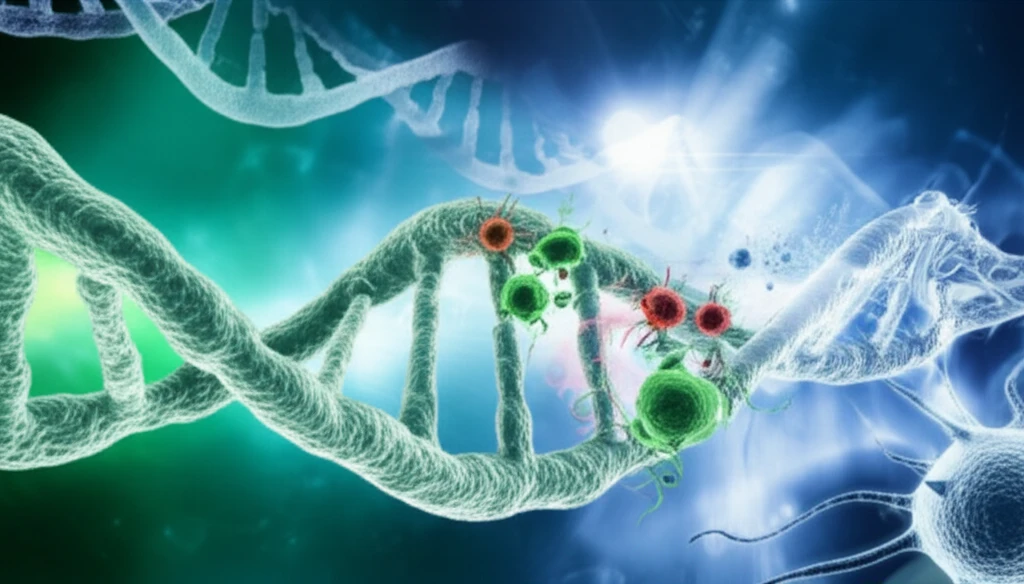
DNA Damage and Cancer Drugs: Can We Turn Cellular Weakness Into Strength?

"New research explores how common cancer drugs induce DNA damage and genome instability, potentially offering new avenues for targeted cancer therapies."
Cancer treatment often relies on small molecules that disrupt DNA metabolism. Trabectedin (ET743), initially derived from a sea squirt, and its synthetic derivative lurbinectedin (PM01183), are examples of such drugs. These drugs are used to treat advanced soft tissue sarcoma and platinum-sensitive ovarian cancer.
One of the primary mechanisms of these drugs involves inhibiting transcription—the process by which DNA is read to create RNA. They preferentially bind to specific DNA sequences and can prevent transcription factors from binding to chromatin. Moreover, they induce the degradation of RNA polymerase II (RNAPII), a critical enzyme in transcription.
Cancer cells are often associated with genome instability. R-loops, structures consisting of an RNA-DNA hybrid and displaced single-stranded DNA, can be a significant source of this instability. While R-loops can play physiological roles, they can also lead to DNA damage and replication stress, linking them to neurodegenerative disorders and cancer.
Established DNA-Damaging Therapies
DNA-damaging agents remain a mainstay of cancer chemotherapy, although their full mechanisms of action are not completely known. Reviews of these agents discuss their clinical use, limitations, and the DNA damage response network. Research has also used chemical genomics to characterize existing compounds and identify potential new DNA-damaging agents. Recent work emphasizes continuing limitations in drug delivery and the need for next-generation delivery platforms and personalized medicine.
From Tumor Descriptions to Molecular Therapy
Cancer research has developed through centuries of scientific inquiry and medical innovation, from early written descriptions of tumors to modern molecular therapies. The National Cancer Institute's 2025 timeline presents key milestones from the past 250 years of cancer research. Historical reviews also describe the growing importance of DNA damage and repair mechanisms, including their therapeutic applications and related clinical trials. More recent advances include genetic engineering, monoclonal antibodies, and immune checkpoint inhibitors for advanced or metastatic tumors.
How Trabectedin and Lurbinectedin Affect DNA and Genome Stability
Recent research has shown that trabectedin and lurbinectedin cause transcription-dependent replication stress and genome instability. These drugs induce RNA-DNA hybrid-dependent DNA damage in HeLa cells, leading to replication impairment. High levels of R-loops increase the sensitivity of cells to trabectedin, indicating a critical role for these structures in the cellular response to the drugs.
- R-loops and DNA Damage: Drugs like trabectedin and lurbinectedin induce DNA damage and genome instability by affecting RNA-DNA hybrids.
- Transcription Dependency: The drugs' impact on DNA is closely linked to transcription processes.
- FANCD2 Foci Accumulation: Trabectedin leads to increased FANCD2 foci, which are suppressed by RNase H1 overexpression.
- Evolutionary Conservation: The effects of these drugs are seen in both human and yeast cells, indicating an evolutionarily conserved mechanism.
Emerging Combinations and Immune Connections
A 2024 study reports that persistent lurbinectedin impairs the DNA damage response, causing DNA damage accumulation, cell-cycle arrest, and apoptosis through activation of p53 and other pro-apoptotic factors. Preclinical research found that combining lurbinectedin with irinotecan and 5-fluorouracil produced highly efficient tumor-cell killing in pancreatic cancer models. Another report describes variable antitumor effects when trabectedin is combined with the PARP1 inhibitor olaparib in advanced sarcomas. A 2026 Nature review examines how DNA damage response defects shape tumor immunogenicity and responses to immune checkpoint inhibitors.
Resistance Limits the Strategy
Most chemotherapy drugs are DNA-damaging agents that trigger distinct forms of DNA damage and can lead to cancer-cell death. However, innate or acquired resistance emerges in many tumors during treatment. Resistance to chemotherapy and radiotherapy is described as common, motivating continued development of new therapeutic strategies. Targeted therapies seek to address resistance by exploiting specific vulnerabilities in different cancer types, although the cited review states that drug or therapy resistance remains an inevitable and fatal problem in cancer.
Damage, Chromatin, and Repair Targets
DNA-targeting drugs are widely used in cancer treatment and can produce different types of DNA damage, including changes to the chemical structure of DNA. Molecules that bind DNA may also interfere with chromatin packing, so their effects are not limited to direct DNA lesions. DNA-PK inhibitors represent a distinct strategy because DNA-PK is a key component of non-homologous end joining, the pathway that repairs DNA double-strand breaks. The inhibitor landscape has evolved from early molecules such as OK-1035, with DNA-PK targeted to sensitize cancer cells to DNA-damaging therapies.
Implications for Future Cancer Therapies
This research provides a new understanding of how trabectedin and lurbinectedin work, linking their activity to transcription and R-loop formation. These insights suggest that targeting R-loops could be a viable strategy for developing new anticancer agents. Given that R-loops are present throughout the genome, drugs that can effectively act on these structures may enhance their therapeutic efficacy, opening new possibilities for treating specific cancers.