
Distance Doesn't Define Care: How Teledermatology Can Revolutionize Your Cancer Treatment

"Discover how teledermatology is breaking down barriers in cancer care, offering accessible and timely dermatological assessments for patients undergoing chemotherapy and improving quality of life."
Cancer treatment often brings unexpected side effects, with skin rashes being a common concern. These rashes, known as dermatologic toxicities, can be uncomfortable, impact appearance, and even disrupt treatment plans. Traditionally, managing these issues meant scheduling appointments with dermatologists, which could be difficult, especially when travel is involved.
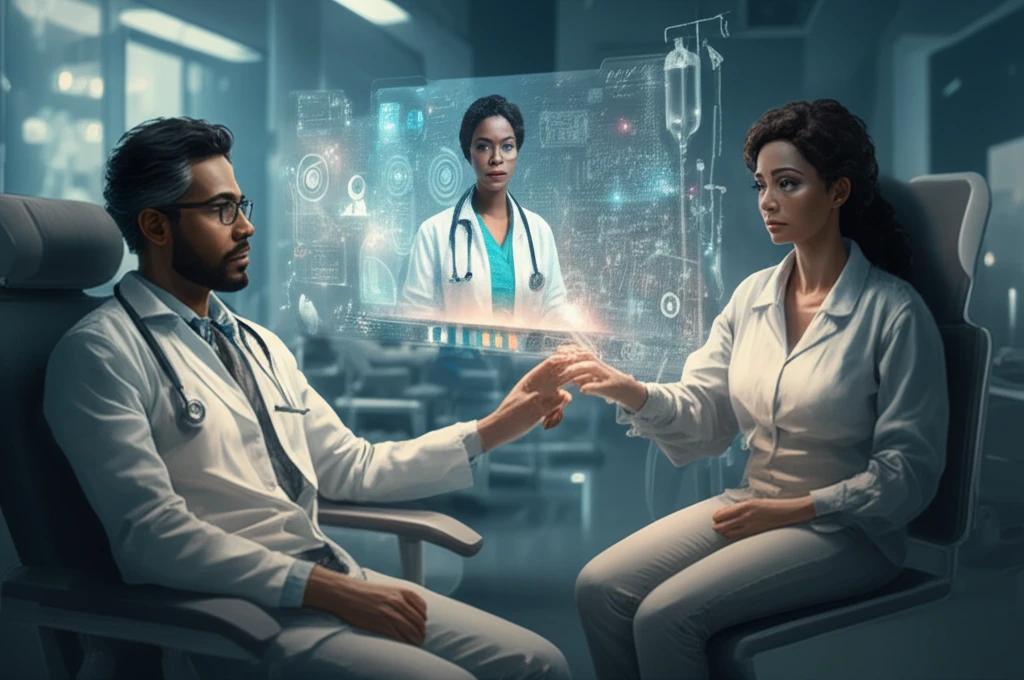
Imagine a scenario where specialized dermatological care is readily available, regardless of location. This is the promise of teledermatology, a field that uses technology to bridge the gap between patients and specialists. By leveraging telemedicine, healthcare providers can assess and manage skin conditions remotely, ensuring that patients receive the timely care they need without added stress.
This article explores how teledermatology is transforming cancer care, focusing on a pilot project that brought dermatological expertise directly to patients undergoing chemotherapy at an outpatient infusion center. Learn how this innovative approach not only improved access to care but also enhanced patient satisfaction and collaboration among healthcare teams.
Rapid Adoption of Image-Based Skin Care
Teledermatology involves taking digital photographs of the affected skin and sharing them with a dermatology specialist who reviews the images remotely. The approach has expanded rapidly across the UK, where many NHS trusts now use image-based referral and triage systems as standard practice, allowing GPs to submit photographs for specialist review. A 2020 survey found a significant difference in teledermatology use based on practice setting, with a higher number of respondents from academic settings implementing the technology (P<0.001). The global teledermatology market is also being examined closely, with reports analyzing the factors expected to drive and restrain demand over the projected period.
Models, Standards, and Diagnostic Limits
The accepted evidence base rests on systematic reviews and meta-analyses that compare teledermatology and face-to-face agreement in primary diagnoses of dermatological conditions. Quality standards outline three types of teledermatology services and consider both the benefits and limitations of teledermatology as part of the care pathway. Professional bodies such as the American Academy of Dermatology have created a core set of teledermatology standards advocating for responsible telemedicine platform technology and telehealth reimbursement. In low-resource settings, standardized teledermatology pre-filled forms and picture standards have been developed to support healthcare workers.
From Analog Cameras to Digital Dermatology
Teledermatology transmits medical data for a skin examination using telecommunications technology. It is considered a sub-specialty of dermatology and likely the most popular application of e-health and telemedicine. While the field's roots trace to the broader emergence of telemedicine, it was only in the early 1980s that these technologies became more popular, with the initial milestone being the commercialization of the Mavica analog models produced by Sony in 1981. Dermatology itself is the branch of medicine dealing with the skin, encompassing both medical and surgical aspects.
Breaking Down Barriers: Teledermatology in Action
The pilot project, conducted at a chemotherapy infusion center, aimed to evaluate the effectiveness of teledermatology in assessing and managing dermatologic conditions arising from cancer treatments. Patients experiencing skin rashes during chemotherapy were offered the opportunity to consult with a dermatologist located at the institution's main campus through a telemedicine cart.
- Enhanced access to care: Patients received timely dermatological assessments without the need to travel to the main campus.
- Improved patient satisfaction: Patients reported high levels of satisfaction with the convenience and quality of care received through telemedicine.
- Strengthened clinician collaboration: Teledermatology fostered communication and collaboration between the dermatologist, oncologist, and chemotherapy nurse.
Expanding Evidence Across Special Populations
Recent research is examining the spectrum of dermatologic conditions experienced by homeless individuals, identifying barriers to adequate care and exploring teledermatology as a potential solution to bridge these gaps. Current research also indicates that teledermatology is effective and efficient in the diagnosis and management of skin diseases in children, with reviews analyzing the commonalities and differences between pediatric and adult patient care. A systematic review of studies published since June 2009 found that teledermatology reduces waiting time and achieves high patient satisfaction when compared with face-to-face dermatology services. Teledermatology is described as one of the most active applications of telemedicine in the United States, with common uses including store-and-forward models.
Limitations: Palpation, Photos, and Trust
A notable weakness of teledermatology is that it does not allow palpation, which is very useful in dermatoses such as psoriasis, atopic dermatoses, and actinic keratoses. In primary teledermatology, a further problem can be the poor reliability of self-provided information from patients. Experts also warn that the correlation between a correct diagnosis and the quality of the photograph is a real issue, with one dermatologist advising against practicing teledermatology on patients who have never been seen before. Broader reviews of the field also highlight ethical considerations and legislative challenges as limiting factors.
Teledermatology Versus In-Person Consultations
Overall, teledermatology has demonstrated good performance in comparison to conventional consultations for diagnostic agreement and diagnostic accuracy. Studies comparing diagnoses between live interactive teledermatology and in-person consultation generally show diagnostic agreement, although studies directly comparing live interactive teledermatology to pathologic diagnosis are not currently available. Comparative studies have paired video and in-person examinations conducted by different dermatologists, for example at an urban Veterans Affairs dermatology clinic, to assess physician and patient impressions and interphysician diagnostic agreement.
The Future of Cancer Care: Accessible, Timely, and Patient-Centered
Teledermatology is more than just a technological advancement; it represents a paradigm shift in how we deliver cancer care. By embracing innovative solutions like telemedicine, we can ensure that patients receive the specialized care they need, when they need it, regardless of their location. As technology continues to evolve, the possibilities for improving patient outcomes and enhancing the overall cancer care experience are endless.
Expert Views: High Satisfaction and Knowledge Transfer
Experts report that patient satisfaction with teledermatology is high, and primary care providers gain knowledge and expertise in treating skin conditions, which over time may reduce how often they need to consult dermatology experts and improve efficiency in care. Teledermatology may also be used by the treating dermatologist to seek expert opinion for difficult cases, and studies have demonstrated the importance and usability of patient-assisted teledermatology practice. Author-based second-opinion teledermatology has been described, in which experts who have previously worked and published may offer valuable suggestions, alongside economic analyses such as a study of presurgical teledermatology in patients with nonmelanoma skin cancer.
AI, Growth, and Secure Infrastructure Ahead
The deployment of artificial intelligence and machine learning within teledermatology is described as a burgeoning area with immense potential, and AI integration is highlighted as a key emerging trend. Market reports project that teledermatology services could reach a valuation of USD 6.5 billion by 2035, growing at a CAGR of 6.65% during the forecast period from 2025 to 2035. Reviews of the COVID-19 era note that while the number of teledermatology programs was initially limited, consultations showed an upward trend with a median yearly volume of 263 consultations in one analysis, and the field's future outlook remains a focus of discussion. Looking to 2026, teledermatology infrastructure is increasingly framed around security, translation, and trust for patient-centric care.
Rural Access, Relationships, and Sustainability
Teledermatology faces particular challenges in rural Australia, where geography, connectivity, and limited specialist access complicate delivery. The technology also alters the traditional doctor-patient relationship in some ways, since patients no longer visit an office and present complaints in person. Beyond access, dermatology practices face unique sustainability challenges, with the widespread use of topical formulations including medical ointments, sunscreens, and cosmeceuticals representing a specific area of environmental concern within the specialty.
Real-World Results and Patient Impact
Real-world NHS case studies show teledermatology being deployed through programs such as Consultant Connect, with NHSX digital playbooks developed to support clinical teams in reimagining and redesigning care pathways by showcasing tried-and-tested technologies that solve real-world problems. Implementation research notes that well-run programs can better realize teledermatology's promise for enhancing patients' access to expert dermatologic care in real-world healthcare settings. Reported accuracy figures suggest treatment plans from virtual dermatologists match in-person ones 70-90% of the time, and studies report that more than 73% of cases are successfully diagnosed without additional testing, illustrating the practical reliability of virtual skin checks.