
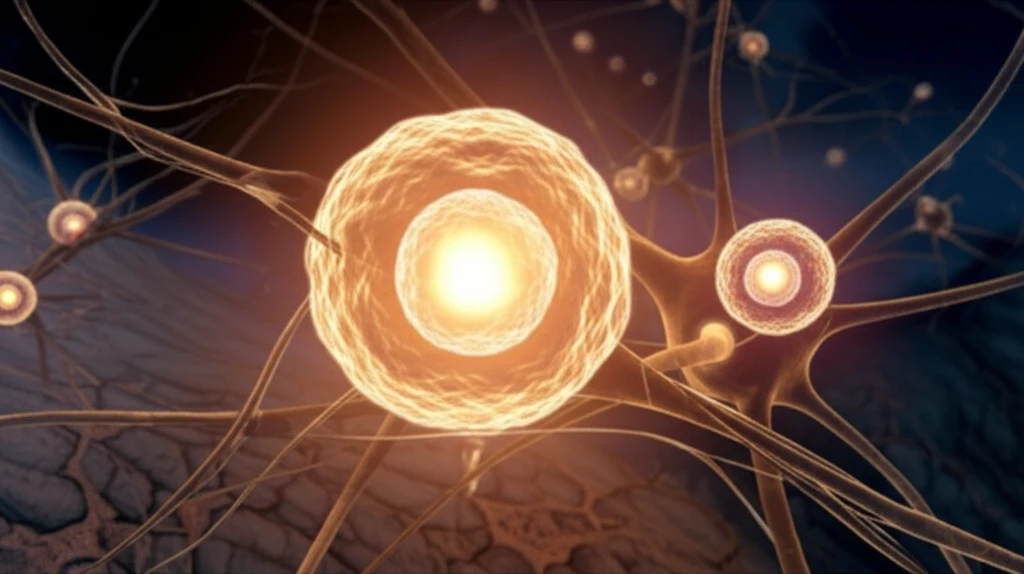
Diabetes Breakthrough: Can Stem Cells End Neuropathic Pain?

"Human adipose-derived stem cells and their secretome show promise in reversing diabetic neuropathic pain in experimental models, offering a potential new approach to treatment."
Diabetic neuropathic pain, a frequent complication of diabetes mellitus, significantly diminishes the quality of life for affected individuals. Current pharmacological treatments often fall short, highlighting the urgent need for innovative therapeutic strategies. Recent research has turned its attention to the potential of mesenchymal stem/stromal cells (MSCs), particularly those derived from adipose tissue (hASCs), to combat this debilitating condition.
A new study published in Scientific Reports investigates the therapeutic effects of human adipose-derived stem cells (hASCs) and their secretome (hASC-CM) in a preclinical mouse model of diabetes. The researchers aimed to determine whether hASCs and hASC-CM could alleviate neuropathic pain and restore nerve function, offering a novel approach to treating diabetic neuropathy.
This article explores the key findings of the study, elucidating how hASCs and hASC-CM treatments reverse neuropathic hypersensitivity, modulate neuroinflammation, and promote nerve regeneration. We'll also delve into the potential mechanisms of action, offering insights into how these cell-based therapies could revolutionize the treatment of diabetic neuropathic pain.
The Evidence Base for Stem Cell Therapy in Diabetic Peripheral Neuropathy
Diabetic peripheral neuropathy (DPN), a frequent complication in people with type 1 or type 2 diabetes, is now the subject of systematic reviews and meta-analyses examining whether stem cell therapy is a safe and effective treatment. A systematic review and meta-analysis published November 19, 2024, set out to assess the efficacy and safety of stem cell therapy in human studies for DPN. To be included, a trial had to be controlled — randomized or non-randomized — and had to evaluate stem cell therapy for DPN in patients with DM-1 or DM-2. The same review also excluded animal or in vitro studies, review papers, conference abstracts, and editor letters, underscoring how deliberately the available human clinical evidence is being catalogued. Reviewers note that cell-based therapy might offer a permanent solution in the treatment and management of diabetes-induced neuropathy, which is why the human trial evidence carries so much weight.
Where Current Treatment Falls Short
Because no dedicated sources were retrieved for this angle, the picture here is necessarily general and should be read as background rather than as a documented consensus. In broad terms, standard management of diabetic neuropathy has centered on tight glucose control and symptom relief rather than on repair of the damaged nerve itself. Many clinicians and researchers would acknowledge that this conventional approach often manages pain incompletely and does not reverse underlying nerve damage. This is precisely the gap that regenerative cell-based strategies are being investigated to close. Readers should treat these generalizations with caution, as they are contextual framing rather than claims drawn from a specific cited study.
From Descriptive to Regenerative Thinking
No dedicated sources were retrieved for this subsection, so the history offered here is deliberately general and hedged. Over time, the study of diabetic neuropathy has moved from characterizing the condition as progressive nerve damage driven by prolonged high blood sugar to exploring whether the nervous system's own repair capacities can be mobilized. The emergence of stem cell biology shifted the question from whether nerve damage could be slowed to whether it could be reversed and regenerated. That conceptual shift is part of the backdrop for the contemporary clinical trials discussed elsewhere in this article. Because no specific milestones or named discoveries were documented in the available source material, none are asserted here.
Reversing Diabetic Pain: hASC and hASC-CM in Action
The study employed a streptozotocin (STZ)-induced diabetic mouse model to mimic the characteristics of type 1 diabetes. Once neuropathic hypersensitivity was established, mice were treated intravenously with either hASCs or hASC-CM. The researchers then assessed the effects of these treatments on various pain-related behaviors and underlying biological markers.
- Reversed mechanical and thermal allodynia and thermal hyperalgesia (abnormal pain responses to non-painful and painful stimuli, respectively).
- Exhibited rapid and long-lasting effects, with pain relief sustained for up to 12 weeks after treatment.
- Restored a correct pro/anti-inflammatory cytokine balance in nerves, dorsal root ganglia, and spinal cord.
- Prevented skin innervation loss, a common feature of diabetic neuropathy.
- Re-established Th1/Th2 balance in the spleen, which was shifted towards Th1 dominance during diabetes.
- Improved kidney morphology, indicating protection against diabetic nephropathy.
An Updated Systematic Review and Meta-Analysis
The most current recap of the evidence is a human-study systematic review and meta-analysis published in Stem Cell Research & Therapy (DOI article 10.1186/s13287-024-04033-3), which set out to assess the efficacy and safety of stem cell therapy for diabetic peripheral neuropathy. Its methods were exhaustive: the authors searched Ovid MEDLINE ALL, Embase via Ovid SP, Scopus, Web of Science Core Collection, and Cochrane CENTRAL up to January 31, 2024, using keywords and controlled vocabularies related to diabetic neuropathy and stem cell therapy. Consistent with the inclusion criteria, all controlled trials — randomized or non-randomized — that examined stem cell therapy for DPN in type 1 or type 2 diabetes were eligible. The review remains a key reference point because it aggregates controlled human trials rather than relying on animal or laboratory evidence.
Research Grounded in Controlled Human Trials
The review literature assembled for this article repeatedly emphasizes that it draws only on controlled human trials, excluding animal or in vitro studies, review papers, conference abstracts, and editor letters. This methodological discipline is itself a response to concerns about overstated or anecdotal claims: the goal is to judge stem cell therapy for DPN on randomized or non-randomized controlled evidence in people with type 1 or type 2 diabetes. By foregrounding heterogeneity concerns and strict inclusion criteria, the reviewers acknowledge that the evidence base is still being built and that not every published report is equal in weight. That conservative stance is worth keeping in mind whenever dramatic headlines about stem cells and neuropathy appear.
No Head-to-Head Evidence Retrieved
No dedicated sources comparing specific stem cell types or protocols were retrieved for this subsection, so any comparative analysis must be kept deliberately general. In the wider field, comparisons typically turn on questions like cell source (for example, bone marrow-derived versus umbilical-derived cells), route of delivery, dosing, and how outcomes are measured — but none of those specifics are documented in the source material for this section. Readers should therefore interpret claims of one therapy outperforming another as unsupported by the evidence assembled here. The honest summary is that rigorous head-to-head human data distinguishing preferred approaches has not been captured in this article's sources, and that distinction is better left to the primary clinical literature.
The Secretome Advantage: A New Era for Pain Relief?
While the study did not directly compare hASC and hASC-CM treatments, the results suggest that the secretome plays a significant role in mediating the therapeutic effects of hASCs. The secretome encompasses a broad range of bioactive factors, including growth factors, cytokines, and extracellular vesicles, that can:
What the Evidence Really Adds Up To
No dedicated synthesis or expert commentary sources were retrieved for this subsection, so the synthesis offered here is deliberately interpretive and hedged. Pulling the documented evidence together, the common thread is that stem cell therapy for diabetic peripheral neuropathy has moved from hypothesis into structured, controlled human evaluation — a meaningful step, but not proof of a finished therapy. The reviews consistently flag safety and efficacy as the two questions under active assessment, and they deliberately exclude weaker forms of evidence. A fair bottom line, on the material actually sourced here, is that the approach is promising, rigorously studied, and still to be validated as a routine option.
Where the Field Could Head
No dedicated forward-looking sources were retrieved for this subsection, so the outlook below is general and should be read as framing. The natural next questions raised by the existing trial program are durability, optimal dosing and delivery, and which patients with diabetic peripheral neuropathy are most likely to respond. As larger and longer controlled trials accumulate, answers to those questions would determine whether stem cell therapy becomes part of routine neuropathy care or remains an adjunct for selected cases. Nothing in the material sourced for this article supports a specific timeline or named upcoming study, so those projections are deliberately withheld here.
The Wider Stem Cell Landscape in Diabetes Care
Stem cell therapies for diabetes sit within a much larger research agenda, and one review paper summarizes recent advances, prospects, and challenges across stem cell-based treatments for diabetes mellitus. That review focuses particular attention on induced pluripotent stem cells and mesenchymal stem cells, highlighting how different cell types are being engineered for different jobs. It also covers the development of pancreatic islet organoids, a frontier where lab-grown islet tissue could eventually substitute for donor tissue in restoring glucose control. The same paper connects these threads to the potential for personalized medicine, in which specific cell-based treatments could be tailored to individual patients — a systemic goal that also shapes how neuropathy-focused cell therapies are likely to evolve.
Toward a Permanent Fix for Diabetes-Induced Neuropathy
Beneath the trials and meta-analyses lies a plainly human ambition: a therapy that does more than manage symptoms. In a paper on stem cell therapy in diabetic polyneuropathy published February 2, 2023, the authors express this directly, stating that cell-based therapy might be a permanent solution in the treatment and management of diabetes-induced neuropathy. The same work examines the factors responsible for diabetic polyneuropathy, grounding the therapeutic promise in an understanding of why the condition develops in the first place. For patients living with painful, progressive nerve damage, the appeal of a regenerative treatment that could address root causes rather than just palliate is exactly the real-world impact driving this research forward.
<ul> <li>Promote axonal growth and remyelination</li> <li>Modulate the immune system</li> <li>Protect against apoptosis (cell death)</li> <li>Stimulate angiogenesis (blood vessel formation)</li> </ul>
The fact that hASC-CM alone can elicit similar therapeutic benefits as hASCs opens up exciting possibilities for cell-free therapies, which could overcome some of the challenges associated with cell transplantation, such as immune rejection and cell survival. Further research is needed to fully elucidate the composition and mechanisms of action of the hASC secretome to optimize its therapeutic potential for diabetic neuropathic pain and other conditions.