
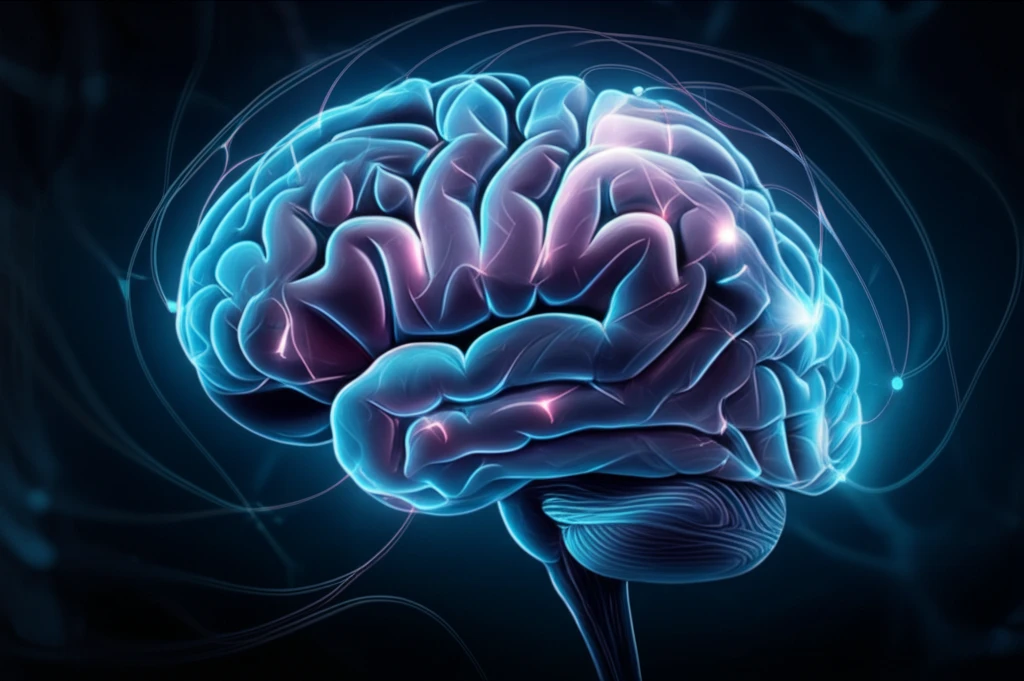
Deep Brain Stimulation: Can It Rewire Depression?

"Exploring the science and potential of deep brain stimulation (DBS) as a cutting-edge treatment for depression, offering new hope for those who haven't found relief through traditional methods."
Depression, a condition affecting millions worldwide, often proves resistant to conventional treatments. While therapy and medication offer relief for many, a significant portion of individuals continue to struggle, seeking alternative solutions for lasting well-being. This is where deep brain stimulation (DBS) emerges as a promising, albeit complex, frontier in mental health treatment.
Deep brain stimulation involves surgically implanting electrodes in specific areas of the brain. These electrodes deliver carefully controlled electrical impulses, aiming to modulate neural activity and alleviate depressive symptoms. Though still under investigation, DBS has shown remarkable potential in cases where other treatments have failed, offering a beacon of hope for those with treatment-resistant depression (TRD).
This article delves into the world of deep brain stimulation, exploring its mechanisms, target areas within the brain, and the latest research shaping its application in depression treatment. It provides an overview of the existing clinical trials, ongoing investigations, and the future directions of DBS as a therapeutic option.
Provided Sources Do Not Address DBS
The supplied sources do not provide statistics or clinical evidence about deep brain stimulation or depression. They instead describe Microsoft SwiftKey deep search, Microsoft Copilot Deep Research, and Windows drive optimization. Microsoft reports that SwiftKey deep search uses GPT to organize search results by category, while Copilot Deep Research was scheduled for retirement in the consumer Copilot app beginning August 18, 2026. These materials cannot substantiate claims about DBS prevalence, effectiveness, or impact.
Clinical Approaches Require Appropriate Evidence
No source material was provided for this subsection. A reliable discussion of standard depression treatments, DBS protocols, accepted methods, and their limitations would require clinical guidelines or peer-reviewed medical evidence. Without those sources, specific claims about treatment effectiveness, risks, or clinical acceptance should be omitted.
Historical Evidence Not Supplied
No source material was provided for this subsection. A factual history of DBS and its relationship to depression would require documented milestones, foundational discoveries, and dated clinical research. Those details cannot be established from the listed materials.
Deep Brain Stimulation: A Targeted Approach to Mental Wellness
Deep brain stimulation (DBS) isn't a one-size-fits-all solution; instead, it is a highly targeted intervention. Researchers have identified several key brain regions that play a crucial role in mood regulation and are therefore potential targets for DBS. These areas include:
- Subgenual Anterior Cingulate Cortex (sACC): Often referred to as Brodmann area 25, this region is consistently linked to major depressive disorder and feelings of sadness. DBS in the sACC aims to regulate overactivity associated with depressive states.
- Ventral Capsule/Ventral Striatum (VC/VS): This area is involved in reward processing and motivation. By stimulating the VC/VS, DBS seeks to reignite interest in activities and alleviate anhedonia, a common symptom of depression.
- Nucleus Accumbens (NAcc): A key component of the brain's reward circuitry, the NAcc is targeted to address the loss of pleasure and motivation that characterizes depression. Stimulation of this area aims to enhance reward-seeking behavior and improve overall mood.
- Lateral Habenula (LHb): This region plays a role in processing negative emotions and aversive stimuli. DBS of the LHb aims to reduce its overactivity, which may contribute to depressive symptoms.
- Inferior Thalamic Peduncle (ITP): As a bundle of fibers interconnecting various brain regions, the ITP is targeted to modulate communication between areas involved in mood regulation.
- Medial Forebrain Bundle (MFB): Consisting of two distinct tracts, the MFB is connected to various parts of the limbic system.
- Bed Nucleus of the Stria Terminalis (BNST): BNST is located in the basal forebrain, serves as a major output pathway of the amygdala and has a complex role in regulating stress response. Dysfunction in this structure was suggested to play an important role in anxiety disorders, partly through serotonergic activity [83].
Research Sources Not Supplied
No source material was provided for this subsection. Current findings about DBS for depression would need to be drawn from recent studies or systematic reviews. Without such sources, no specific research conclusions can be stated.
Limitations Require Clinical Sources
No source material was provided for this subsection. Evaluating failed trials, adverse effects, methodological criticisms, or arguments against DBS requires direct evidence from clinical and scientific sources. Those claims cannot be responsibly specified here.
Comparative Evidence Not Supplied
No source material was provided for this subsection. Comparing DBS with medication, psychotherapy, electroconvulsive therapy, or other interventions would require evidence using comparable outcomes and populations. Without that evidence, a meaningful comparison cannot be made.
The Future of DBS: Personalized Treatment and Beyond
While deep brain stimulation holds immense promise for treating depression, several challenges and future directions warrant attention. A consensus on the optimal DBS target/s for treating depression has not been reached yet, hence leaving the door for future investigations in this field still open. Personalized medicine for DBS treatment in depression. In line with the concept of abnormal neurocircuitry in MDD, the observed variability in depressive symptomatology suggests the existence of variability in structural and/or functional abnormalities within the involved brain networks. Reliable biomarkers of these abnormalities are needed to determine.
Expert Commentary Not Supplied
No source material was provided for this subsection. A synthesis of the evidence or expert commentary on whether DBS can rewire depression would require clinical studies and qualified expert sources. No supported conclusion can be drawn from the available materials.
Future Evidence Not Supplied
No source material was provided for this subsection. Predictions about personalized stimulation, neural targets, devices, or future trials would require current research and clearly identified sources. Such projections should not be invented.
Systemic Evidence Not Supplied
No source material was provided for this subsection. Discussion of access, cost, regulation, ethics, healthcare disparities, or implementation challenges requires evidence specific to DBS and depression care. Those issues cannot be described factually from the supplied sources.
Patient Impact Evidence Not Supplied
No source material was provided for this subsection. Patient experiences, quality-of-life effects, caregiving burdens, and real-world outcomes would require appropriately sourced clinical or qualitative research. Without it, specific claims about how DBS affects people should be omitted.