
Decoding the Secrets of Our Genes: How Evolutionary Changes Shape Our Traits

"Unraveling the complex relationship between epigenetics, histones, and the evolution of Drosophila"
Epigenetics, the study of how our behaviors and environment can cause changes that affect the way our genes work, is a rapidly evolving field. These changes, unlike genetic mutations, are reversible and don't alter our DNA sequence, but they can change how our bodies read a DNA sequence. Think of it like this: our genes provide the script, and epigenetics direct the play, determining which parts are highlighted and when.
Histones play a crucial role in this process. These proteins act like spools around which DNA winds, forming structures called nucleosomes. How tightly or loosely the DNA is wound affects gene expression—tightly wound DNA is often silenced, while loosely wound DNA is more accessible and active. Different types of histones exist, each influencing gene expression in unique ways. Understanding these variations and how they've evolved can give us profound insights into the mechanisms that control our traits and susceptibility to disease.
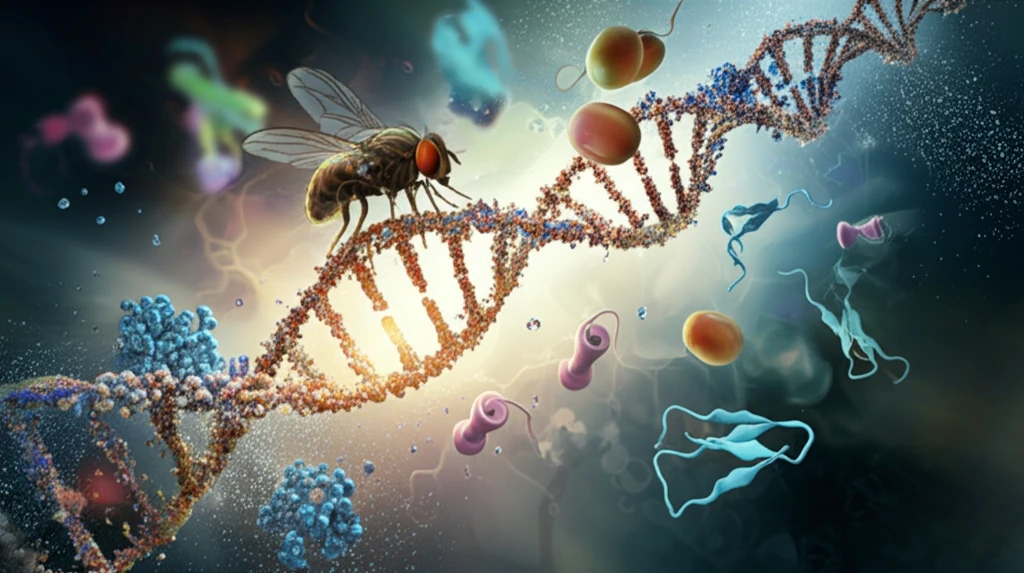
The study of Drosophila, or fruit flies, has been instrumental in advancing our knowledge of genetics and epigenetics. These tiny creatures share many biological pathways with humans, making them an invaluable model for research. By examining the evolutionary changes in histone genes within Drosophila, scientists are uncovering fundamental principles that apply across species, including humans.
The Growing Scale of Epigenetics Research
Epigenetics research generates vast quantities of data, with genome-wide association studies (GWAS) summary statistics and single-cell experiments requiring sophisticated computational infrastructure. The field spans clinical genomics, evolutionary genomics, and disease-related research, with curated resources now indexing complex trait genetics tools, biobanks, and AI-related tooling for researchers. Growing demand for epigenetic modulators—compounds used in chromatin regulation and transcriptional control—reflects the expanding market for target validation and mechanism studies across cell-state modulation workflows. These resources highlight how epigenetics has matured from a niche discipline into a data-rich field intersecting multiple areas of modern biology.
From ChIP-seq to CUT&Tag: Evolving Epigenetic Methods
Chromatin immunoprecipitation followed by sequencing (ChIP-seq) has long been the gold standard for profiling histone modifications and transcription factor binding. However, CUT&Tag is rapidly emerging as a new standard due to its low input requirements, high sensitivity, and streamlined workflow—particularly advantageous when working with limited material. Epigenetic ageing clocks have also become powerful machine learning tools over the past decade, used not only to estimate chronological and biological age but also to assess the efficacy of anti-ageing and cellular rejuvenation interventions. These methodological advances address limitations of earlier approaches while introducing new challenges in standardization and statistical validation.
From Mendel to Modern Epigenetics
The origins of genetics trace back to Gregor Mendel's 1865 memoir on plant hybridization, though the word 'genetics' was not coined until 1906 to designate the new science of heredity. Epigenetics as a field has a long history dating to the mid-18th century, with modern research now encompassing histone and DNA-modifying enzymes, nucleosome remodelers, histone chaperones, and the roles of long non-coding RNA and small interfering RNA in transcriptional regulation. Chromatin research has evolved from early observations of chromosome structure to a sophisticated discipline studying how chromatin-binding proteins facilitate transcription factor and polymerase action. This progression from Mendelian genetics to epigenetics represents a fundamental broadening of how scientists understand heredity and gene expression.
The Tale of Two Histones: H2A and H2AvD in Drosophila
In a recent study, researchers delved into the evolutionary dynamics of two histone variants in Drosophila: H2A and H2AvD. H2A is a canonical histone, essential for the basic structure of chromatin, while H2AvD is a variant known for its role in nucleosome remodeling and DNA repair. By comparing the genetic sequences of these histones across twelve different Drosophila species, the researchers aimed to understand how these proteins have evolved and how their differences might impact gene expression.
- Gene Pairing: In seven Drosophila species, the H2AvD gene was located head-to-head with the Ball gene, which codes for a histone threonine kinase. This suggests a functional link between the two genes, with Ball potentially involved in modifying histones.
- Conserved Sequences: A highly conserved DNA sequence was found upstream of the H2AvD gene in multiple species, even those without the Ball gene pairing. This sequence likely serves as a crucial transcriptional signal, ensuring proper gene expression.
- Downstream Gene: The SPARC gene, involved in calcium binding, was located tail-to-tail downstream of the H2AvD gene in most species. This conserved arrangement hints at a coordinated regulation of these genes.
Emerging Frontiers in Epigenetics Research
Recent research has illuminated how chemically customized chromatin can be used to interrogate epigenetic mechanisms, with studies published in Nature Genetics revealing nuance in DNA and transcription factor interactions. A growing body of work indicates that maternal prenatal stress—whether from natural or human-made disasters—can lead to epigenetic modifications in offspring, expanding understanding of how environmental exposures shape gene expression across generations. In disease contexts, research suggests that arthritic joints may require different treatments due to diverse epigenetic signatures, particularly regarding DNA methylation patterns. Researchers also believe some epigenetic changes can be passed from generation to generation, a finding with profound implications for understanding health and disease inheritance.
Ethical and Conceptual Challenges in Epigenetics
While epigenetics has been seized upon by some social scientists hoping to restore environmental explanations for human differences, critics argue the hype far outstrips what the science actually shows. The nature-versus-nurture debate has been complicated by epigenetic findings, as environmental factors can modify gene expression through mechanisms like DNA methylation, demonstrating how nurture directly impacts nature. Epigenetic processes account for regulation of chromosomal activity by recording, signaling, or maintaining changed activity levels—yet the extent to which these modifications are truly heritable in mammals remains contested. Ethical, legal, and societal implications of epigenetics research have prompted multidisciplinary reviews from scholars across various epistemological standpoints, reflecting unresolved questions about responsibility and application.
Genetics vs. Epigenetics: Distinct Yet Interconnected
Genetics is the study of genes, genetic variation, and heredity of living organisms, while epigenetics examines alterations in heritable traits in gene expression that do not involve changes to the DNA sequence itself. The two fields play unique yet interconnected roles in determining how organisms develop and function. Cutting-edge tools like CRISPRoff and CRISPRi are now enabling durable epigenetic silencing, with performance comparisons based on pooled experimental data revealing distinct mechanisms and applications for each approach. Understanding the differences and overlaps between genetic and epigenetic regulation is essential for interpreting how evolutionary pressures shape both the genome and its expression patterns.
Why This Matters: Implications for Human Health and Evolution
The study of histone variants and their evolutionary dynamics in Drosophila offers valuable insights into the complex mechanisms that govern gene expression. Understanding how these mechanisms have evolved can shed light on how organisms adapt to changing environments and how variations in gene expression contribute to disease susceptibility. By continuing to unravel the secrets of our genes, we can gain a deeper understanding of what makes us who we are and how we can improve our health and well-being.
Expert Perspectives on Epigenetics' Promise and Peril
Geneticist Randy Jirtle of Duke University has explored how lifestyle choices may affect the health of not only individuals but their children and grandchildren through epigenetic mechanisms. Manel Esteller, a cancer epigenetics expert with over 640 published papers, has shaped understanding of DNA methylation in cancer and contributed to the development of epigenetic drugs against mantle cell lymphoma. However, skepticism persists—some argue that epigenetics has become 'dangerously fashionable,' with claims exceeding the current evidence base, particularly regarding transgenerational inheritance in humans. This tension between promising therapeutic applications and overhyped claims underscores the need for rigorous, evidence-based evaluation of epigenetic interventions.
Epigenetics Market Growth and Therapeutic Potential
The epigenetics market is experiencing robust growth driven by technological advancements and increasing applications in personalized medicine, with the USA market alone estimated at USD 610 million in 2025. Emerging trends are predominantly driven by technological advancements that enable more precise and comprehensive analysis of epigenetic modifications, with rising interest in epigenetic therapies shaping the future of treatment options for various diseases. Future research in epigenetic reprogramming holds particular promise, as scientists explore how to reset or modify epigenetic marks to reverse disease states or aging processes. These developments suggest the field is transitioning from basic discovery to translational applications with significant commercial and clinical potential.
Epigenetics at the Intersection of Genes and Environment
Epigenetics may provide insights into the interplay between genes and environments during the life span of an individual and in the transmission across generations of the effects of environmental exposures—nutritional, stress, toxins—and social experiences. Two key epigenetic mechanisms influencing DNA expression are methylation of DNA and modification of surrounding histone proteins, yet charting a course for discovery requires comprehensive mapping of epigenomic landscapes. The Broad Institute's Epigenomics Initiative works to understand how epigenetic modifications to chromatin affect human health, acknowledging that researchers cannot chart a course for discovery without a good map. Broader epigenetics research has made significant contributions to understanding systemic biological processes, though the complexity of these interactions presents ongoing challenges for the field.
Intergenerational Trauma and the Psychology of Epigenetics
Studies in epigenetics have shown promising results indicating that certain traits linked to epigenetic changes—particularly in worms and mice—are being passed down across generations, supporting the biological reality of intergenerational trauma. Epigenetic modifications switch specific genes on and off, often through methylation of the cytosine nucleotide, and the study of alterations in gene expression caused by environmental factors and experience is central to this field. However, researchers caution that while a mechanism for epigenetic inheritance exists in plants and nematodes, there is no convincing evidence that it operates the same way in mammals, especially humans. Understanding how enzymes that help turn genes on and off influence traits like blood vessel development represents a tangible example of how epigenetics connects molecular mechanisms to observable human biology.