
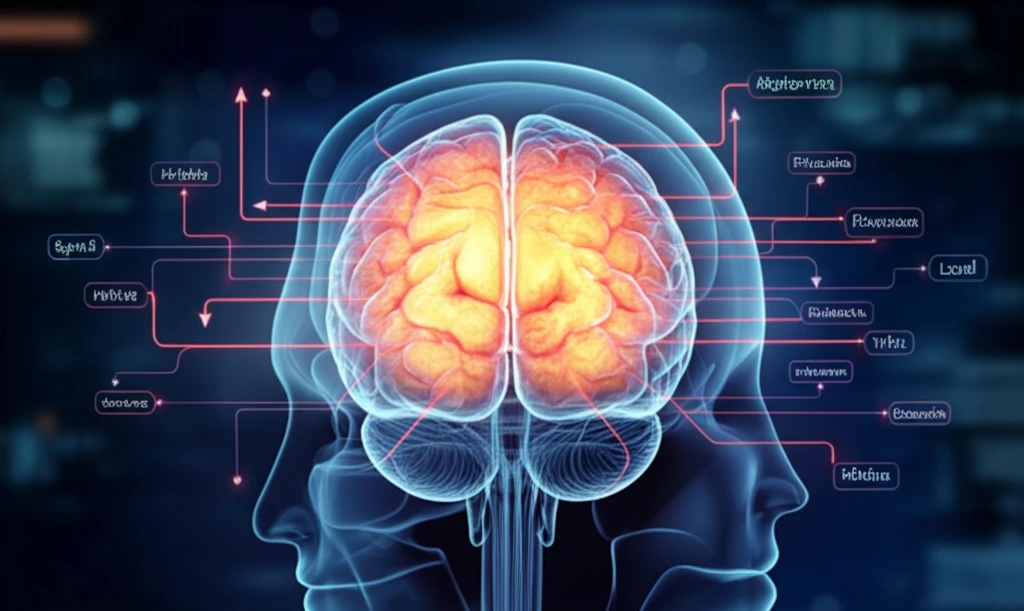
Decoding the Diabetes-Alzheimer's Connection: A Guide to Prevention and Brain Health

"Unraveling the Link Between Type 2 Diabetes and Alzheimer's: Actionable Steps to Protect Your Cognitive Future"
In our modern world, neurological and psychiatric disorders affect millions, often blurring the lines between mind and body. Conditions like Alzheimer's, Parkinson's, and Huntington's disease, along with mood disorders, can stem from various causes including genetics, trauma, and autoimmune factors. What's increasingly clear is that these conditions rarely exist in isolation; they often involve a complex interplay of neuropsychiatric components.
For example, Alzheimer's patients experience not only memory loss and dementia, but also personality changes and depression. Parkinson's disease extends beyond physical tremors to include memory problems and depression. Huntington's disease, driven by a genetic mutation, leads to both uncontrollable movements and cognitive decline. At the cellular level, these neurodegenerative diseases share a common hallmark: the buildup of misfolded proteins such as amyloid-beta, tau, and alpha-synuclein. These proteins trigger pathways leading to mitochondrial dysfunction, oxidative stress, and ultimately, neuronal dysfunction and cell death.
Emerging research highlights a concerning link between these neurological disorders and metabolic processes, specifically imbalances in energy metabolism, enzyme activities, and hormone regulation. This is where the connection between Alzheimer's disease and Type 2 Diabetes (T2DM) becomes particularly relevant. The interplay between these two seemingly distinct conditions is now a major focus of scientific investigation.
A Global Concern with Local Differences
Alzheimer's is a progressive brain disorder that affects memory, thinking, and behavior, and for many people it is one of the biggest concerns of growing older — especially for those who have watched a loved one face the disease. The Alzheimer's Association's annual Facts and Figures report tracks the impact of Alzheimer's and other dementias across the United States, documenting the toll the disease takes on individuals, families, and the healthcare system. The disease is not experienced identically everywhere: the largest biomarker study of Alzheimer's conducted in Africa to date has detected established Alzheimer's markers in blood samples from Nigeria and Tanzania, with researchers reporting that these markers show important differences across diverse global populations. Findings like these underscore why prevention guidance and brain health efforts must account for biological and geographic variation.
Complementing Standard Alzheimer's Care
Standard Alzheimer's care centers on managing a disease characterized by progressive cognitive decline, but researchers are actively exploring ways to supplement that approach. One emerging line of research is 40 Hz audio-visual gamma stimulation, which targets the disrupted neural oscillations associated with Alzheimer's disease and has emerged as a potential non-invasive therapy. A separate study reported that early Alzheimer's patients are often missing many simple, everyday steps that could protect brain health, and its authors stress that lifestyle changes are not a replacement for medical care but rather opportunities to improve overall brain and body health alongside standard Alzheimer's treatment. Together, these lines of work point toward a future in which accepted medical treatment is paired with non-pharmacologic, lifestyle-based support.
From Genes to Blood Biomarkers
Understanding of Alzheimer's disease has evolved from a purely clinical diagnosis into a molecular and genetic picture. One foundational discovery is familial Alzheimer's disease (FAD), a form doctors know for certain is linked to genes, appearing in members of at least two generations — though it accounts for less than 1% of all cases. That genetic insight has paved the way for modern biomarker-based detection: blood tests measuring proteins such as p-tau217 can now suggest whether someone has early signs of Alzheimer's in the brain, a tool that has reached primary care and is prompting real questions about how results should be interpreted. Diagnosis, treatment, epidemiology, history, and brain scans remain core threads in how the disease is studied and documented across the medical literature.
The Intertwined Paths of Diabetes and Alzheimer's
Type 2 diabetes mellitus (T2DM) is characterized by insulin resistance and impaired glucose regulation. This occurs when the body's cells become less responsive to insulin, a hormone crucial for transferring glucose from the blood into cells for energy. As a result, blood sugar levels remain elevated, leading to a cascade of metabolic problems. Recent studies have revealed that many of the destructive processes seen in T2DM are also present in the brains of individuals with neurodegenerative diseases, most notably Alzheimer's.
- Insulin Resistance in the Brain: Alzheimer's patients often exhibit insulin resistance specifically within brain cells, impairing their ability to use glucose for energy.
- Amyloid-Beta and Insulin: Amyloid-beta, the hallmark protein of Alzheimer's plaques, can disrupt insulin signaling in the liver, potentially exacerbating insulin resistance.
- Inflammation: Both Alzheimer's and T2DM involve chronic inflammation, which damages cells and contributes to disease progression.
- Mitochondrial Dysfunction: Impaired mitochondrial function is a key feature of both conditions, leading to reduced energy production and increased oxidative stress.
Inflammation, Hormones, and New Treatment Targets
Recent research is zeroing in on the biology of Alzheimer's, including the chronic, low-level brain inflammation that characterizes the disease; researchers are studying treatments that target the processes behind that inflammation, and the medicine sargramostim (Leukine) is currently in research. A separate large study of more than 21,000 participants found that women who used estrogen-only hormone therapy later in life were less likely to develop dementia and showed fewer signs of Alzheimer's disease in their brains. This work sits alongside the widely reported fact that Alzheimer's is a progressive condition causing memory loss and cognitive decline, accounting for 60% to 80% of dementia cases in the United States, with most affected people age 65 or older. Dedicated science outlets continue to track and share these findings from labs, universities, and hospitals around the world.
The Loss of Abstract Thinking
Some accounts frame Alzheimer's as a type of dementia whose progression strips away far more than memory. A major symptom highlighted in one such account is the loss of abstract thinking, which in time takes away a person's ability to solve problems and draw conclusions. This erosion of higher-order reasoning is part of what makes the disease so difficult for families, since the capacity to navigate everyday decisions declines along with recall. It is a reminder that cognitive decline in Alzheimer's extends beyond forgetting names or dates to the very machinery of logic and judgment.
Risk Factors vs. Prevention Strategies
Looking at Alzheimer's risk and prevention side by side shows two sides of the same coin. Modifiable risk factors identified in the literature include heart disease, diabetes, obesity, smoking, poor sleep, and a lack of physical or mental activity, alongside non-modifiable factors such as age, genetics, and family history. On the prevention side, the National Institute on Aging points to promising strategies supported by the latest evidence, including regular physical activity, blood pressure control, and cognitive training. Taken together, many of the health conditions and behaviors that raise Alzheimer's risk are precisely the targets that prevention efforts are designed to address.
A Future of Integrated Health Strategies
The growing understanding of the molecular links between T2DM and Alzheimer's offers hope for new therapeutic interventions. By targeting common pathways such as insulin signaling, inflammation, and mitochondrial function, researchers aim to develop strategies that protect both metabolic and cognitive health. Focusing on preventative measures, such as diet and exercise, will be crucial in combating the rising tide of both diseases and promoting healthier aging.
Test Results and Ethical Responsibility
Experts caution that new Alzheimer's blood tests, including at-home versions, may do more harm than good. Days after a simple blood test, a person with dementia can learn whether they have Alzheimer's disease — but experts say these tests are problematic, in part because of how such results are delivered and interpreted outside a clinical setting. The broader expert conversation also carries an ethical dimension, as opinion pieces on Alzheimer's care during the COVID-19 pandemic were at times scrutinized and even 'vehemently questioned.' The message from this expert commentary is that diagnostic power and ethical responsibility must advance together.
Detection and the Young-Onset Frontier
The future of Alzheimer's detection is being shaped in both laboratories and policy halls. A recent event at the Houses of Parliament brought together leading researchers, NHS clinicians, policymakers, industry experts, and innovators to explore the future of Alzheimer's disease detection. Meanwhile, attention is growing on early-onset (or young-onset) Alzheimer's, which occurs in people younger than 65 — a very small number of people, many in their 40s and 50s, have the disease when it takes hold. Young-onset Alzheimer's is described as a rare form of dementia that presents unique challenges, from diagnosis to daily coping, underscoring why earlier and more accurate detection is a central frontier.
A Shared Biology Across Brain Diseases
Alzheimer's is one part of a larger landscape of neurodegenerative disease. It is a degenerative disease of the brain that causes a gradual loss of memory, judgment, and the ability to function, usually appearing in people older than 65, with less common forms emerging earlier in adulthood. The biology underlying it overlaps with other conditions: toxic clumps of brain proteins are features of many neurodegenerative diseases, including Parkinson's disease, ALS, and Huntington's disease. That shared biology is why an immunotherapy approach showing promise in a mouse study at Washington University could have implications beyond Alzheimer's, potentially informing treatments across a spectrum of brain disorders.
Families, Air Quality, and Resilience
Behind the statistics, Alzheimer's is a deeply human ordeal — one commentator calls dealing with the disease one of the most frustrating and heartbreaking experiences a family can go through. The human toll is also environmental: a study of 27.8 million Americans concluded that long-term exposure to fine particulate air pollution is associated with a higher risk of Alzheimer's disease, largely through direct effects on the brain rather than through common conditions such as hypertension, stroke, or depression. Alzheimer's accounts for roughly 60% of all dementia cases, which means its impact reaches the majority of the dementia population. Some researchers reframe brain health in terms of resilience rather than disease severity alone — as one expert puts it, brain age measures not the severity of the disease but the resilience we have to withstand it.