
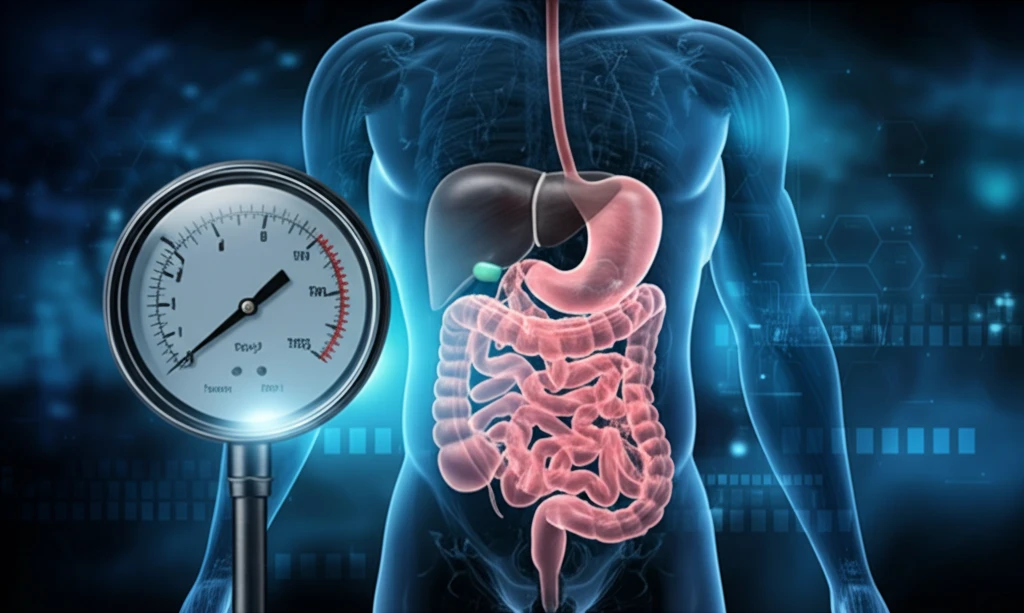
Decoding the Connection: How Job Stress Impacts Your Gut Health

"Unveiling the link between workplace stress and functional dyspepsia, and actionable strategies for women to reclaim their digestive wellness."
In today's fast-paced world, job stress has become an almost ubiquitous part of our daily lives. While we often associate stress with mental and emotional well-being, its impact extends far beyond, significantly affecting our physical health, particularly our digestive system. Functional dyspepsia, a common condition characterized by persistent and recurring gastrointestinal symptoms, is increasingly linked to the pressures and anxieties of the workplace.
Functional dyspepsia (FD) is a condition defined by upper abdominal discomfort, including postprandial fullness, early satiation, epigastric pain, and burning sensations, where these symptoms occur without any identifiable organic disease to explain them. This means that traditional diagnostic tests might not reveal any abnormalities, leaving individuals to grapple with discomfort that significantly impacts their quality of life. With a global prevalence rate ranging from 7% to 45%, functional dyspepsia represents a significant health challenge, underscoring the need to understand and address its underlying causes.
Recent research has shed light on the intricate relationship between job stress and functional dyspepsia, particularly among women. These studies reveal that specific aspects of workplace stress, such as high job demands and a negative occupational climate, can significantly increase the risk of developing functional dyspepsia. Understanding this connection is the first step toward developing effective strategies for managing stress and promoting better gut health.
The Scale of Workplace Stress Today
Workplace stress is pervasive across industries and roles, with 54% of U.S. workers reporting that job insecurity significantly affects their stress levels. Specific stress drivers have been quantified: unrealistic deadlines affect 63% of workers, lack of control impacts 47%, constant connectivity burdens 51% of remote workers, and difficult customers stress 42% in service roles. These figures underscore that job stress is not a niche concern but a widespread occupational hazard with measurable causes.
How Stress Is Typically Addressed—and Where It Falls Short
Conventional approaches to workplace stress emphasize identifying the root cause and avoiding unhealthy coping mechanisms such as smoking or drinking. Organizations have increasingly adopted structured tools like the England HSE Institute's standard job stress questionnaire to measure and diagnose stress among employees. However, research shows that job stress has escalated progressively over recent decades, suggesting these individual-level and diagnostic approaches alone have not curbed the problem. Finding a truly low-stress job may be functionally impossible, highlighting the limits of personal strategies without broader organizational intervention.
Stress as a Survival Mechanism Through History
For much of human history, stress served a vital evolutionary purpose by motivating survival in the face of physical threats. The stress response was adaptive, helping ancestors react to danger and navigate harsh environments. Understanding this historical function provides important context: the same biological mechanisms that once protected humans now activate in response to modern workplace pressures, where the threats are psychological rather than physical.
The Study: Unpacking Job Stress and Gut Health
A recent study published in the Annals of Occupational and Environmental Medicine investigated the correlation between job stress and functional dyspepsia in a group of 901 workers in the display manufacturing sector in South Korea. The study utilized the Korean Occupational Stress Scale (KOSS) to measure various dimensions of job-related stress, including job demand, insufficient job control, interpersonal conflict, job insecurity, organizational system, lack of reward, and occupational climate. Participants also completed questionnaires assessing their symptoms of functional dyspepsia based on the Rome III criteria.
- Job Demand: High workload, tight deadlines, and constant pressure to perform can overwhelm the body's stress response system, leading to digestive upset.
- Occupational Climate: A negative work environment characterized by poor communication, lack of recognition, and limited opportunities for growth can create a sense of isolation and anxiety, exacerbating digestive symptoms.
- Brain-Gut Connection: Stress can trigger the release of stress hormones like cortisol, which can disrupt the balance of gut bacteria, increase intestinal permeability, and lead to inflammation in the digestive tract.
- Psychological Factors: Anxiety and depression, often associated with chronic stress, can amplify the perception of digestive symptoms, making them feel more intense and bothersome.
Emerging Evidence on Job Stress and Health
Recent research has established that job stress is associated with pervasive and clinically significant adverse health outcomes, as demonstrated in studies of firefighters. However, the available evidence remains predominantly cross-sectional, meaning it suggests associations rather than confirmed causal effects. A separate review has found that women in health care face significantly higher burnout rates compared to their male colleagues, pointing to gender as an important moderating factor in work-related stress.
When Stress Responses Become the Problem
Self-criticism, or the 'inner critic,' can compound workplace stress by affecting how workers feel and perform, often leading to avoidance behaviors and missed opportunities. These negative self-talk patterns are frequently internalized from past criticism and limit employee productivity beyond the original stressor. Critical incident stress can manifest physically, emotionally, cognitively, and behaviorally, with symptoms including poor concentration, memory problems, and impaired decision-making. In some cases, what employees perceive as constant criticism from managers may actually reflect a lack of organizational clarity rather than a lack of individual capability.
Stress Levels Vary Significantly Across Occupations
Not all jobs carry equal stress burdens. Occupational stress rankings place miners at a level of 8.3 and police officers at 7.7 on standardized stress scales, illustrating meaningful variation between professions. Comparing the stress and security of different career paths—such as transitioning from a former role to an outlier position—can reveal trade-offs between stability and peace of mind. These comparisons highlight that stress is not merely an individual experience but is shaped by the structural demands of one's occupation.
Reclaiming Your Gut Health: Actionable Steps for Stress Management
If you're a woman experiencing symptoms of functional dyspepsia, especially in the context of a stressful job, it's essential to take proactive steps to manage your stress and support your gut health. Here are some actionable strategies you can implement today:
Reframing the Relationship Between Work and Identity
Experts emphasize the importance of remembering that your job is what you do, not who you are—a distinction that becomes critical during periods of forced separation or career transition. Physical fitness and movement training experts stress that there is no place for being mediocre when it comes to maintaining resilience, applying the same rigor used in training elite athletes to everyday well-being. This reframing suggests that addressing the gut health impact of job stress requires both a psychological shift in how workers relate to their roles and a physical commitment to bodily well-being.
The Growing Economic Toll and Unresolved Challenges
A 2020 World Health Organisation study estimated that stress-related illnesses cost the global economy $1 trillion annually, encompassing lost productivity, healthcare costs, and absenteeism. Job insecurity continues to drive chronic anxiety, while the blurring of personal and professional life—particularly in remote work settings—fuels burnout that impacts both mental and physical health. As AI and automation reshape workplaces, the nature of occupational stress is poised to evolve, though the fundamental challenges of work-life balance and job stability remain unresolved.
Stress as a Systemic, Not Just Individual, Issue
Addressing workplace stress requires understanding it as a systemic challenge embedded in how organizations are built and governed. ESG (Environmental, Social, and Governance) frameworks are increasingly being integrated into organizational strategy, reflecting a shift toward treating employee well-being as inseparable from how companies operate. Leadership coaching that makes systemic interconnections visible helps leaders understand not only what they do but what their actions set in motion—because when a leader shifts, the entire organizational system responds.
How Stress Manifests in Real Lives and Policy
Research shows that only in countries with specific national legislation on stress were job resources found to be associated with less reported stress through the existence of organizational action plans, highlighting the role of policy. Case studies such as that of Sarah, an ambitious marketing executive, illustrate how chronic stress from demanding jobs and family obligations can undermine well-being even among high achievers. Job stress has been identified as one of the most important problems in the modern world, generating significant concern for organizations across sectors. Notably, some research has challenged assumptions about stress and weight gain, suggesting the relationship between job stress and physical outcomes may be more complex than previously believed.