
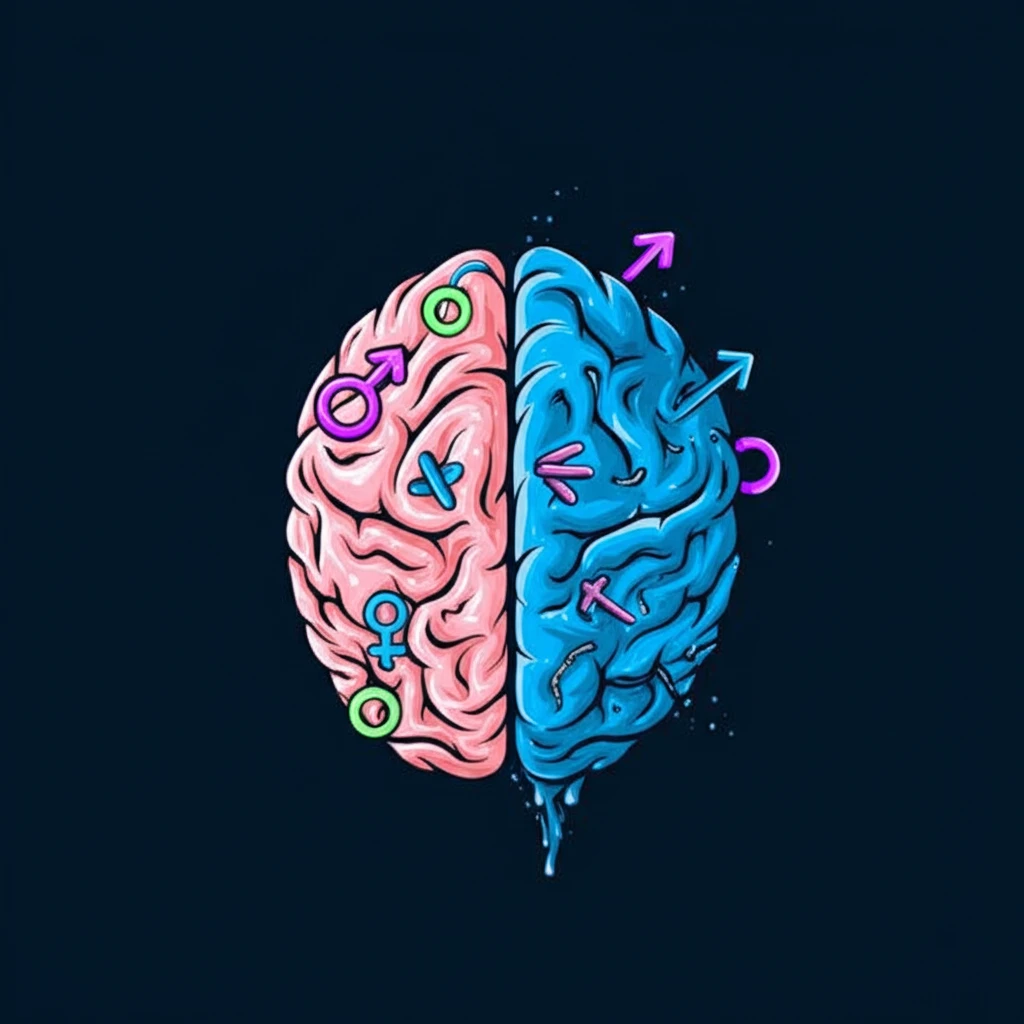
Decoding Personality: How Sex Differences Shape Disorders

"Explore the intriguing link between gender and personality disorders. Understand how these differences influence diagnosis, symptoms, and treatment approaches for better mental health outcomes."
Personality disorders (PDs) represent significant challenges in mental health. These conditions aren't fleeting but deeply ingrained, affecting how individuals perceive themselves and interact with the world. Unlike temporary struggles, PDs permeate all aspects of a person's life, leading to enduring patterns of inflexible and inadequate behaviors and inner experiences. These patterns typically emerge in adolescence or early adulthood, severely impacting relationships and professional life.
According to the Diagnostic and Statistical Manual of Mental Disorders, Fifth Edition (DSM-5), approximately 15% of U.S. adults grapple with at least one personality disorder. This makes PDs a common yet serious concern, with consequences for individuals, families, and the economy.
One of the ongoing debates in psychology centers on sex differences in personality. Are men and women inherently different in their personalities? Do these differences extend to how personality disorders manifest? Women are often perceived as more emotional and agreeable, while men are seen as more assertive. But how do these stereotypes and potential realities shape the landscape of personality disorders?
Diagnosing and Measuring the Burden of Personality Disorders
Per the DSM-5, personality disorders are defined as "an enduring pattern of inner experience and behavior that deviates markedly from the expectations of the individual's culture," a definition cited by the National Institute of Mental Health. Borderline personality disorder statistics show that up to 80% of people with the condition self-harm, with 10% attempting suicide and most facing chronic emotion dysregulation. Data aggregators such as Gitnux draw on peer-reviewed journals, government agencies, and professional bodies, with each statistic independently verified via reproduction analysis. Some conditions in this space remain disputed; dissociative identity disorder, for example, is characterized by at least two personality states or "alters," yet the diagnosis itself is controversial.
Dimensional Frameworks, Clusters, and Treatment Pathways
The DSM-5 uses a continuum-based approach to diagnosing personality disorders while also retaining separate, discrete personality disorder categories. These categories are commonly organized into clusters, including the Cluster B disorders described by Verywell Mind. Critics of the categorical system argue for dimensional, strengths-based models that emphasize integrated paths to healing rather than diagnosis alone. Treatment typically combines psychotherapy with symptom-targeting medication; for paranoid personality disorder, for example, cognitive behavioral therapy and dialectical behavior therapy are used to improve emotional regulation and reduce mistrust.
From Phrenology to Psychoanalysis
Much of the early history of narcissism and narcissistic personality disorder originates from psychoanalysis, drawing on the myth of Narcissus, the man in love with his own reflection. Earlier still, in the 18th century, the term "phrenology" was used to describe personality characteristics, based on the belief that personality traits originate from various facets of the cranium. Modern definitions describe personality disorders as longstanding patterns of cognition, emotional regulation, interpersonal functioning, and behavior that deviate from cultural expectations. Such conditions have historically been considered hard to treat, often requiring long-term attention to change entrenched behavior and thought patterns.
The Shifting Sands of Diagnosis: Sex and Personality Disorders
The DSM-5 acknowledges that some personality disorders appear more frequently in one sex than the other. For instance, borderline personality disorder is more often diagnosed in women, while antisocial personality disorder is more prevalent in men. However, the DSM-5 also cautions against diagnostic bias. Clinicians must be wary of over- or under-diagnosing specific PDs based on societal stereotypes. The historical makeup of DSM working groups, predominantly male, has also raised concerns that diagnostic criteria might be skewed by a masculine perspective.
- Diagnostic Bias: Clinicians might unintentionally over-diagnose certain PDs in one sex due to societal expectations.
- Symptom Presentation: The same PD can manifest differently in men and women, leading to missed diagnoses.
- Study Populations: Research findings often vary depending on the populations studied, making it difficult to draw firm conclusions about sex differences.
- Comorbidity: Co-occurring conditions can further complicate the picture, with different PDs and mental health issues showing varying prevalence across sexes.
Symptom Profiles and Post-Pandemic Resilience Research
Mayo Clinic reports that symptoms of narcissistic personality disorder and how severe they are can vary, with people affected having an unreasonably high sense of self-importance and requiring constant, excessive admiration. Recent research has turned to broad personality frameworks such as the Big Five to examine how personality profiles relate to well-being. One cross-sectional cluster-analytic study examined Big Five personality profiles, self-reported distress, and resilience resources among adults in Italy after the acute COVID-19 emergency. Such profile-based research reflects a growing effort to link personality structure to measurable psychological outcomes.
Contested Diagnoses and Confusing Criteria
Mental health charity Mind reports that lots of people disagree about when and how to diagnose personality disorder, or whether it should be diagnosed at all, citing confusing and inconsistent diagnosis as a key problem. Even within recognized conditions, symptom profiles are debated; the NHS describes borderline personality disorder as featuring emotional instability, impulsive behaviour, and intense yet unstable relationships with others. Controversy also extends to proposed categories such as masochistic personality disorder, a self-defeating personality disorder whose diagnosis and treatment remain subjects of ongoing discussion. These disputes underscore broader uncertainty about the validity and boundaries of personality disorder diagnoses.
Borderline vs. Narcissistic: Comparing Related Disorders
Borderline personality disorder has been the subject of renaming proposals, with alternative suggestions including emotional regulation disorder, emotional dysregulation disorder, impulse disorder, and interpersonal regulatory disorder, according to John G. Gunderson of McLean Hospital. Comparisons often set personality disorders against mood disorders, examining how enduring patterns of inner experience differ from more episodic disturbances of mood. A common point of contrast is between borderline personality disorder and narcissistic personality disorder, where the core traits and relationship patterns differ in identifiable ways. These comparisons help clinicians and the public distinguish overlapping presentations and core narcissistic traits.
Looking Ahead: A Dimensional Approach
The DSM-5's dimensional model offers a promising avenue for future research. By focusing on impairments in individual functioning and pathological personality traits, this approach may provide a more nuanced understanding of personality disorders. As research continues, a dimensional model could reveal previously hidden sex differences and pave the way for more personalized and effective treatments. Ultimately, by acknowledging and understanding the interplay between sex and personality, we can move toward a more equitable and effective approach to mental health care.
When a Loved One Refuses Help
Expert guidance from the American Psychiatric Association addresses a common dilemma: what to do when you are concerned that a friend may have a personality disorder but she will not consider having an evaluation or getting help. The Q&A format walks families through the practical challenge of encouraging someone to seek care. In parallel, consumer education content such as MedCircle's series on the nine traits of borderline personality disorder aims to help people recognize symptoms in themselves or others. Together, these resources reflect a push toward making personality disorder knowledge accessible beyond clinical audiences.
Neurofeedback as an Emerging Treatment Frontier
A study indexed in PubMed reports that QEEG-guided neurofeedback therapy can change the view of psychiatrists and psychologists in the future regarding the treatment of personality disorders. The study provides what its authors describe as the first evidence for positive effects of neurofeedback treatment in antisocial personality disorder. While early-stage, this work points toward brain-based, neuromodulatory approaches as a potential complement to traditional psychotherapy. Because it is a single early study, the findings should be treated as preliminary rather than established practice.
Triggers, Crises, and the Care Pipeline
People with borderline personality disorder often react intensely to everyday experiences, and understanding what commonly triggers them is a critical part of both coping and care. Sources such as Charlie Health catalog the situations that can set off intense reactions and pair that knowledge with practical guidance on how to get help. Because triggers can involve ordinary interactions, managing the disorder extends into daily life and relationships. This highlights the systemic challenge of making timely, accessible mental health support available beyond clinical settings.
Enduring Conditions, Everyday Consequences
Personality disorders may cause distorted perceptions of reality, abnormal behaviors, and distress across many aspects of life, including work, relationships, and social functioning, according to Cleveland Clinic. ScienceInsights notes that personality disorders have real biological and genetic foundations, even though diagnosis remains imperfect. These conditions are enduring mental illnesses that impact a sizable chunk of a person's life, and borderline personality disorder in particular may impact multiple life domains at once. The cumulative picture is of disorders that are woven deeply into daily experience rather than isolated episodes.