
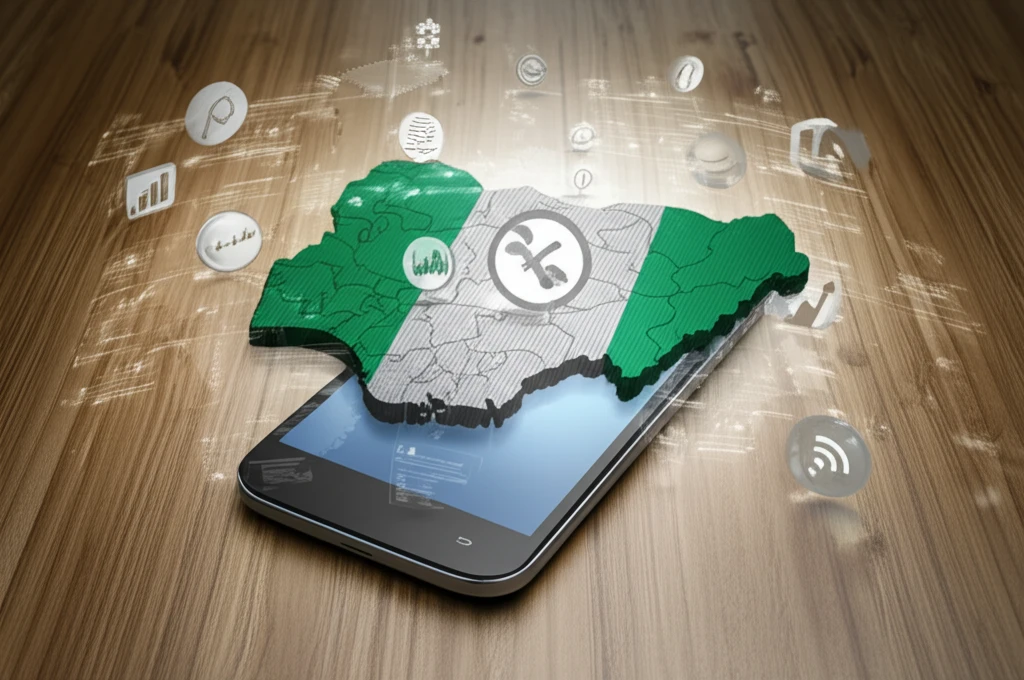
Decoding Nigeria's Data Bundle Dynamics: Are You Getting the Most Out of Your Smartphone?

"Explore how economic factors, resource constraints, and subscriber behavior influence smart phone data consumption in Nigeria and learn how to optimize your data usage."
In Nigeria, the rapid growth of data subscriber populations presents both opportunities and challenges for telecommunication networks. The rise in smartphone usage and internet traffic has led to concerns about network capacity, subscriber loyalty, and overall service quality. Understanding the factors that drive data consumption is crucial for addressing these issues and ensuring sustainable growth in the sector.
Nigeria's telecommunications landscape is shaped by a complex interplay of economic factors, government policies, and technological advancements. Despite robust economic growth in recent years, network expansion continues to be a fundamental characteristic of economic activity. This growth, however, is often accompanied by challenges such as impaired network speed, frequent network migration, and reductions in smartphone performance.
Government policies play a significant role in influencing incentives for market expansion and resource input in Nigeria's telecommunications sector. These policies find expression in the tariffs faced by subscribers and the set of technologies deployed and made available. By examining the factors affecting subscribers' data bundle use decisions, this article aims to provide insights for policymakers, network providers, and consumers alike.
Nigeria's Data Landscape at a Glance
Nigeria, a country in Africa known for its cultural diversity, has positioned itself as a significant mobile data market with MTN Nigeria branding itself as 'Nigeria's No.1 5G Network' and offering a range of 5G Internet, data, prepaid plans, postpaid plans, and broadband devices. The network promotes 'affordable voice and data plans tailored for seamless communication with loved ones.' When a user's data bundle is exhausted, browsing either stops entirely or switches to pay-as-you-go, depending on network settings—a critical transition point that affects how Nigerians experience mobile internet.
Understanding Data Bundle Options
Nigerian consumers navigate a landscape of data bundles that differ significantly from international comparisons, with pricing variations evident when contrasted with markets like Ghana. MTN packages and activation codes represent one common pathway for accessing data in Nigeria. Meanwhile, the prepaid model dominates, with plans starting from as low as $5 per month in some markets—offering unlimited data, talk, and text options that set expectations for what affordable connectivity should look like. This variety of options, however, can create complexity for users trying to identify the most cost-effective plan for their needs.
Nigeria's Growing Digital Population
Nigeria's population trajectory provides essential context for understanding data bundle demand in the country, with Worldometer and World Bank data tracking the nation's demographic growth over time. As the population expands, so does the pressure on telecommunications infrastructure to deliver affordable and reliable data services. Airtel and MTN data plans have evolved alongside this growth, with users actively seeking the best data plans available—demonstrating a maturing market where consumers increasingly compare options across providers. This population-driven demand has shaped how Nigerian networks structure and price their data offerings.
The Economics of Data Bundle Consumption
A recent study conducted in Abuja and Lagos offers valuable insights into the factors that influence smart phone data bundle consumption in Nigeria. The study develops a model of subscriber response to economic and technical stimuli, conditional on cybernomic and subscriber characteristics. By analyzing survey data gathered from subscribers of data and voice bundles, the model empirically evaluates the impact of various factors on data consumption patterns.
- Single SIM users react to data bundle prices and airtime discounts.
- Data sharing occurs through subscriber substitution and increased phone usage.
- Dual SIM users frequently switch networks based on tariffs.
- Power constraints affect data bundle demand.
Data Depletion: The Alarming Reality
Recent reports reveal a stark deterioration in data value for Nigerian mobile subscribers. TechTrends Africa documented that a N2,000 data bundle that once lasted three to four weeks now depletes within three to five days for average users—a dramatic reduction in value. The mathematics are straightforward: even if consumption patterns remained constant, the price increase alone means users get less data for the same money. Compounding concerns, MTN Nigeria faced fresh data depletion outrage when a subscriber's phone reportedly consumed 58.83 gigabytes via the cellular network in a single day, prompting allegations of a system glitch. The subscriber noted he could not possibly consume such an amount of data in a day, particularly when his phone automatically connects to Wi-Fi at home.
Examining Alternative Perspectives
While concerns about data depletion dominate Nigerian consumer discourse, it is worth noting that the broader global market offers alternative models worth examining. Lyca Mobile, for instance, provides SIM-only deals with unlimited data, talk, and text options in the US market—demonstrating that unlimited or generous data packages are commercially viable elsewhere. However, this comparison has inherent limitations given the vastly different market conditions, infrastructure costs, and regulatory environments between the US and Nigeria. The gap between international best practices and Nigerian realities highlights the need for context-specific solutions rather than simply importing foreign models.
5G Deployment and Data Value in Nigeria
Nigeria's transition to 5G technology represents a significant milestone in the country's telecommunications evolution. MTN Nigeria's 5G offerings require a 5G-capable smartphone or router and a 4G-enabled SIM card to access the network. To incentivize adoption, MTN has offered 11GB of free data on selected data bundle purchases from N5,000 for three months—a promotional strategy aimed at driving uptake of the newer technology. This 5G rollout, combined with concerns about data consumption rates and subscription spending patterns documented by bloggers like Olafusi Michael, illustrates the tension between advancing network capabilities and ensuring consumers perceive genuine value in their data purchases.
Policy Implications and Future Directions
The study's findings have significant implications for policymakers and network providers seeking to promote sustainable growth in Nigeria's telecommunications sector. By understanding the factors that influence data bundle consumption and subscriber behavior, stakeholders can develop targeted policies and strategies to address the challenges and opportunities presented by the digital age. Further research is needed to explore the long-term impacts of data bundle policies on subscriber behavior and network performance, as well as to identify innovative solutions for expanding access to affordable and reliable internet services.
The Paradox of Consumption and Value
Nigeria's economic landscape presents a troubling paradox that directly impacts data bundle dynamics: household consumption is plummeting despite rising disposable incomes. This phenomenon, analyzed by Atlantic Post, suggests that inflation and policy challenges are eroding purchasing power even as nominal incomes grow. When placed in regional context, the scale of data consumption across Africa becomes clearer—Business Daily Africa reported that Kenyans consumed 269 million gigabytes of data in a single year, with consumption projected to rise to 984 million gigabytes by 2022. These regional consumption patterns underscore the broader trend of explosive data demand across the continent, making the question of fair pricing and adequate data bundles even more critical for Nigerian consumers navigating their own economic pressures.
Nigeria's Data Consumption Trajectory
Nigeria's data consumption has reached unprecedented levels, with the country consuming more than 4 million terabytes of data in just the first quarter of 2026—the first time ever such volumes were recorded, according to NCC data. This explosion in usage raises fundamental questions about whether the country's digital infrastructure can actually keep up with demand. Academic research from institutions examining smartphone data bundle consumption trends in Abuja and Lagos states has developed models of subscriber response to economic and technical stimuli, conditional on various subscriber characteristics. As consumption continues to surge, the intersection of infrastructure capacity, pricing strategies, and subscriber behavior will determine whether Nigeria's data ecosystem can sustain this growth trajectory.
Infrastructure and Policy Headwinds
MTN Nigeria's recent 50% tariff hike on calls and data has sparked significant consumer outrage, with the 1.5 terabyte plan experiencing a staggering 60% increase from N150,000 to N240,000. This price escalation may set a precedent, encouraging other operators to follow suit and amplifying the systemic impact on consumers. Beyond pricing, Nigeria faces broader systemic challenges in building its tech ecosystem, including difficulties in hiring qualified engineers, data scientists, and experienced executives. To truly become a regional powerhouse, observers note that Nigeria must invest heavily in upskilling its population through educational reforms, vocational training, and partnerships with international institutions—challenges that extend far beyond data bundles alone.
Real-World Testing and Consumer Experience
Understanding the gap between theoretical specifications and real-world performance is critical for consumers evaluating their data bundle investments. Technical case studies demonstrate the importance of moving beyond online debates and theory to conduct actual testing using live data. While discussions about data consumption rates and system performance often rely on assumptions, hands-on verification using real ECU data and practical measurement provides more accurate insights. This empirical approach to understanding data usage patterns mirrors what Nigerian consumers need—reliable, verifiable information about how their data bundles actually perform in everyday use, rather than relying solely on network-provided statistics that may not reflect individual usage realities.