
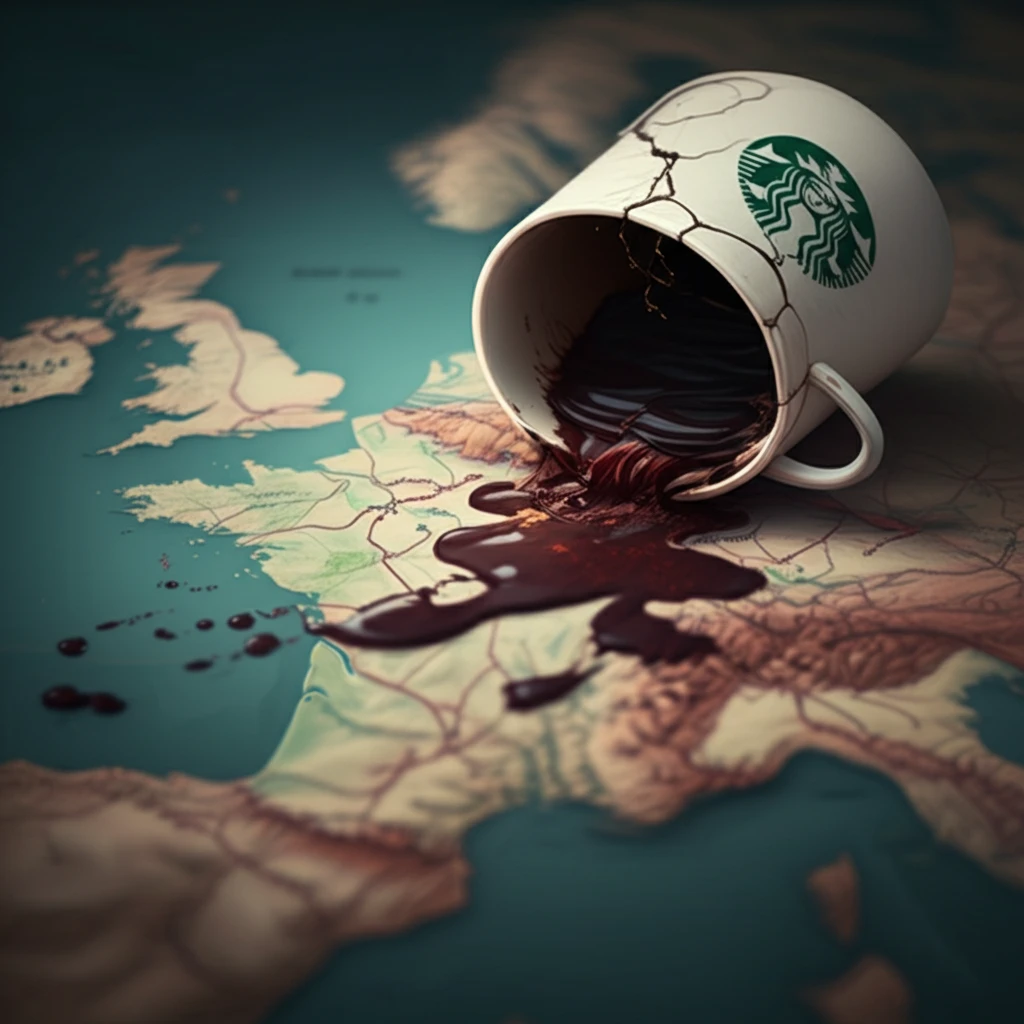
Decoding Brand Hate: Why Consumers Turn Against Iconic Brands Like Starbucks

"Exploring the phenomenon of brand hate, its causes, consequences, and what companies can do to navigate the negativity."
In today's hyper-connected world, brands are more than just logos and products; they're symbols loaded with cultural and emotional meaning. While companies strive for brand love, the opposite – brand hate – can also emerge, posing a significant threat to a company's reputation and bottom line. But what exactly is brand hate, and why do consumers develop such strong negative feelings toward certain brands?
Academic research is increasingly focusing on this phenomenon, seeking to understand the antecedents and consequences of brand hate. Unlike simple dissatisfaction, brand hate is a deep-seated aversion that can manifest in various ways, from boycotts and negative word-of-mouth to online activism and even brand sabotage. This article will explore the concept of brand hate, drawing on a case study of Starbucks in France to illustrate the complexities of this consumer sentiment.
While Starbucks enjoys global recognition and a loyal customer base, it has also faced criticism and outright hate from certain segments of the population. By examining the factors that contribute to brand hate in this specific context, we can gain valuable insights into how companies can better understand and manage negative consumer perceptions.
The Scale of Consumer Backlash
Iconic brands like Starbucks command substantial market influence, yet their very prominence can invite scrutiny and criticism. However, reliable quantitative data on the specific scale of brand hate toward such companies remains limited and varies across studies. Observers generally agree that highly visible brands face disproportionate attention when controversies arise. As a result, any precise figures on the impact of consumer backlash should be treated cautiously.
Defining and Managing the Brand
A brand is commonly understood as a set of words, images, and associations that represent and distinguish a product or service in the marketplace, with strong brands eliciting emotional responses from consumers and adding value to what they represent. Brand names are sometimes distinguished from generic or store brands, and brand management encompasses a range of strategies used to build and protect these associations. Accepted methods include carefully managing the brand's identity, positioning, and the emotional connections it fosters with audiences, as Britannica notes that strong brands add value by eliciting emotional reactions. A key limitation of these approaches is that they assume a controlled, positive relationship between brand and consumer, leaving comparatively little room for explicitly modeling how and why those emotional ties can turn negative. Consequently, standard brand frameworks are well suited to cultivating affinity but less equipped to explain the dynamics of outright rejection or hate.
The Evolving Concept of the Brand
The concept of the brand has evolved considerably over time, expanding from a simple mark of ownership into a complex tool for shaping consumer perception and driving business success. Historical analyses emphasize that a brand's core elements help change how consumers perceive a product while building long-term business value. Over the decades, branding milestones have shifted from identification and differentiation toward emotional and symbolic meaning. These foundational shifts help explain why modern consumers can develop intense attachments to brands — and, by extension, why they may react strongly when those expectations are disappointed.
Unpacking Brand Hate: More Than Just Dislike?
Brand hate is more than just a fleeting feeling of dissatisfaction. It is "the extreme negative affective component of attitude towards a brand". This suggests that brand hate is a durable phenomenon, and extreme negative attitudinal consumer responses can be quite significant and damaging for food-related companies.
- Active Brand Hate: Includes emotions such as anger and contempt.
- Passive Brand Hate: Related to emotions such as fear, disappointment, and dehumanization.
- Triggers: Negative past experiences, symbolic incongruity, and ideological incompatibility.
Emerging Insights on Brand Hate
Research on brand hate is still at a relatively early stage, and the evidence base continues to develop. Scholars and industry observers are increasingly examining the psychological and social triggers that lead consumers to reject once-loved brands. Findings so far suggest that negative emotional attachment can be as powerful as positive attachment, though consistent measures remain elusive. Given the emerging nature of this work, specific conclusions should be read as provisional rather than settled.
When Brand Strategy Falls Short
Despite sophisticated brand management, even the most iconic companies occasionally fail to anticipate or contain consumer anger. Well-known cases illustrate that a single misstep can override years of accumulated goodwill. Counter arguments note that some backlash is short-lived or limited to vocal minorities, yet persistent damage is also documented. These outcomes highlight the limits of relying on brand equity alone to weather reputational crises.
Comparing Consumer Responses Across Brands
Comparing how consumers respond to different brands reveals that the intensity of backlash varies widely across categories and contexts. Some brands weather controversy with minimal long-term effect, while others suffer durable reputational harm. The differences appear tied to factors such as brand history, the nature of the offense, and the strength of consumer identification. Generalizing from any single case therefore requires care, as outcomes are rarely uniform.
Turning Hate Around: Strategies for Brand Recovery
Combating brand hate requires a multifaceted approach that addresses the underlying causes of negative sentiment. While complete reversal may not always be possible, companies can take steps to mitigate the damage and rebuild trust with consumers. This begins with active listening, empathetic communication, and a willingness to address legitimate concerns.
Weighing the Evidence on Brand Hate
Pulling the available material together, brand hate appears to be a complex, multifaceted phenomenon rather than a single uniform effect. Expert views converge on the idea that emotional bonds cut both ways, strengthening loyalty and intensifying disappointment. Still, analysts caution that much of the narrative rests on illustrative cases rather than broad quantitative proof. A balanced reading treats brand hate as real and consequential, while acknowledging the gaps in current evidence.
Where Brand-Hate Research Is Heading
Going forward, the study of brand hate is likely to become more systematic and empirically rigorous. Newer research methods and richer consumer data promise better measurement of the triggers and long-term consequences of backlash. Experts expect growing attention to digital and social dynamics, where criticism can spread quickly. These developments should help turn anecdotal understanding into more robust, actionable insight.
The Systemic Forces Behind Consumer Backlash
Brand hate does not occur in isolation but is shaped by broader social, economic, and technological forces. Larger structural trends, such as shifting consumer values and the amplification of criticism through digital channels, create conditions in which backlash spreads more easily. These systemic factors make single-company fixes insufficient, since reputational risk is increasingly connected to wider public sentiment. Understanding these forces is essential for any brand hoping to manage its standing over the long term.
The People Behind the Backlash
At its core, brand hate is a human phenomenon rooted in real emotions, identities, and communities. Consumers who turn against a brand often feel a sense of betrayal or misalignment with their personal values. These individual and collective responses have tangible consequences for employees, shareholders, and the communities where brands operate. Recognizing this human dimension is key to appreciating why brand hate can feel so personal and why it is so difficult for companies to dismiss.