
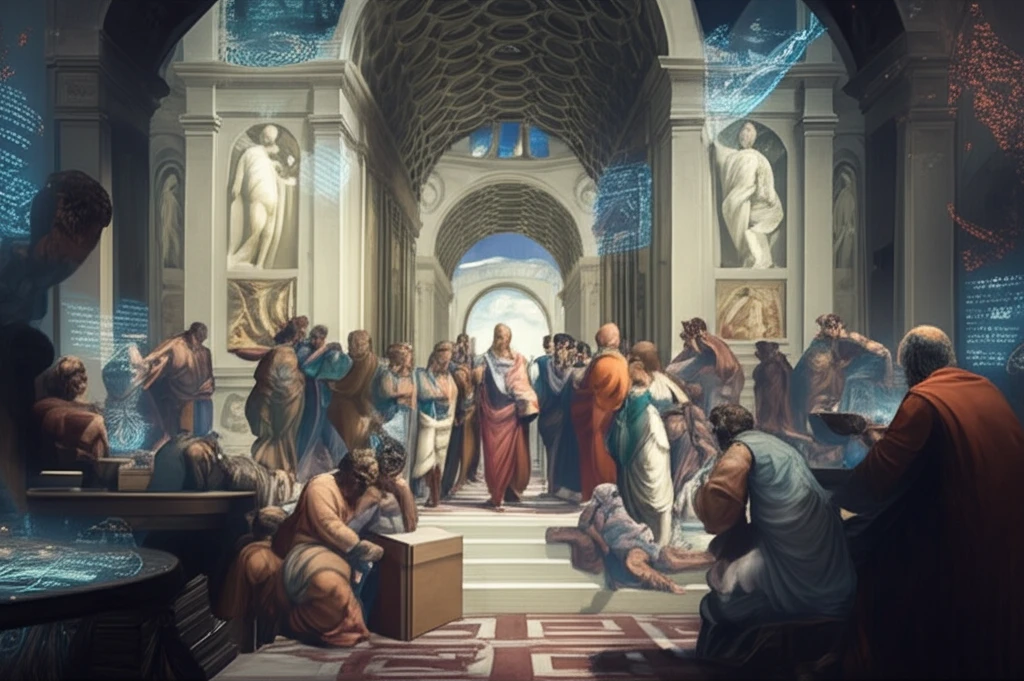
Decoding Ancient Texts: Unveiling the Enduring Relevance of Classical Literature

"Exploring classical literature uncovers timeless insights into humanity, culture, and the art of storytelling."
Classical literature, with its roots in ancient Greece and Rome, offers a profound lens through which to examine the foundations of Western civilization. These texts, penned by literary giants like Homer, Virgil, and Ovid, have influenced countless generations of writers, artists, and thinkers. Their exploration provides enduring insights into human nature, society, and the art of storytelling.
A recent collection of studies, 'Dicite, Pierides. Classical Studies in Honour of Stratis Kyriakidis,' delves into the multifaceted world of classical literature, presenting fresh perspectives on well-known works and shedding light on lesser-explored corners of the ancient world. This compilation showcases the ongoing relevance of classical studies and their ability to illuminate contemporary issues.
This exploration examines key themes and analyses presented in these classical studies, offering a guide to understanding the enduring power and influence of ancient texts. Whether you're a seasoned scholar or a curious newcomer, prepare to be captivated by the timeless wisdom of classical literature.
Six Centuries of Latin Letters
Formal classical literature has a precise starting point: 240 BC, when the first stage play in Latin was performed in Rome, marking the beginning of formal Latin literature. Latin literature then flourished for the next six centuries, giving the Western canon its long chronological spine. The influence of these traditions extends beyond the page, as an encyclopedia entry on folklore notes that folklore has exerted a considerable influence on literature and music. Yet for many contemporary readers the canon's size is part of the problem, with beginner-oriented study guides acknowledging that the volume of classical literature makes it daunting to know where to start.
Two Classical Pedagogies, and the Limits of Standardization
Within classical education, two methods dominate: the didactic approach and the Socratic approach, which classical educators use when teaching literature. Structured frameworks from literary theory play a supporting role, with guides such as the Blackwell Guide to Literary Theory gathering the major theories and practitioners to help students and instructors navigate the field. Even so, standardized approaches carry well-documented limitations, and lessons from other disciplines illustrate the pattern—as the RadiCal project notes, the models codified in international standards are frequently oversimplified, assuming perfectly flat, idealized cases that ignore real-world complexity. By analogy, a rigid, one-size-fits-all method of teaching the classics risks flattening texts that reward patient interpretation.
From Greek Models to the Augustan Age
Classicism in literature is defined by its origin, historical context, and major themes, with the movement characteristically looking back to the models of classical antiquity. The movement did not stay confined to one genre: literary classicism expanded from drama into poetry during the Enlightenment and into prose in the Augustan Age of 18th-century English literature, gaining particular popularity in England from about 1700 to 1750. This arc helps explain why surveys of English literature routinely structure their timelines from the Classical Period forward through the Postmodern Age. Britain's literary heritage—embracing the United Kingdom, the Isle of Man, and the Channel Islands—was repeatedly reshaped by these successive revivals of classical models.
The Power of Narrative: Visual Art and Storytelling
One of the most compelling aspects of classical literature is its intricate relationship with visual art. The concept of 'ekphrasis,' where visual art is described within a literary text, highlights the interplay between the visual and the narrative. As explored in the studies, ekphrasis is not merely a descriptive technique but a dynamic literary method that evolves over time.
- Visual art in literature creates depth.
- Narrative provides motion to static images.
- Ekphrasis evolves as a literary method.
- Homer's shield showcases visual storytelling.
Ongoing Scholarship and New Digital Archives
Recent scholarship continues to trace classical influence well beyond Europe: ScienceGate's collection of current papers documents how classicism deeply influenced the Tamil poet Kannadasan and how scholars analyze its impact on his screenplays. Digital archives are widening access to the source material itself, with the Theoi Classical Texts Library assembling an extensive collection of classical literature on Greek mythology, including works of lesser-known poets not available online elsewhere. The field also benefits from clearer working definitions, and ThoughtCo notes that classic literature includes timeless books from any time period, with ancient Greek and Roman classics qualifying on the strength of their enduring impact. Producing research reviews remains a core scholarly practice, as instructional guidance on writing first-class literature reviews emphasizes.
Unstable Texts and the Limits of Criticism
The stability of the text itself is a central weakness: textual criticism exists precisely because manuscripts and printed books survive in multiple versions, and identifying those textual variants is the field's core concern. Criticism brings its own failure modes, and the Dictionary of World Literature observes that criticism has tended to limit the function of literature to a single facet of Aristotle's conception—such as imitation—which, pushed to an extreme, tends toward indiscernible counterfeits or the illusion of a present reality. The critical tradition itself is ancient, stretching back to Plato, who as a young man of 20 in Athens fell under the spell of the thinker and teacher Socrates. The rivalry between lenses endures, with classical and romantic criticism still contrasted in literary studies.
The Disciplines of Comparison
Comparative analysis has deep disciplinary roots: comparative literature is one of the main disciplines out of which translation studies emerged, even though the relationship between the two has at times been marked by antagonism. The psychology of comparison matters too, and research on selective versus comparative processing shows that certain effects occur when options are evaluated simultaneously and are attenuated when they are evaluated sequentially. This helps explain why side-by-side comparison has become a popular tool across fields, from platforms that compare specifications across more than 100 categories to readers who curate comparisons of national traditions such as Russian literature. The practical lesson is that comparative reading yields its clearest insights when texts are deliberately placed side by side.
Timeless Wisdom: Why Classical Literature Still Matters
Classical literature is more than just a historical artifact; it's a living, breathing body of work that continues to resonate with contemporary audiences. By exploring the themes, techniques, and ideas of ancient writers, we can gain a deeper understanding of ourselves, our society, and the world around us. The studies highlighted here offer a glimpse into the richness and complexity of classical literature, inviting us to engage with these timeless texts and discover their enduring relevance.
Where the Experts Point
Expert synthesis returns consistently to a small set of touchstones: Poem Analysis lists the Iliad and Odyssey by Homer among the most important works of the classical period, and observes that it is to these works that the authors of the Classicism and Neoclassicism movements looked for inspiration. That backward gaze extended far into modernity, with scholars such as Victoria Moul and Colin Burrow examining how Early Modern Latin literature shaped the intellectual 'mind of Europe.' For newcomers, expert commentary increasingly stresses approachability, with accessible guides arguing that literary analysis can be genuinely enjoyable when the pressure is removed. Even the terminology deserves care, and commentators note that words like 'classic' and 'classical' are often confused, with 'classical literature' properly denoting the classical literary tradition.
Reading Ahead
Outlook assessments for 2026 emphasize staying informed on current trends, a discipline that applies equally to the study of the classics, where platforms such as American Literature continue to bring short stories and classic texts to new readers. Demographic change gives that outlook a human shape: trend analyses note that an aging population and the rising prevalence of chronic conditions are reshaping demand, with older adults and caregivers seeking reliable, manageable solutions. By extension, the appetite for trustworthy, accessible editions of the classics is likely to keep growing alongside the audience that values them. Technical fields offer a further template for the future, pairing established theory with explicit agendas for next-stage research.
Systemic Problems, Systemic Responses
Systemic challenges are problems embedded within the structure and operation of an institution—in one well-known definition from the justice system, they result from longstanding policies, practices, and cultural attitudes that create barriers. The same framing appears in climate and agricultural policy, where authors argue that systemic problems demand systemic responses, as with innovation in adaptation to climate change through agroecology. Read through this lens, the study of classical literature faces structural rather than merely individual hurdles, since access depends on education systems, publishing models, and digital infrastructure that are themselves shaped by legacy practices. Lasting progress, by this logic, requires coordinated, systemic responses rather than isolated fixes.
Impact That Outlasts the Page
The human reach of the classics is measurable in continued use: analyses of the enduring legacy of classicism report that it has had a profound impact on literature, shaping the development of poetry, prose, and drama, with classical ideas, themes, and allusions still used by writers today. Real-world impact, however, is demonstrated through lived outcomes rather than sheer survival—as a longitudinal clinical study covering 2023–2026 shows, dynamic re-classification of genetic variants had demonstrable clinical utility and influenced real reproductive decision-making for one affected family. The parallel is instructive: scholarship earns its relevance when it reaches individuals and changes decisions. By that standard, the classics continue to pay dividends in the present day.