
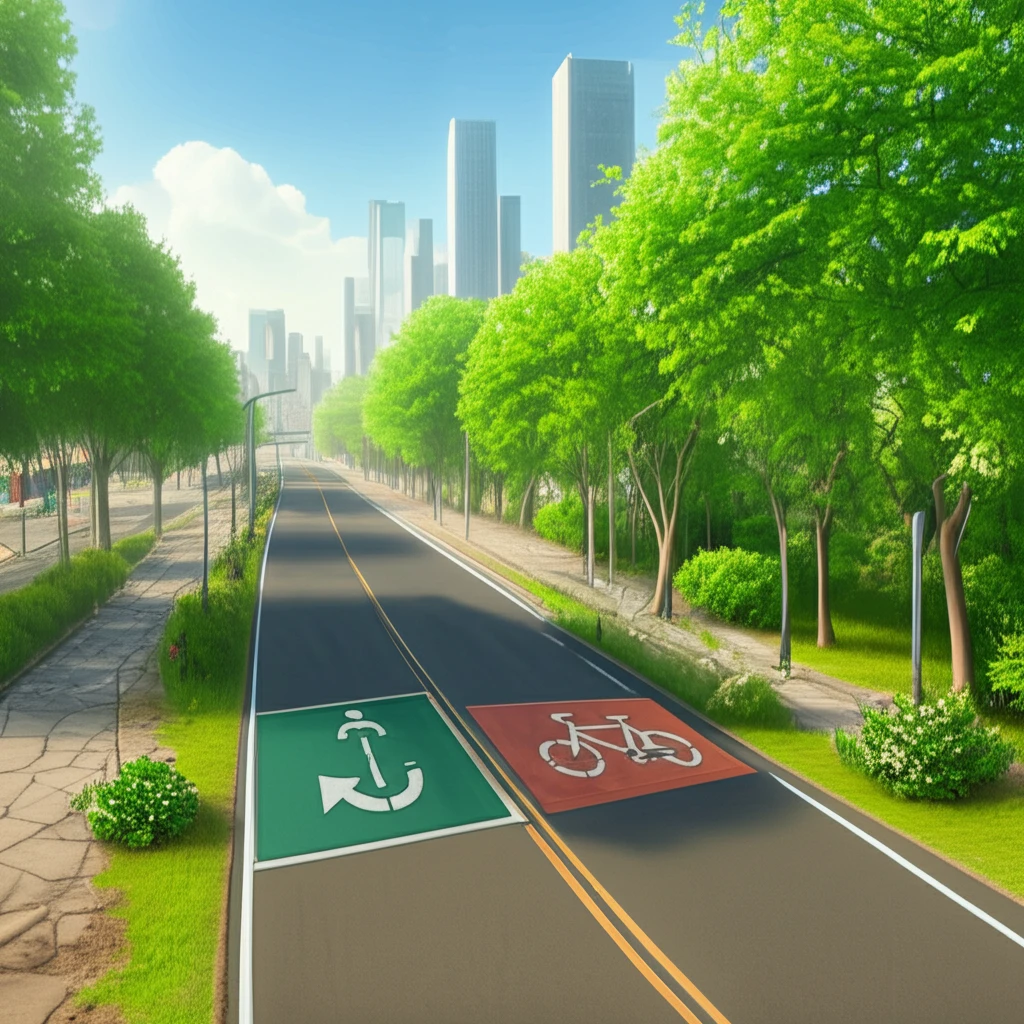
Complete Streets vs. SmartRoads: What Can These Urban Design Philosophies Learn From Each Other?

"Explore how American Complete Streets and Australian SmartRoads are reshaping urban landscapes, and how they can improve by adopting each other's strengths."
For decades, road management in both Australia and America has been primarily focused on easing vehicle flow and reducing traffic jams. However, there's been a shift towards recognizing the important role roads play in our communities. Considerations like road safety, fair access, community integration, and catering to various road users (including public transit, pedestrians, and cyclists) are becoming more important.
Two relatively new methods for designing and managing roads—Complete Streets in the United States and SmartRoads network operations planning in Australia—show this shift. Complete Streets aims to create roads that work for everyone, while SmartRoads focuses on efficient, multi-modal network performance. This article will discuss the Complete Streets movement in America and introduce the SmartRoads management framework, which was created in Victoria, Australia.
We'll compare the scope, focus, and strategies of both frameworks. Although they were developed around the same time, they differ in significant ways. By learning from each other, both approaches can significantly improve how roads are managed and designed in both Australia and the United States.
The Scale and Stakes of Urban Development
With over 82 percent of Texans now living in urban areas, and similar concentration trends across major economies, the design of city streets directly shapes daily life for the vast majority of the population. Urban environments offer diverse perspectives and greater access to resources, including in the medical field, though researchers note that maintaining social cohesion amid density remains an ongoing challenge. Pollution has reached disturbingly high levels in some urban areas, underscoring the urgency of rethinking how streets function within these densely built environments.
Prevailing Street Design Frameworks
Urban street design has historically followed established engineering manuals and traffic-flow models that prioritize vehicle throughput. While these standards have provided a consistent baseline for municipalities, they have been criticized for insufficiently accounting for the needs of pedestrians, cyclists, and transit users. The growing adoption of Complete Streets and SmartRoads reflects a broader recognition that legacy methods may not adequately serve the complexity of modern urban life.
Origins of Modern Street Design Thinking
The emergence of both Complete Streets and SmartRoads as formalized philosophies can be traced to the early 2000s, when transportation planners began challenging car-centric orthodoxy. Complete Streets gained national momentum in the United States after New Hampshire passed the first policy by that name, while SmartRoads developed as a more technology-integrated approach to managing street networks. These milestones marked a shift from viewing streets purely as conduits for vehicles toward treating them as multifunctional public spaces.
What Are the Shared Philosophies Behind Complete Streets and SmartRoads?
Recently, both Australia and the United States have significantly changed their approaches to road planning and traffic management. Previously, road design and traffic management prioritized the efficient movement of motorized vehicles, mainly cars and trucks. However, this focus often came at the expense of public transportation, walking, and cycling infrastructure.
- Complete Streets: Aims for safe roadways for all users, addressing decades of underinvestment in infrastructure for active modes and focusing on safety and equity.
- SmartRoads: Focuses on improving network efficiency for all road users, balancing general traffic, freight, transit, cycling, and walking through multimodal perspectives.
Evolving Definitions and Urban Street Research
Contemporary research continues to refine what 'urban' means in the context of transportation and design, with scholars noting that streetscapes are now understood as defining features of a city or town rather than mere infrastructure. This broadening definition reflects a growing academic and policy consensus that street design is inseparable from broader questions of urban identity and livability. However, rigorous comparative research between competing street-design philosophies remains limited, creating an opportunity for more systematic inquiry.
Criticisms and Shortcomings of Both Approaches
Neither Complete Streets nor SmartRoads has proven immune to implementation challenges. Critics of Complete Streets note that policies can sometimes lead to 'design by committee' outcomes that dilute the original vision or fail to adapt to local context. SmartRoads, meanwhile, has faced pushback for potentially over-relying on technology solutions that may be inequitable or fail in lower-resource settings.
Points of Convergence and Divergence
Complete Streets and SmartRoads share the foundational goal of making streets safer and more accessible, yet they diverge significantly in their mechanisms. Complete Streets emphasizes design standards and policy mandates to ensure streets serve all users, while SmartRoads focuses on data-driven and adaptive technologies to optimize street performance. A meaningful comparison requires examining how each philosophy balances equity, sustainability, and technological integration.
How Can Complete Streets and SmartRoads Improve Road Management?
Both the SmartRoads and Complete Streets frameworks have the potential to make great improvements in road design. By implementing key pieces such as road safety, consideration of all road users, and network-wide operations. With that said, practitioners in America, Australia, and around the world are dealing with similar challenges to transitioning from a vehicle-focused road to roads for everyone. By combining these approaches we can continue working towards safety, equity, and sustainability in our road systems.
Integrating the Two Philosophies
Urban planning experts increasingly suggest that the strongest outcomes arise not from choosing one philosophy over the other, but from hybrid approaches that combine the design inclusivity of Complete Streets with the technological responsiveness of SmartRoads. Such integration demands collaboration between engineers, designers, technologists, and communities. The most effective implementations tend to be those grounded in local needs rather than applied as one-size-fits-all templates.
Where Street Design Is Heading
Emerging trends point toward a future where street design is increasingly adaptive, climate-resilient, and responsive to real-time conditions. Advances in sensor technology, artificial intelligence, and green infrastructure could enable streets that shift function throughout the day, accommodating commuters, pedestrians, and emergency vehicles as needed. The challenge ahead lies in ensuring these innovations remain accessible and equitable across communities of varying resources.
Systemic Barriers to Better Streets
Progress in street design is frequently constrained by fragmented governance, siloed funding streams, and political cycles that favor short-term fixes over long-term transformation. Municipalities often lack the institutional capacity to adopt and maintain innovative street designs at scale. Addressing these systemic barriers is as critical to urban livability as any single design or technological intervention.
How Street Design Shapes Daily Life
Ultimately, the debate between Complete Streets and SmartRoads matters because street design profoundly influences how people experience their cities on a daily basis. A well-designed street can foster social interaction, support local economies, and improve physical and mental health outcomes. Conversely, poorly designed streets can entrench inequality, increase pollution exposure, and undermine community cohesion, making the stakes of getting urban street design right deeply personal for millions of residents.