
Coffee's Hidden Crisis: Unlocking the Secrets of Brown Eye Spot

"Explore the intersection of irrigation, nutrients, and disease in coffee plantations to uncover sustainable farming solutions with Cercospora coffeicola insights."
Coffee, a global commodity cherished by millions, faces persistent threats that challenge its production and sustainability. Among these threats, brown eye spot (BES), caused by the fungus Cercospora coffeicola, stands out as a significant concern for coffee farmers, particularly in Brazil, the world’s largest coffee producer. This disease not only diminishes crop yield but also affects the overall health and resilience of coffee plants, necessitating innovative approaches to manage and mitigate its impact.
Traditional methods of coffee farming are evolving, with increased adoption of irrigation and fertigation techniques aimed at boosting productivity. However, these practices can inadvertently influence the microclimates within coffee plantations, potentially exacerbating the conditions favorable for diseases like brown eye spot. Understanding the complex interplay between irrigation, plant nutrition, and disease development is crucial for devising effective and sustainable disease management strategies.
Recent research leveraging geostatistical analysis is shedding light on the spatio-temporal dynamics of brown eye spot and its relationship with plant nutrients and soil fertility. By examining these factors in irrigated coffee plantations, scientists are uncovering insights that could revolutionize disease management practices, paving the way for more resilient and environmentally conscious coffee farming.
A Common Spot, a Complex Cause
The most common cause of a brown spot on the eye is a choroidal nevus, popularly called an 'eye freckle,' which Book An Eye Test reports is usually as harmless as it sounds. Eye color itself is genetically complex, and Wikipedia notes that the total number of genes contributing to eye color remains unknown, with blue eyes bearing a brown spot linked to a different part of the genome. Social-media content also treats brown spots in blue eyes as a curiosity worth explaining and offers causes and possible treatments. Because several causes are possible, the American Academy of Ophthalmology advises that anyone with unusual vision symptoms should speak with an ophthalmologist.
Nevi, Warning Signs, and Cosmetic Fixes
The standard explanation is that brown spots in the eye, also referred to as nevi, form when melanocytes, or pigment cells, group together much like freckles or moles on the skin. Those pigment cells also produce melanin, which is responsible for the color of hair, skin, and eyes. For spots on the eyelid, available guidance concentrates on common causes, symptoms, treatment options, and warning signs, and on knowing when to seek a doctor for an expert evaluation. In contrast, some popular online content promotes cosmetic 'eye exercises' aimed at altering eye appearance rather than addressing any medical condition.
Thin Historical Record
Formal historical milestones for brown eye spot are scarce in the available material, and nothing located documents a foundational discovery or a dated breakthrough. Instead, widely shared online content treats the topic mainly as a visual curiosity, with items covering brown spots under the eyes and discoloration of the whites of the eye. Unrelated product content, such as a sippy-bottle advertisement, also surfaces in searches for the term, illustrating how loosely 'brown spot' material is organized online. A reliable historical timeline therefore cannot be reconstructed from these sources.
Decoding the Dynamics of Brown Eye Spot
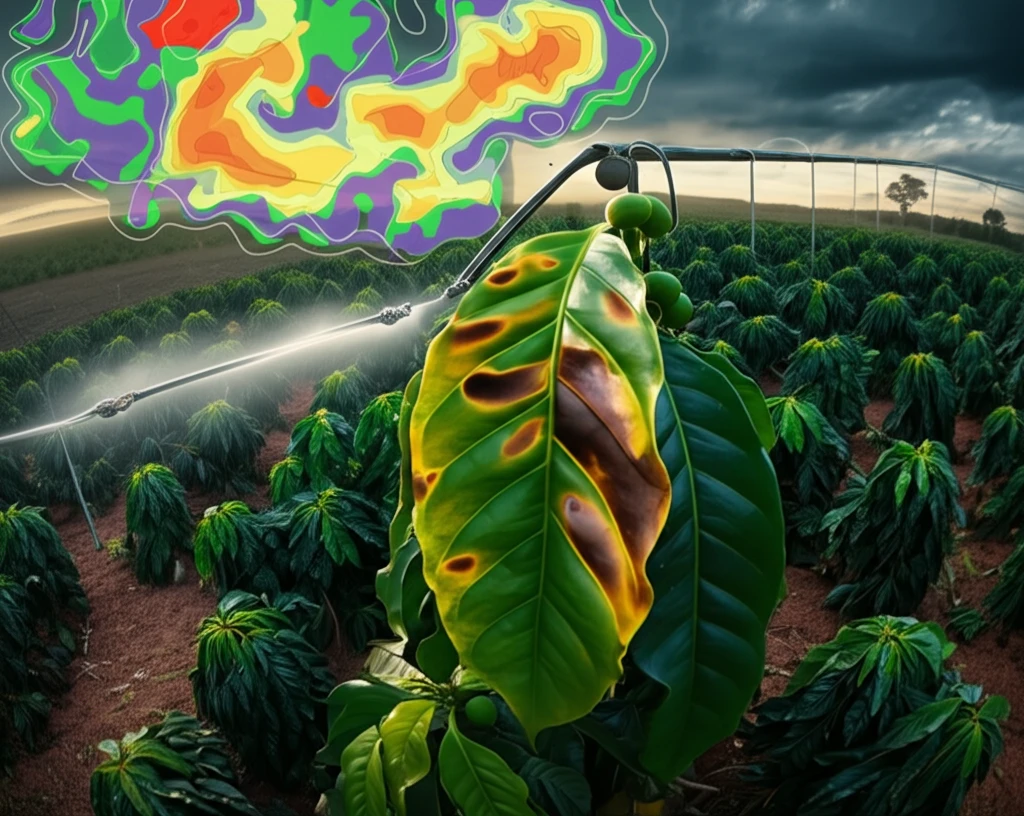
A groundbreaking study conducted in Carmo do Rio Claro City, Minas Gerais, Brazil, meticulously examined the progression of brown eye spot in coffee plantations using center pivot and drip irrigation systems. Over several years, researchers monitored disease incidence, yield, plant mineral nutrition, and soil fertility, collecting extensive data to map the disease’s spread and impact. This comprehensive approach allowed for a nuanced understanding of how various factors contribute to the disease’s severity and distribution.
- Lower average temperatures and cumulative rainfall during periods of high disease incidence.
- High relative humidity, often exceeding 80% due to irrigation, exacerbating disease spread.
- Significant correlations between disease incidence and leaf nutrients like boron (B), potassium (K), and phosphorus (P).
Cercospora coffeicola Under the Microscope
Brown eye spot (Cercospora coffeicola) is one of the main fungal diseases of coffee, and a preprint reports it causes a significant drop in crop productivity and beverage quality in Brazil. Researchers note that while many efforts have aimed to develop coffee plants resistant to different Cercospora species, studies specifically on C. coffeicola are still incipient. A preprint examining agroclimatic zoning for the disease's incidence is currently under review. Because this work is early-stage and preprint-based, its conclusions should be treated as preliminary.
What Field Data Shows
In Brazil, researchers tracked brown eye spot incidence and severity on coffee leaves during the vegetative stage, plotting the disease's progress curves over time together with local climate data. The study's results-and-discussion section treats these field curves as central evidence of how the disease behaves in real growing conditions. Most other results for this angle do not engage with the coffee disease at all, so no documented counter-argument or failed approach could be cross-checked across the available sources.
Freckles, Pigment, and Beauty Claims
Sources compare brown spots by cause and appearance: visionconcern.com reports that a brown spot in the eye is often a harmless eye freckle, while Moorfields Eye Hospital distinguishes pigmented from non-pigmented spots. Moorfields explains that the conjunctiva is the transparent layer covering the white part of the eye, which frames where many such spots appear. Meanwhile, social-media content frames a blue eye with a single brown spot mainly as a distinctive beauty feature. The sources differ in tone and depth, so specifics such as prevalence are not compared consistently across them.
Toward Sustainable Solutions
The findings from this study pave the way for precision agriculture techniques in coffee farming. By understanding the spatial distribution of disease and its dependence on nutrients and microclimate factors, farmers can implement targeted fertilization and spraying systems. This approach not only optimizes resource use but also reduces environmental impact by minimizing the application of fungicides and fertilizers. Ultimately, integrating this knowledge into disease management practices will enhance the sustainability of coffee production, ensuring a stable supply of this beloved commodity for future generations.
Spots, Specks, and Shared Vocabulary
Mayo Clinic describes eye floaters as spots in vision that may look like black or gray specks, strings, or cobwebs, presenting them as a recognized, named symptom. This expert framing shows that 'spots' in the eye are a defined clinical topic rather than an informal concern. In the context of this article, that terminology is worth distinguishing from brown eye spot, the coffee disease, since casual online usage conflates the two. The two subjects overlap only in the shared word 'spot.'
Portable Tools and Sharper Triage
Future eye-care monitoring appears to be moving toward more portable tools: one market outlook reports that handheld applanation tonometers offer portability and ease of use for on-the-go professionals, while tabletop versions provide precise measurements in stable clinical settings. In the wake of events such as an eclipse, public-health coverage notes that a central blind spot can signal retinal damage even though dry eyes or a gritty sensation may be short-lived, and advises that such a symptom warrants medical help. These reports point to earlier detection and clearer triage for eye conditions, though both describe ongoing rather than completed transitions.
Digital Detection Meets Trust
Digital detection is entering coffee disease surveillance: an Indonesian study applies digital image processing, including the Hough transform and Euclidean distance methods, to detect brown eye spot on coffee leaves. Deploying such systems at scale, however, sits within the broader challenge of AI credibility and adoption noted in the wider literature. The systemic problem is therefore not only technical accuracy but also whether growers and regulators will trust automated diagnosis. Related material on 'blind spot detection' in other industries shows the same monitoring logic spreading well beyond agriculture.
Spotting as a Game
One way communities are drawn into spotting-and-documenting phenomena is through gamified apps such as CatchCat, where players photograph real cats, unlock collectible cat cards, explore community sightings, and battle rival crews in Alley Clash. That pattern of rewarding public observation illustrates how collecting and sharing sightings is becoming a familiar, accessible activity for ordinary people. While the app itself is unrelated to coffee, it is a useful example of how observation-driven participation is packaged and motivated in everyday life.