
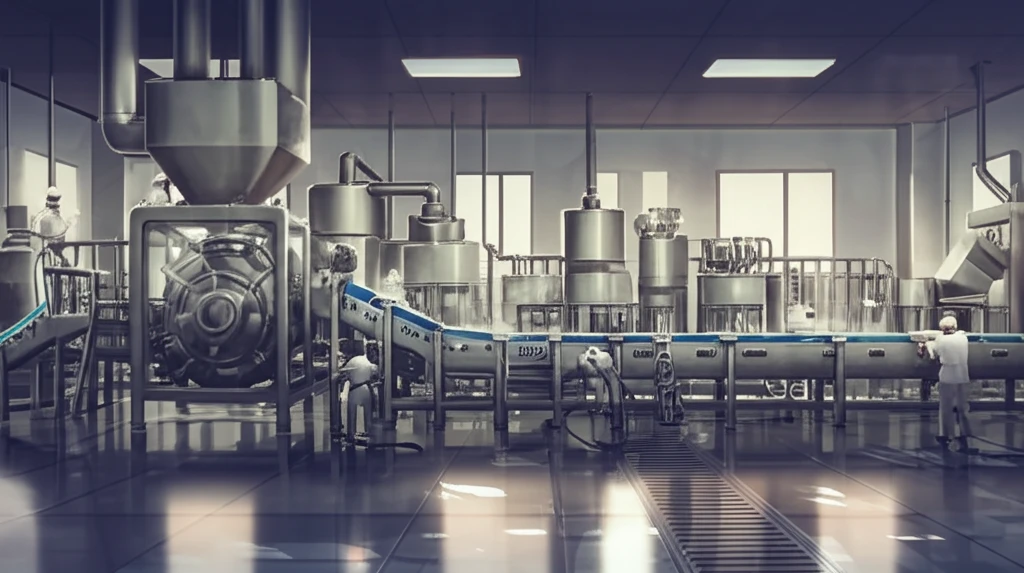
Clean Sweep: How to Keep Food Processing Equipment Germ-Free

"Mastering Hygiene for a Safer Food Supply: A Guide to Maintenance and Sanitation"
In the world of food production, it's easy to focus on the ingredients and recipes that make our favorite snacks and meals. However, behind the scenes, there's a crucial aspect that often goes unnoticed: the cleanliness and maintenance of the equipment used to process our food. Just like a kitchen at home, food processing equipment needs regular cleaning and care to prevent the buildup of bacteria and other contaminants.
Imagine a conveyor belt carrying cookies, or a giant mixer blending cake batter. If these machines aren't properly cleaned, they can become breeding grounds for harmful microorganisms, leading to foodborne illnesses and product recalls. This is where personal hygiene and good maintenance practices come into play. They are the unsung heroes of food safety, ensuring that the equipment used to create our food is as clean and safe as the ingredients themselves.
This article explores the essential steps and strategies for maintaining food processing equipment. From understanding the importance of personal hygiene for maintenance staff to selecting the right cleaning products and implementing effective maintenance schedules, we'll uncover the secrets to keeping our food supply safe and sound.
High Stakes and the Rise of Automated Cleaning
Proper cleaning of food processing equipment is key to ensuring food safety and maintaining high-quality standards. Clean-in-place (CIP) is the automated method most commonly used to clean the interior surfaces of pipes, vessels, equipment, filters and associated fittings without major disassembly, particularly for piping, tanks and filters. Lines handling products such as onions typically combine multiple processing units — including peelers, automatic orientation units, dicers and slicers — each of which presents its own cleaning demands. Ongoing research into cleaning food processing equipment exists precisely because the consequences of inadequate sanitation can be potentially serious.
How Cleanability Is Designed and Verified
Sanitation in food processing is one of the most significant ways to keep consumers healthy, yet plant owners face food recalls that are increasing at an alarming number — a wake-up call for the industry. To determine whether closed process equipment can be cleaned reliably, researchers apply computational fluid dynamics (CFD) simulations to investigate equipment design with respect to cleanability. These CFD simulations are validated using the standardized cleaning test proposed by the European Hygienic Engineering and Design Group (EHEDG). The market for hygienic easy-to-clean equipment spans bakery and confectionery, meat and poultry, dairy products, seafood and fish, and alcoholic and non-alcoholic beverages.
A Sector Built on Long Experience
Long-established suppliers such as Cimbria have built their businesses around supplying grain, seed, food and feed processing equipment, reflecting decades of accumulated engineering experience in the sector. Trade publications such as FoodNavigator cover daily developments in food ingredients, flavours, starch and additives, charting how food science has evolved in step with processing practice. Even popular food histories — such as programmes tracing the origin of dishes like biryani — illustrate how food preparation traditions and processing methods have developed together over time. This long lineage shows that today's sanitation standards are the product of generations of incremental refinement.
The Pillars of Equipment Hygiene
Maintaining the cleanliness of food processing equipment involves several key areas. It's not just about wiping down surfaces; it's a comprehensive approach that covers everything from the design of the equipment to the behavior of the maintenance personnel.
- Equipment Design: Opt for equipment with smooth surfaces, rounded corners, and easy access for cleaning.
- Material Selection: Use materials that are non-corrosive, non-absorbent, and compatible with cleaning agents.
- Maintenance Schedules: Establish regular cleaning and maintenance schedules to prevent the buildup of contaminants.
- Personal Hygiene: Ensure that maintenance personnel follow strict hygiene practices, including handwashing and wearing clean clothing.
Research Informs Cleaning Frequencies
Food safety is of utmost importance in the food processing industry, and different regions have varying regulations regarding the cleaning and sanitation of processing equipment. For equipment such as an onion ring frying line, operators consult industry research reports on food processing equipment maintenance to determine appropriate cleaning frequencies. Much of this research is shared and debated openly on platforms such as ResearchGate, which hosts more than 160 million publication pages and connects over 25 million researchers. This ongoing exchange of research and industry guidance helps operators keep pace with evolving cleaning standards across jurisdictions.
Why Cleaning Is Harder Than It Looks
Keeping equipment clean in food and beverage processing plants is important, but it is not easy. Food processing facilities are divided into distinct zones, each with specific cleaning requirements, and food contact surfaces — equipment and surfaces that directly touch food — require the highest level of sanitation. If cleaning is neglected, the consequences compound quickly: post-processing cleaning must follow the same sequence after every session to prevent the overnight accumulation of protein residues that serve as a substrate for overnight bacterial growth. In practice, this means crews rely on everything from industrial wipes and cleaning cloths for surface cleaning to full-scale janitorial operations.
Benchmarking Options Side by Side
For operators weighing cleaning approaches and equipment options, side-by-side comparison tools help structure the decision. Platforms such as Versus offer comparison across more than 100 categories, with detailed specifications, filters and clear data visualizations that let buyers weigh options against one another. Complementary tools such as Versusutil focus on finding alternatives, letting a user enter a product or service and surface relevant comparable options. Used together, these platforms provide a straightforward, data-driven way to benchmark cleaning equipment and supplies before purchase.
A Commitment to Cleanliness
Maintaining the hygiene of food processing equipment is an ongoing commitment that requires vigilance, attention to detail, and a culture of cleanliness. By implementing the strategies outlined in this article, food manufacturers can minimize the risk of contamination, protect public health, and ensure the safety and quality of our food supply. It's an investment in peace of mind, knowing that every step has been taken to keep our food safe from harmful contaminants.
Experts: Treat Cleaning as Non-Negotiable
Experts argue that sanitation in food processing is one of the most significant ways to keep consumers healthy, warning that the increasing number of food recalls should be a wake-up call to plant owners. The recurring recommendation is to leave food processing plant cleaning to experts rather than relying on ad hoc in-house efforts. The same principle extends to the wider cleaning environment: even for familiar appliances such as dishwashers, experts offer tested techniques for keeping equipment genuinely clean. Across contexts, the through-line is consistent — consistent, expert-led cleaning is what protects both consumers and equipment.
Automation, Data and Urban Growth
Urbanization, food safety regulations and demand for convenience are expected to sustain growth in food processing and packaging markets. The same trend of increasing urbanization appears to be a pivotal driver for the cleaning equipment and supplies market, as more people migrating to urban areas escalates demand for efficient cleaning solutions. At the equipment level, the frontier is data: processing lines generate data, and purpose-built food processing software integrates machine, process and business-level data to give operators the insights and control to stay ahead. High initial costs and raw material volatility remain challenges that could hinder expansion.
Sanitation Within a Strained Food System
The need for clean processing equipment sits within a larger, more turbulent food system. As one commentary reports, a food-complacent public is a public ill-equipped to address the critical juncture confronting every level of the agri-food system. That juncture combines a range of transformations and challenges, from an influx of agritech innovations to what it describes as history's most extensive food crisis. Within that context, sanitation investment looks less like a routine operational cost and more like part of the resilience the sector must build.
Better Tools, Easier Work for Cleaning Crews
Behind every sanitation standard are the crews who do the cleaning, and the human cost of slow, inefficient methods is measurable. A case study of a LEVO washdown station in food production reports significantly reduced cleaning times and labour costs. Higher pressure also meant a reduction in water usage for the cleaning process, due to the increased cleaning impact measured in kilograms of force. The system additionally delivered higher quality chemical application via foaming equipment, showing how better tools translate directly into faster, safer work for cleaning staff.