
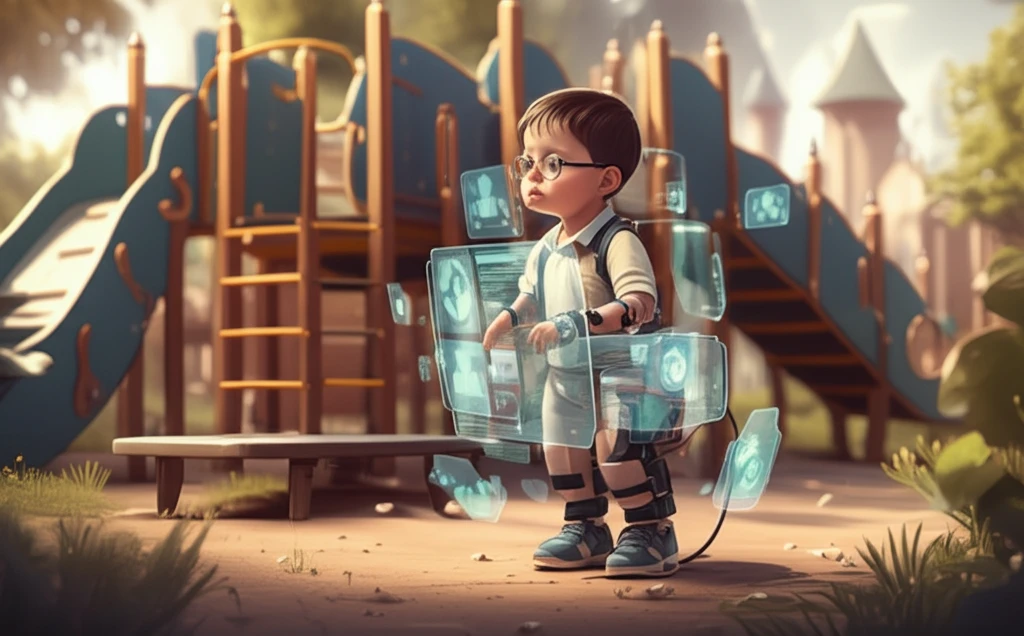
Cerebral Palsy & Activity: Can AI Help Kids Move More?

"New tech offers hope for more accurate, personalized tracking of physical activity in children with cerebral palsy."
Cerebral palsy (CP), the most common physical disability in children, often brings challenges to physical activity. For many kids with CP, staying active can be tough, but it’s incredibly important for their overall health and well-being. That’s where new technology, like machine learning, comes into play, offering innovative ways to track and encourage physical activity.
Traditionally, measuring physical activity in children, including those with CP, has relied on methods like questionnaires or wearable sensors. However, these approaches often fall short. Questionnaires can be subjective and rely on memory, while standard wearable sensors might not accurately capture the nuances of movement in children with CP, potentially underestimating their activity levels.
But what if we could use smart technology to understand exactly how kids with CP move and find ways to help them be more active? Researchers are now exploring machine learning (ML) algorithms to more accurately identify the types and intensity of physical activity in children with CP. This approach could lead to personalized interventions and a better understanding of how to promote healthier, more active lifestyles.
Physical Activity Levels in People with Cerebral Palsy
Approximately 64-65% of adolescents and young adults with cerebral palsy meet physical activity guidelines, though only about 56% engage in physical activity at least once per week. Many adults with CP experience a decline in gross motor function over time, which can further reduce their activity levels. Research consistently shows that people with CP are less physically active than their typically developing peers.
Traditional Approaches and Their Shortcomings
Standard management of cerebral palsy involves a multidisciplinary approach including physical therapy, assistive devices, and pharmacological interventions. Despite these established methods, a randomized trial found that a physical activity stimulation program for children with CP did not improve physical activity levels. This gap between intervention and real-world outcomes highlights the need for new strategies.
Understanding Cerebral Palsy Through History
Cerebral palsy was first studied and defined by Dr. William John Little in 1853, making it one of the earliest recognized movement disorders. The primary indicator that a child may have CP is a delay in reaching motor milestones such as rolling over, sitting, standing, or walking. Since these early foundational discoveries, physical activity has emerged as an essential tool for improving quality of life for children and young people with CP.
Machine Learning for Accurate Activity Tracking: How Does It Work?
Machine learning steps in to bridge the gap by analyzing data from wearable sensors to accurately classify different types of physical activity. This is especially crucial for children with CP, whose movements may not fit standard activity profiles.
- Data Collection: Researchers used ActiGraph GT3X+ accelerometers to gather movement data from children with CP during structured activities.
- Feature Extraction: The raw data was processed to extract key features, like the intensity and frequency of movements.
- Algorithm Training: Machine learning algorithms like Random Forest (RF), Support Vector Machine (SVM), and Binary Decision Tree (BDT) were trained to recognize different activity types.
- Cross-Validation: The models were tested rigorously to ensure they accurately classified activities across different children.
Evidence on Physical Activity Interventions
A systematic review found very low certainty evidence that strength training improves strength-related outcomes for adults with cerebral palsy. However, there is preliminary evidence suggesting that exercise can relieve pain and fatigue, two common secondary conditions among people with CP. These findings indicate that while the evidence base is still developing, physical activity holds promise for addressing key quality-of-life concerns.
Barriers and Gaps in Physical Activity for CP
Cerebral palsy is a persistent disorder characterized by limitations in locomotion and posture, affecting muscle tone and voluntary movements. Lack of optimal physical activity may contribute to the development of secondary conditions associated with CP, such as chronic pain, fatigue, and osteoporosis. This creates a challenging cycle where the condition itself makes physical activity harder, yet inactivity worsens outcomes.
Comparing Approaches to Physical Activity in CP
While specific head-to-head comparisons of intervention approaches for physical activity in cerebral palsy are limited, research generally points to a need for individualized strategies that account for the wide variation in functional ability across the CP population. The field continues to explore how different methods and technologies might better serve children and adults with varying levels of motor impairment.
The Future of Activity Tracking: What Does This Mean for Kids with CP?
The development of machine learning models for activity recognition opens up exciting possibilities for children with CP. By accurately tracking physical activity, these models can help clinicians and families better understand a child’s movement patterns and tailor interventions to promote more active lifestyles. This personalized approach can lead to improved motor skills, increased participation in daily activities, and enhanced overall well-being for children with CP.
Bringing It Together
The body of research on physical activity and cerebral palsy reveals both promise and persistent challenges. While conventional methods have laid important groundwork, the evidence suggests they are not fully sufficient to help people with CP achieve optimal activity levels. Emerging tools and approaches, including potential AI-driven solutions, may help bridge this gap and improve outcomes.
What Lies Ahead for CP and Physical Activity
Exercise, sports, and recreation are recognized as important for the health and well-being of people with cerebral palsy, offering improved quality of life including better mood and well-being. Physical activity can also increase muscle strength, bone health, and stamina while reducing symptoms of depression and anxiety. Organizations like the Cerebral Palsy Foundation are working to raise awareness and collaborate with stakeholders to change the status quo for people with CP.
The Wider Picture
Addressing physical activity in cerebral palsy requires not only individual-level interventions but also broader systemic changes in how healthcare, education, and community systems support people with CP. Barriers such as access to services, cost of equipment, and public awareness remain significant challenges that must be tackled alongside technological innovations.
Real-World Results and Patient Experiences
A 12-week mixed-method physical exercise program was shown to improve physical fitness, reduce stress and anxiety, and enhance quality of life in adolescents with cerebral palsy. Similarly, community-based high-level mobility programmes have shown promise in promoting sustained participation in physical activity. For non-ambulant children with CP, physical activity is seen as critically important by both parents and children, suggesting that personal motivation and family support are key drivers of real-world impact.