
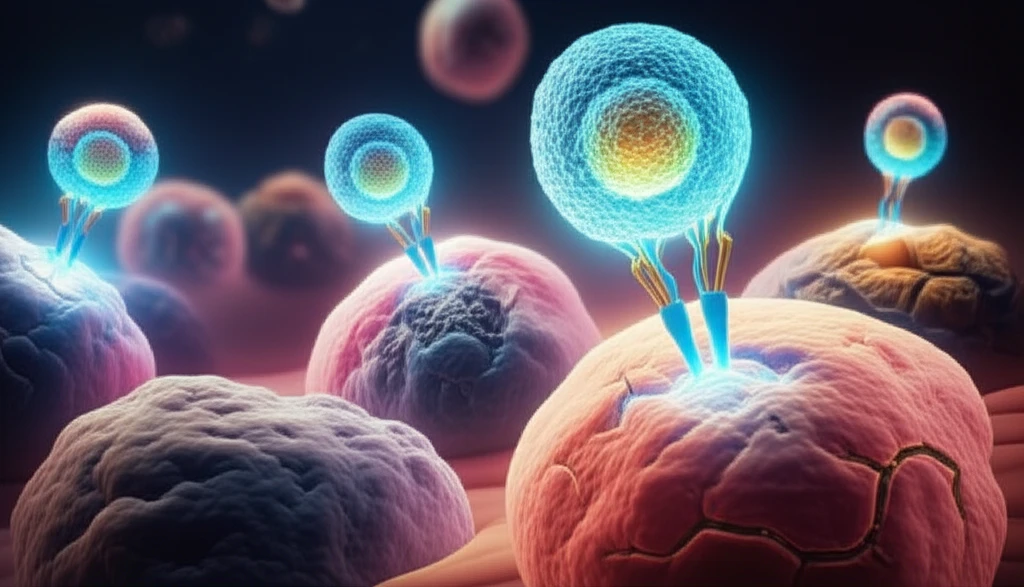
CAR-T Cell Therapy: A Revolutionary Approach to Fighting Cancer

"Understanding Personalized Immunotherapy and Its Impact on Cancer Treatment"
In the relentless battle against cancer, medical science continually seeks innovative treatments. Among the most promising advancements is CAR-T cell therapy, a form of immunotherapy that has revolutionized cancer treatment. This personalized approach utilizes the patient's own immune cells to target and destroy cancer cells, offering hope where traditional methods have faltered.
This article delves into the world of CAR-T cell therapy, exploring its mechanisms, clinical efficacy, potential side effects, and the future implications for cancer treatment. We'll break down the science behind this revolutionary treatment, making it accessible and understandable for everyone.
As we explore the intricacies of CAR-T cell therapy, we aim to empower you with knowledge. We'll discuss the latest developments, clinical trial results, and what this innovative therapy means for patients and their families.
Utilization and Eligibility
Recent research has examined national inpatient trends in CAR-T-cell therapy utilization among pediatric and adult populations in the United States from 2017 to 2022, using weighted annual estimates and 95% confidence intervals. The Center for International Blood and Marrow Transplant Research collects longitudinal clinical data on CAR-T and other cellular therapies, supporting analysis of treatment activity and outcomes. A 2024 study reported that, among patients with advanced or metastatic cancer, the overall eligibility for CAR-T therapy was 3.9% and the potential response rate was 3.4%, despite a high response rate among treated patients.
Established Benefits and Limits
CAR-T therapy has developed through approaches intended to improve anti-tumor efficacy, expand clinical effectiveness, and limit toxicity. Proposed strategies include combining CAR-T cells with other anticancer therapies and using innovative CAR-engineering methods to produce more powerful cells with improved anti-tumor activity and decreased toxicity. A major limitation remains the difficulty of effectively infiltrating solid tumors, partly because of the immunosuppressive tumor microenvironment.
From Concept to Clinical Feasibility
CAR-T cells were developed to identify and eliminate target cells independently of major histocompatibility complex, or MHC, antigen presentation. The field's history spans theoretical concepts in adaptive biology, advances in molecular biology, T-cell construct engineering, and clinical practice. A Memorial Sloan Kettering team built the first effective CAR-T cells targeted against a prostate cancer antigen; these second-generation cells survived, proliferated, and killed prostate cancer cells in the laboratory, establishing the feasibility of the approach.
How CAR-T Cell Therapy Works: A Step-by-Step Guide
CAR-T cell therapy is a highly personalized treatment that involves several key steps. The process begins with collecting T cells from the patient's blood. These T cells are a type of white blood cell that plays a crucial role in the immune system.
- Collection: T cells are extracted from the patient's blood.
- Modification: The T cells are genetically engineered to express CARs.
- Expansion: The modified T cells are multiplied in the lab.
- Infusion: The CAR-T cells are infused back into the patient.
- Action: CAR-T cells bind to cancer cells and kill them.
Expanding CAR-T Technology
Recent reviews describe CAR-T therapy through its cellular structure, clinical history, and continuing technological development. The treatment has made substantial progress particularly in hematological malignancies, while application in solid tumors remains challenging. Current research includes dual-target CAR-T designs, universal and allogeneic engineering strategies intended to mitigate graft-versus-host disease and host rejection, and emerging in vivo gene-delivery platforms that could bypass conventional ex vivo manufacturing.
Remaining Uncertainties
CAR-T therapy has shown promise, but its benefits should not be treated as universal or guaranteed. Outcomes may vary across cancers and patient populations, and important questions remain about safety, durability, access, and effectiveness outside the settings where the therapy has been most extensively studied. These uncertainties support continued clinical evaluation rather than assuming that CAR-T is suitable for every patient.
CAR-T and CAR-NK
Compared with CAR-T cells, CAR-NK cells are reported to have a higher safety profile regarding cytokine release syndrome and neurotoxicity. CAR-NK cells are also naturally cytotoxic, making them a promising alternative, while CAR-T therapy has been widely adopted for certain blood cancers. However, CAR-NK approaches remain limited by insufficient tissue infiltration and low transduction efficiency.
The Future of CAR-T Cell Therapy
CAR-T cell therapy represents a significant leap forward in cancer treatment. Its potential to harness the body's own immune system to fight cancer is truly remarkable. While there are challenges, including the high cost and potential side effects, ongoing research and development are constantly improving the efficacy and safety of this innovative therapy. As we move forward, CAR-T cell therapy promises to be a key player in the future of cancer treatment, offering renewed hope for patients worldwide.
A Promising but Evolving Therapy
CAR-T therapy represents a rapidly evolving form of cancer treatment that combines immune-cell biology with genetic engineering. Its progress has created meaningful hope, particularly where existing treatment options are limited, but important limitations and side effects remain. The field's long-term value will depend on improving effectiveness, safety, and applicability across a broader range of cancers.
Multifunctional and Scalable CAR-T
The clinical landscape is increasingly focused on multifunctional CAR-T cells, with registered studies showing a rise in multiantigen targeting and strategies designed to improve safety and efficacy. Researchers are also examining approaches that integrate multiple functions within a single CAR-T strategy. One market projection estimates that the CAR-T cell therapy market could grow from USD 5.08 billion in 2026 to USD 16.79 billion by 2035, representing a projected CAGR of 14.2% during 2026–2035.
Access Beyond the Laboratory
The broader impact of CAR-T therapy depends not only on biological advances but also on whether patients can reach specialized treatment services. Health systems must address practical questions involving treatment delivery, monitoring, reimbursement, and equitable access. These systemic factors may influence how widely the therapy benefits patients in routine care.
From Trials to Patient Care
Real-world CAR-T initiatives are examining how real-world data can support assessment of the therapy's long-term value and impact, including work focused on diffuse large B-cell lymphoma and acute lymphoblastic leukemia. Healthcare systems are also addressing challenges involving access, delivery, and reimbursement. Clinicians continue to compare real-world outcomes and toxicity with clinical-trial experience for therapies such as liso-cel and axi-cel, which have shown promising efficacy and manageable safety profiles in certain blood cancers.