
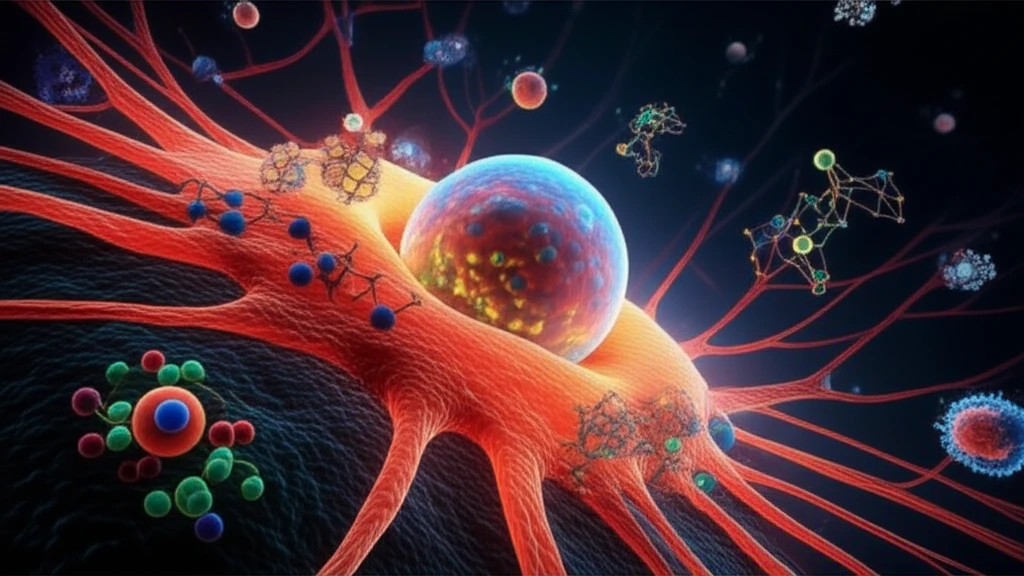
Cancer's Kryptonite: How a Breakthrough in the Lab Is Changing Treatment

"Scientists have discovered a new way to fight cancer by combining existing drugs, offering new hope in the fight against this deadly disease."
Cancer, a word that strikes fear into the hearts of many, is a formidable foe. It’s a disease that has challenged medical science for decades, and while we've made significant strides in treatment, finding new and effective approaches remains a constant battle. Now, a new study published in Oncotarget, offers a beacon of hope: a potentially game-changing approach to cancer treatment that combines existing drugs in a novel way.
The research, led by Priyanka Saini, Yizhu Li, and Matthias Dobbelstein, dives deep into the inner workings of cancer cells and how they respond to treatment. Their work focuses on the interaction of existing chemotherapy drugs with inhibitors of checkpoint kinases like Wee1, ATR, and Chk1. Essentially, the scientists have found a way to make cancer cells more vulnerable, increasing the effectiveness of existing treatments.
This isn't just a minor adjustment to current treatments. The researchers' work shows that combining these drugs can lead to a substantial improvement in outcomes, potentially improving survival rates and reducing the suffering of those battling cancer. It's a complex topic, but the implications are clear: this could be a turning point in how we approach cancer treatment.
Why WEE1 Matters
WEE1 inhibition is being investigated as a way to disrupt cancer cells' ability to manage DNA damage and cell-cycle stress. The approach may be particularly relevant in tumors with defects in checkpoint control, but its overall clinical impact remains under study. Current evidence supports cautious optimism rather than a settled change in standard cancer care.
Promise and Constraints
WEE1 is considered a rational therapeutic target, especially in tumors with TP53 mutations, because it participates in DNA-damage responses and cell-cycle regulation. However, reviews identify acquired resistance, toxicity, and patient selection as continuing obstacles to clinical implementation. Earlier WEE1 inhibitors also suffered from off-target effects, encouraging the development of more selective agents. Research has additionally reported that WEE1 inhibitors can activate the GCN2-mediated integrated stress response and may synergize with defects in mRNA translation.
From Checkpoint Biology to Therapy
The development of WEE1-targeted treatment grew from research into how cancer cells regulate DNA damage and progression through the cell cycle. Early work established the biological rationale for interfering with this checkpoint, while later drug-development efforts tested whether that vulnerability could be exploited therapeutically. The field has since moved toward more selective inhibitors and biomarker-guided investigation, although the clinical significance of these milestones remains under evaluation.
Unlocking the Power: How Scientists Are Changing Cancer Treatment
The core of this research revolves around the concept of "checkpoint kinases." These are proteins within cancer cells that act like roadblocks, preventing the cells from being destroyed by treatments. By targeting and inhibiting these checkpoints, scientists can essentially disarm the cancer cells, making them more susceptible to the effects of chemotherapy drugs like gemcitabine.
- Wee1 Inhibitors: These compounds specifically target the Wee1 protein, a critical player in cell division.
- ATR Inhibitors: These work by targeting the ATR kinase, which is activated by DNA damage, allowing the cancer cell to continue to replicate with the damaged DNA.
- Chk1 Inhibitors: These target Chk1 which when suppressed, the DNA damage becomes overwhelming, leading to cell death.
New Combination Strategies
Recent research is examining WEE1 inhibitors in combination with other anticancer treatments. A July 2026 study investigated azenosertib with antibody-drug conjugates, reasoning that ADCs produce antitumor effects through DNA damage or mitotic disruption and may therefore complement WEE1 inhibition. Another 2026 study reported WEE1 as a promising target for colorectal cancer with acquired resistance to EGFR inhibition and supported evaluating WEE1 inhibitors alone or with DNA-damaging agents. A separate review emphasizes scaffold optimization and electron-withdrawing group insertion in the design of next-generation WEE1 inhibitors.
Resistance and Tolerability
The case for WEE1 inhibition is tempered by unresolved problems in acquired resistance, toxicity, and patient selection. These issues complicate efforts to determine which patients are most likely to benefit and how treatment should be optimized. Preclinical work on orally available, selective Wee1 inhibitors has reported increased DNA damage, tumor-cell mitosis, and tumor regression in vivo, but those findings do not by themselves establish clinical success. The central challenge is translating these experimental effects into durable and tolerable treatment.
Comparing WEE1 Inhibitors
Comparative literature examines AZD1775 alongside azenosertib, also called ZN-c3, and Debio 0123. The comparison guide focuses on their performance, supporting experimental data, and the methods used in key experiments. A broader literature review evaluates WEE1 inhibitors using evidence from both preclinical and clinical studies. These comparisons are intended to help researchers and drug-development teams assess differences among candidate inhibitors rather than treat the class as a single uniform product.
A Glimmer of Hope in the Fight Against Cancer
The research into Wee1 inhibitors and their effects on cancer cells represents a major step forward in the ongoing battle against this disease. By combining existing drugs in new ways, scientists are able to unlock the potential to make treatments more effective and improve patient outcomes. While more research is needed, the results of this study are encouraging, offering a significant step forward in cancer treatment and giving hope to those battling this terrible disease.
A Promising but Unfinished Field
WEE1 inhibition represents a biologically grounded strategy for exploiting weaknesses in cancer-cell checkpoint control. The research direction is promising, particularly where tumors depend heavily on damage-response mechanisms, but the available evidence also points to important limits. Resistance, toxicity, and the challenge of selecting appropriate patients mean that the approach should be viewed as developing rather than definitive.
Biomarkers and Precision Treatment
A major future direction is identifying predictive biomarkers for WEE1-inhibitor treatment. A 2024 systematic review examined WEE1's role in tumor progression and drug resistance while summarizing the predictive biomarkers being studied. Such work could help clarify which tumors are most likely to respond and support more precise clinical development. The review frames biomarker discovery as an important part of advancing WEE1-directed therapy.
Combining Targeted Therapies
The broader treatment challenge is that antibody-drug conjugates have transformed targeted cancer therapy while resistance and limited efficacy remain important concerns. Research is therefore testing whether the selective WEE1 inhibitor azenosertib can enhance ADC activity. The rationale is that ADCs carrying topoisomerase I payloads can generate DNA damage, creating a potential basis for combination treatment. This strategy reflects a wider effort to make targeted therapies work more effectively together.
From Mechanism to Patients
WEE1 inhibition may lead to mitotic catastrophe and cell death, while WEE1 overexpression has been associated with tumor progression, cancer-cell survival, and poorer treatment outcomes. Clinical development is beginning to test these ideas in patients, including a phase 1 dose-escalation trial of Debio 0123. Separately, research on the clinically advanced inhibitor adavosertib reported potent anti-leukemic activity in 18 of 27 high-risk or relapsed acute lymphoblastic leukemia specimens at concentrations below those attainable clinically, independent of TP53 mutation status. These findings are encouraging but remain different from demonstrating a broadly effective treatment for patients.