
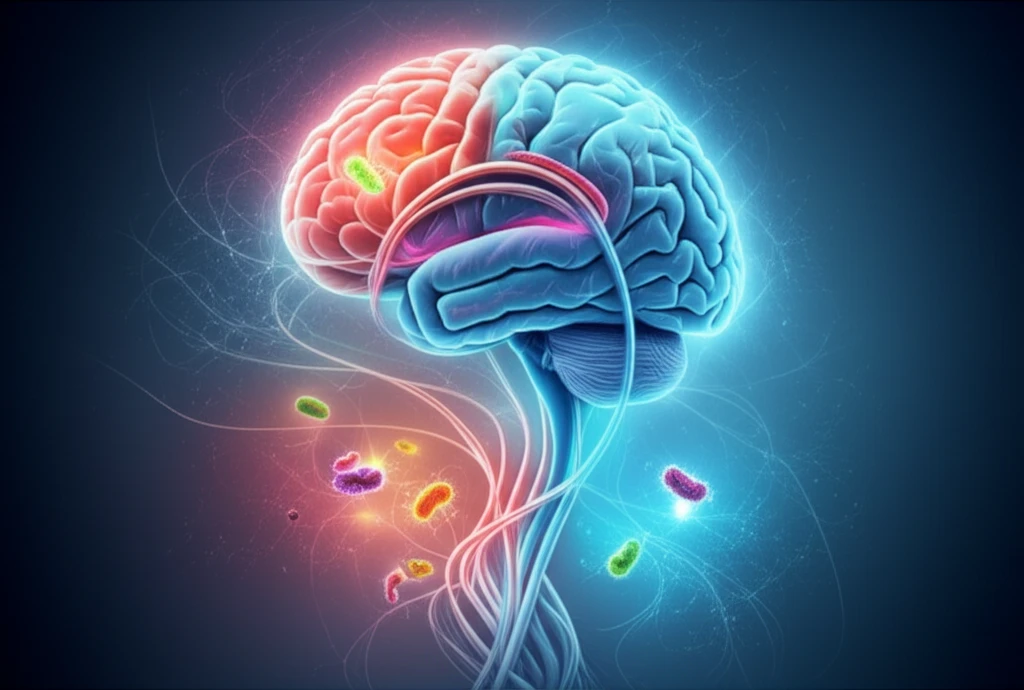
Can Probiotics Ease Your Stress? The Gut-Brain Connection Explained

"New research explores how specific probiotics can alleviate stress and anxiety by influencing the gut microbiota and reducing inflammation in the brain."
Feeling stressed? You're not alone. In today's fast-paced world, stress and anxiety are common challenges. While various coping mechanisms exist, emerging research highlights a fascinating connection between your gut and your brain, suggesting that probiotics might play a role in managing stress.
The gut microbiota, the community of microorganisms living in your digestive system, is increasingly recognized for its influence on various aspects of health, including mental well-being. This article explores how specific probiotics can potentially alleviate stress and anxiety by modulating the gut microbiota and reducing inflammation in the brain.
Drawing from a recent study, we'll delve into the science behind this gut-brain connection, examining how a multi-strain probiotic treatment impacts stress-related behaviors, gut health, and brain inflammation in a mouse model. Get ready to discover a new perspective on stress management and the potential of probiotics.
Probiotics: Promise and Evidence Gaps
A review published October 17, 2025, examines probiotics, prebiotics, and synbiotics in relation to the gut–brain axis, synthesizing proposed mechanisms and therapeutic potential while highlighting limitations and research gaps frontiersin.org. A January 26, 2026 review focuses on probiotics and disturbances along the gut–brain axis in major depressive disorder (MDD), and likewise identifies persistent gaps in the literature and directions for future studies frontiersin.org. Another review describes pro- and prebiotic supplements as popular products with potential roles in intestinal and gut–brain-axis function and in preventing or treating some mental disorders . Taken together, these sources describe an area of active investigation, not an established, uniformly effective treatment.
A Growing Gut–Brain Research Focus
A 2025 review describes probiotics as live microorganisms that confer health benefits to the host and explores their potential as a nutritional approach to stress management. It places this interest within a growing understanding of the gut–brain axis and the possible links between gut health and mental health. The source presents probiotics as promising, while framing their role in stress support as an area of current understanding rather than a settled historical milestone.
The Gut-Brain Axis: How Your Gut Impacts Your Mental State
The gut-brain axis is a complex communication network that links your digestive system and your brain. This intricate system involves various pathways, including the vagus nerve, the immune system, and the production of neurotransmitters.
- Neurotransmitter Production: The gut microbiota plays a role in producing neurotransmitters like serotonin, which regulates mood, sleep, and appetite.
- Immune System Modulation: The gut microbiota influences the immune system, and imbalances in gut bacteria can trigger inflammation, which has been linked to mental health disorders.
- Vagus Nerve Activation: The vagus nerve, a major communication pathway between the gut and the brain, can be influenced by the gut microbiota, affecting brain function and behavior.
Evidence Across Mice and Human Trials
A study of Lactobacillus plantarum-derived postbiotics reports prior evidence that oral probiotics ameliorated depressive-like behaviors induced by chronic mild stress in mice doi.org. In an elderly population, a randomized placebo-controlled trial found significantly different resting-state functional connectivity in visual-processing and perception regions between two probiotic groups (p < 0.0001) doi.org. A narrative review focused on adolescents and young adults reports that Mediterranean-style diets and structured exercise—lifestyle interventions targeting the microbiota–gut–brain axis—have been associated with improved mood and, in some studies, lower inflammatory biomarkers . Separately, research on sleep deprivation examined microbial beta-diversity using weighted UniFrac analysis .
A Limitation in Behavioral Testing
A study examining oral probiotics for behavioral deficits induced by chronic mild stress in mice identifies a limitation: the researchers did not account for the effects of behavioral testing on the gut microbiota–inflammation–brain axis. This omission matters to interpretation because the study itself notes that testing procedures may affect the system being investigated. The source flags this as a limitation of that study, rather than evidence that probiotics do not work.
Two-Way Gut–Brain Signaling
The source describes the microbiota–gut–brain axis as bidirectional communication linking the gastrointestinal tract, gut microorganisms, enteric nervous system, immune system, endocrine signaling, and central nervous system. This means signaling is not only from brain to body: the source notes that stress can change gastrointestinal motility as well. The description offers a framework for considering how stress and gut-related processes may influence one another, without establishing that probiotics relieve stress.
Probiotics: A Promising Avenue for Stress Relief?
The research discussed in this article sheds light on the potential of probiotics to alleviate stress and anxiety by targeting the gut-brain axis. While more research is needed to fully understand the mechanisms involved and to determine the most effective probiotic strains and dosages for humans, the findings offer a promising avenue for natural stress management.
Psychobiotics and Mood: A Promising Proposal
A 2025 narrative review says that interest is growing in the gut microbiota’s interaction with the nervous system through the microbiota–gut–brain axis. It describes microbiota modulation with probiotics as a proposed therapeutic alternative for mood regulation and the treatment of anxiety and depression mdpi.com. A 2024 narrative review defines psychobiotics as beneficial bacteria and their food sources, prebiotics, and reports emotional and cognitive benefits mediated through the gut–brain axis, including anxiolytic and antidepressant effects mdpi.com. These reviews present potential, rather than proof that probiotics are an established treatment for mood disorders.
Early Findings in People
A 2021 study in stressed adults reported a potential link between probiotic-induced gut microbiota modulation and relief of stress and anxiety, and said its results supported involvement of the gut–brain axis in easing stress-related symptoms sciencedirect.com. A systematic review listed a broad range of outcomes it aimed to evaluate across diverse populations, including depression, anxiety, sleep, cognition, stress hormones, and gut microbial composition . The first source reports a potential association; the second describes the scope of a review, not its findings, in the supplied summary.
If you're considering using probiotics to manage stress, it's essential to consult with a healthcare professional to determine if they're right for you and to discuss potential risks and benefits. They can help you choose the most appropriate probiotic strain and dosage based on your individual needs and health status.
Ultimately, maintaining a healthy gut microbiota through a balanced diet, regular exercise, and stress management techniques can contribute to overall well-being and resilience in the face of life's challenges. Probiotics may be a valuable tool in this holistic approach to health.