
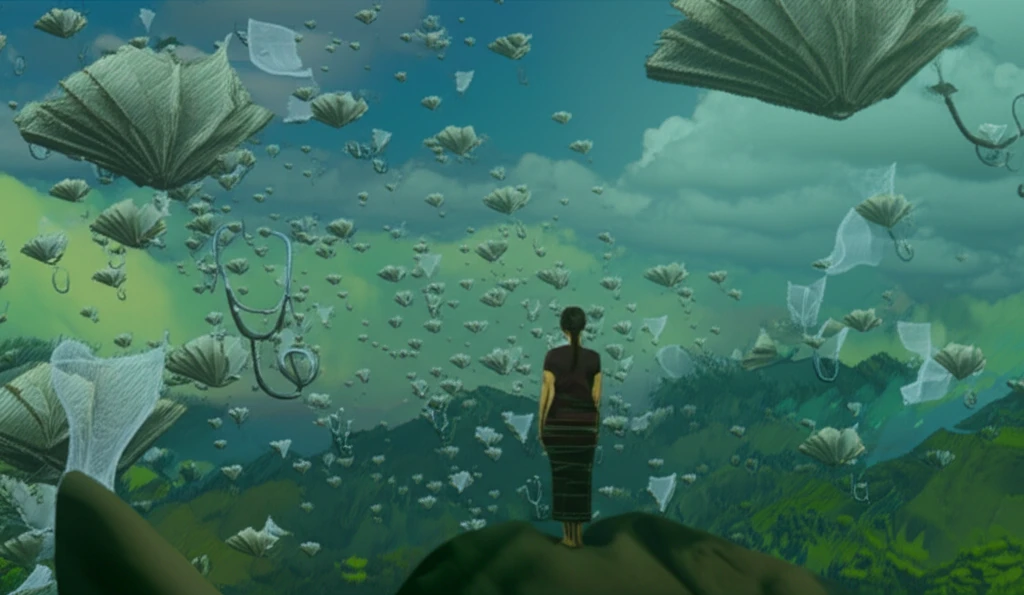
Bridging the Gap: Health Education for Karen Youth in Rural Thailand

"Understanding knowledge gaps in communicable and non-communicable diseases can empower a vulnerable population."
In an increasingly interconnected world, even remote communities face complex health challenges. For ethnic minority groups in developing countries, these challenges are often amplified by disparities in access to healthcare and health education. A recent study focused on the Karen people, an ethnic minority group residing along the Thai-Myanmar border, sheds light on this issue, revealing significant gaps in their knowledge of both communicable and non-communicable diseases.
The study, conducted in the rural district of Thasongyang in Thailand, assessed the health knowledge of Karen high school students regarding prevalent conditions like diabetes, hypertension, COPD (Chronic Obstructive Pulmonary Disease), malaria, and diarrheal diseases. These diseases represent a 'double burden,' where communities grapple with both infectious diseases and chronic conditions linked to lifestyle and aging.
By understanding the specific knowledge gaps, this research offers valuable insights for creating targeted health education programs. This article explores the study's findings and discusses the potential for school-based initiatives to empower Karen youth with the knowledge they need to protect their health and well-being.
What the Data Show About Karen Youth
A University of Minnesota study of 765 youths aged 3–17 found that Karen youth engaged in recommended health behaviors more frequently than their peers on almost every measure, with findings compared against data from other populations. That benchmark sits within a broader U.S. data landscape: the CDC's Division of Adolescent and School Health (DASH) collects data on youth and school health policies and practices nationwide to advance health equity and adolescent health issues. The HHS Office of Population Affairs makes comparable public federal data available through interactive tools that show the health and demographic trends of adolescents. Together, these figures help position Karen youth relative to general adolescent benchmarks rather than treating them as an unexplained outlier.
School-Based Programs and the Push for Empowerment
The California Health Education Framework recommends that teachers, other credentialed teachers, school counselors, school nurses, administrators, and curriculum development specialists plan, implement, and evaluate effective health education from TK through twelfth grade. Yet approaches that integrate the concepts of enabling and empowerment, it is argued, require new indicators to assess the acquisition of personal skills and the capacity of young people to take action affecting their health. Comparing approaches, health educators conclude that each method has its place and that tailoring interventions to the needs of the community creates a more effective and sustainable impact. Community-based positive youth development (PYD) programs - including one evaluated for long-term effects serving youth in extreme poverty to improve their health, educational, and financial well-being - exemplify the empowerment-oriented alternative to classroom-only instruction.
From Colonial Mission Schools to Modern Youth Groups
Karen formal education traces to the British colonial period, when missionaries such as Rev. C.H. Carpenter established and expanded educational facilities for the Karen community in the Irrawaddy Division. Organized youth activity has deep roots as well: the Karen Youth Organization (KYO) was first established in 1945 and re-established in 1989 within the longer history of the Karen people. Modern successors like the California Karen Youth Connection carry that legacy forward, convening Karen youth each June for a leadership development conference and distributing educational materials on Karen culture, language, and history. Alongside this, health education itself evolved from early instinctive healing practices, through the emergence of scientific medicine in ancient Greece, to the establishment of modern medical institutions - a broad arc that frames contemporary programs.
Knowledge Gaps: A Clear Need for Education
The study revealed several critical gaps in the students' understanding of common diseases:
- Many were unaware that these conditions are non-communicable and incurable.
- They lacked understanding of key risk factors like family history and lifestyle choices.
- Knowledge of blood sugar levels and blood pressure readings was limited.
A Thin But Promising Evidence Base
Peer-reviewed research on health education for Karen youth remains limited, with much of the available work focusing on resettled or displaced Karen populations rather than students in rural Thai schools. Existing studies are largely descriptive, so their findings should be treated as directional rather than definitive. Longer-term program evaluations and intervention studies are needed to establish which educational models actually change health behavior in this population. The current evidence base points toward promise, but it is not yet conclusive.
Where Programs Fall Short
A recent study highlights critical gaps in health knowledge among Karen high school students in rural Thailand, underscoring the urgent need for culturally tailored and comprehensive health education to combat the double burden of disease. Culture-specific evidence is critical for mental health professionals working with Karen youth, informing culturally sensitive strategies for assessment and intervention with Karen youth and families. Failures often stem from a mismatch in priorities: an ODI study of Karen refugee youth in long-established camps on the Thai side of the border found that what youth deem important for their wellbeing does not always align with the priorities of the humanitarian actors supporting them. Systemic disruption compounds these gaps, with KHRG documenting attacks by the State Administration Council on schools in Southeast Burma as clear systemic violations of the right to education.
Comparing Approaches Across Disparate Settings
Meaningful comparison across approaches is complicated by the diversity of Karen communities - rural villages in Thailand, longstanding refugee camps on the Thailand-Myanmar border, and resettled populations abroad - each operating in very different service environments. A model that fits one setting may not transfer cleanly to another, and direct comparative studies are largely absent from the literature. Any conclusion about which approach works best across these contexts is therefore provisional. The most consistent theme in the available evidence is that culturally grounded, community-responsive delivery outperforms generic programming, though that remains a working hypothesis rather than a demonstrated conclusion.
Empowering Karen Youth Through Education
The study's findings underscore the urgent need for comprehensive and culturally sensitive health education programs targeting Karen youth. These programs should address knowledge gaps regarding both communicable and non-communicable diseases, emphasizing preventative measures and healthy lifestyle choices.
The Case for Peer-Led and Digital Delivery
Expert commentary increasingly converges on participatory, peer-based delivery as an effective way to promote youth health, with the internet adding new potential. One study is described as the first to analyze expert opinions on potential web-based interventions for peer-to-peer promotion of youth sexual health. Those experts assessed web-based participatory peer education as promising - an attractive new tool for sexual health promotion by peers, though real-world uptake still depends on access and trust. For Karen youth settings, such peer-driven and technology-enabled models could complement school-based education, though the expert evidence addresses peer education generally rather than Karen communities specifically.
Youth-Driven Solutions and a New Research Agenda
In 2024, the California Karen Youth Connection's youth competition focused teams of five to seven members on three critical topics - Affordable Education, Affordable Health Care, and Homelessness - with solutions evaluated by a panel of policymakers, advocates, and community leaders. In parallel, PolicyLab at Children's Hospital of Philadelphia began 2025 with Dr. Shelby Davies as the new faculty lead for its Adolescent Health and Well-being research portfolio, bringing a community-engaged, clinical focus on adolescent and young adult health, including youth experiencing homelessness and inequities in menstrual health. Together these developments point toward a future agenda in which youth themselves help design health solutions while researchers center community engagement and access.
Peace, Systems Change, and Community Connection
The Karen ethnic community is emerging from what is known as the longest-running civil war, which continued until a ceasefire was agreed in 2012; villagers in Karen State now face the new challenge of reorganizing and restructuring their lives around peace. That historical arc shapes access to health and education across the region. A 'big picture' public health strategy, articulated by the Forum on youth development, argues that integrating what we know about young people's development with what we are learning about big-picture systems and community change is how youth development moves from theoretical ideas to realized impact. Practically, professionals serving Karen youth are encouraged to tune into narratives that connect youth with parents, and between Karen communities overseas and in the United States, to provide culturally responsive assessment and intervention.
What Change Means in Karen Youth's Lives
Karen youth transitions to adulthood are framed by political, social, cultural, and economic contexts that open or close access to services and opportunities in health, education, and jobs. Case studies show why cultural fit is key to successful health campaigns that promote behavior change, with examples drawn from Thailand and India. The pandemic also reshaped delivery: it negatively impacted the mental health of millions of children and families while shifting healthcare toward a tech-based approach, prompting Dr. Karen to devote herself to her startup ChildNEXUS even as patients, students, and research left her spread thin. The human reality of these programs ultimately rests on whether rural and displaced Karen youth can actually access the opportunities those systems open or close.
Schools are ideal settings for implementing these programs. By integrating health education into the curriculum, we can equip young people with the knowledge and skills they need to make informed decisions about their health. Crucially, education efforts should involve parents, teachers, and community leaders to reinforce key messages and promote sustainable change.
Ultimately, empowering Karen youth with health knowledge is an investment in the future. By addressing health disparities and promoting well-being, we can create a healthier and more equitable society for all.