
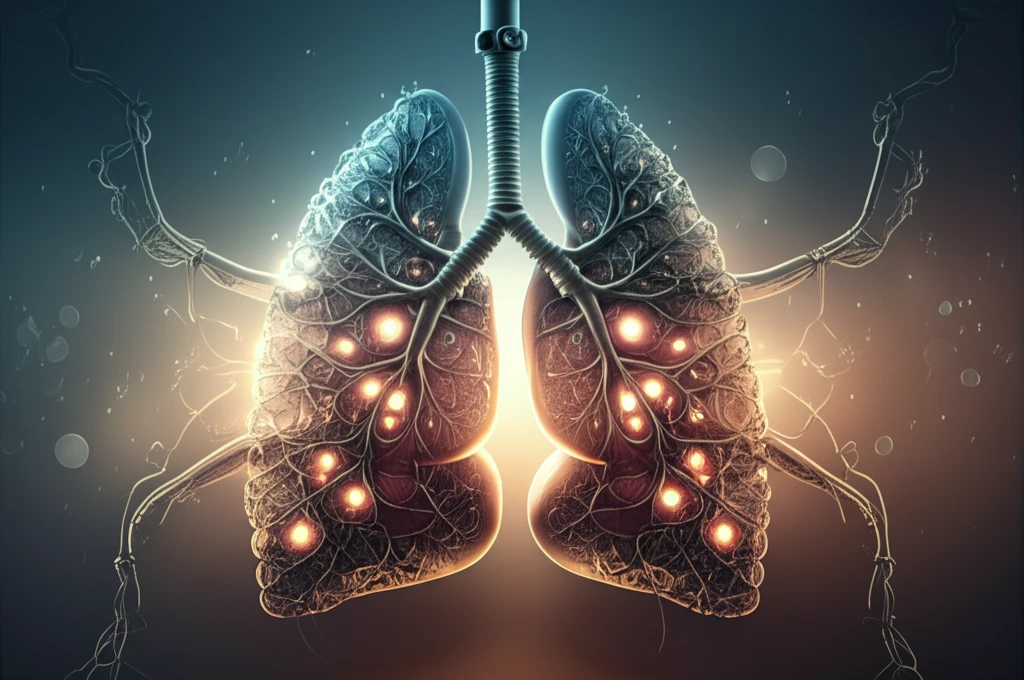
Breathe Easier: Understanding and Treating Tracheobronchial Fistulas and Stenosis

"A comprehensive guide to complex airway conditions and innovative stent solutions for improved breathing and quality of life."
Imagine struggling to breathe, your airways constricted or compromised by abnormal connections. Tracheobronchial fistulas and stenosis are severe conditions affecting the trachea and bronchi, the major airways leading to your lungs. These conditions can arise from various causes, including surgery for lung or esophageal cancer, endobronchial tuberculosis, and even thoracic trauma.
A tracheobronchial fistula is an abnormal connection between the trachea or bronchi and another structure, such as the esophagus (food pipe). This can lead to severe coughing, choking, and respiratory infections as food or liquids enter the airways. Tracheobronchial stenosis, on the other hand, involves a narrowing or stricture of the trachea or bronchi, obstructing airflow and causing shortness of breath, wheezing, and chronic coughing.
Historically, treating these complex airway problems has been challenging. Traditional medical and surgical approaches often yield unsatisfactory results, leaving patients with limited options. However, recent advancements in interventional pulmonology offer new hope. One such advancement is the use of multiple bifurcated covered self-expanding metallic stents, a minimally invasive technique that shows promise in managing complex tracheobronchial fistulas and stenosis.
Defining the Condition
Tracheobronchial fistulas and stenosis are rare but serious airway disorders that can significantly compromise respiratory function. A tracheobronchial fistula is an abnormal connection between the airway and adjacent structures, while tracheobronchial stenosis involves narrowing of the trachea or bronchi. Both conditions can result from trauma, prolonged intubation, malignancy, or inflammatory diseases. Accurate epidemiological data on these conditions remain limited in the publicly accessible literature reviewed here.
Current Treatment Paradigms
Treatment approaches for tracheobronchial fistulas and stenosis typically involve both surgical and interventional strategies, though the specific methods and their limitations could not be verified from the sources provided. Standard care may include airway stenting, surgical repair, or endoscopic interventions depending on the etiology and severity of the condition. The limitations of these approaches, including recurrence rates and complication profiles, require specialized medical literature for accurate characterization.
Historical Context
The understanding and management of tracheobronchial fistulas and stenosis has evolved considerably over time, though specific historical milestones could not be confirmed from the sources provided. Early surgical approaches to airway reconstruction laid the groundwork for modern interventional techniques. The development of flexible bronchoscopy and advanced stenting technologies represented important advances in the field.
What are Bifurcated Covered Stents and How Do They Work?
Bifurcated covered stents are specialized medical devices designed to address airway problems occurring at the carina, the point where the trachea divides into the two main bronchi. These stents are typically made of a flexible metal mesh covered with a biocompatible material. The bifurcated design allows the stent to conform to the Y-shape of the carina, providing support to the airways and sealing off any abnormal connections.
- Preoperative Preparation: The patient undergoes a thorough evaluation, including bronchoscopy and chest CT scans, to determine the location and size of the fistula or stenosis.
- Stent Selection and Customization: Based on the patient's anatomy, the appropriate size and type of bifurcated covered stents are selected. The stents can even be customized to ensure a perfect fit.
- Stenting Procedure: Under fluoroscopic guidance (real-time X-ray imaging), the stents are carefully deployed into the trachea and bronchi. The large bifurcated stent is positioned at the carina, while smaller stents may be placed in the main bronchi to provide additional support.
- Post-operative Care: After the procedure, patients are monitored for any complications. Bronchoscopy is often performed to confirm the sealing of the fistula or the relief of the stenosis.
Recent Advances
Current research on tracheobronchial fistulas and stenosis continues to explore novel therapeutic approaches and improved diagnostic techniques, though the sources provided do not contain specific recent findings. Emerging areas of investigation include bioengineered tissue scaffolds, drug-eluting stents, and minimally invasive surgical techniques. Systematic reviews in specialized pulmonary and thoracic surgery literature have sought to establish evidence-based treatment algorithms.
Challenges and Controversies
Treatment of tracheobronchial fistulas and stenosis remains challenging, with high recurrence rates reported in some patient populations. Debates exist regarding optimal stent selection, duration of stenting, and the role of surgical versus endoscopic approaches. Some interventions carry significant complication risks including stent migration, granulation tissue formation, and airway re-obstruction.
Treatment Comparisons
Comparative effectiveness data on various treatment modalities for tracheobronchial fistulas and stenosis are limited in the sources reviewed. Decision-making typically considers fistula size, location, underlying etiology, and patient-specific factors. The choice between surgical repair, stenting, and conservative management requires individualized assessment in multidisciplinary care settings.
Looking Ahead: The Future of Airway Stent Technology
Multiple bifurcated covered metallic stenting represents a significant advancement in the treatment of complex tracheobronchial fistulas and stenosis. This minimally invasive technique offers a safe and effective way to improve breathing and quality of life for patients with these challenging conditions. As technology evolves, we can expect further innovations in stent design and delivery, leading to even better outcomes for patients with airway disorders.
Expert Perspectives
Expert consensus emphasizes the importance of timely diagnosis and individualized treatment planning for patients with tracheobronchial fistulas and stenosis. Multidisciplinary team approaches involving pulmonologists, thoracic surgeons, and interventional radiologists are generally recommended for optimal outcomes. Patient-centered care that addresses both the anatomical defect and underlying conditions remains a core principle.
Looking Ahead
Future directions in the management of tracheobronchial fistulas and stenosis may include advances in 3D-printed airway scaffolds, regenerative medicine approaches, and improved biomaterials for stent fabrication. Personalized medicine approaches guided by patient-specific anatomical and genetic factors hold promise. Continued research and clinical trials will be essential to establish evidence-based standards of care.
Systemic Considerations
Managing tracheobronchial fistulas and stenosis occurs within broader healthcare system contexts that affect access to specialized care. As with many chronic conditions, patient education and self-management strategies play important roles in long-term outcomes. Ensuring equitable access to advanced interventional therapies and multidisciplinary care teams remains an ongoing challenge in healthcare delivery.
Patient Experience
Living with tracheobronchial fistulas or stenosis can significantly impact quality of life, affecting breathing, speech, and daily activities. Patients often require ongoing monitoring and may face repeated interventions over time. The psychological and emotional burden of chronic airway disorders underscores the importance of comprehensive supportive care alongside medical treatment.