
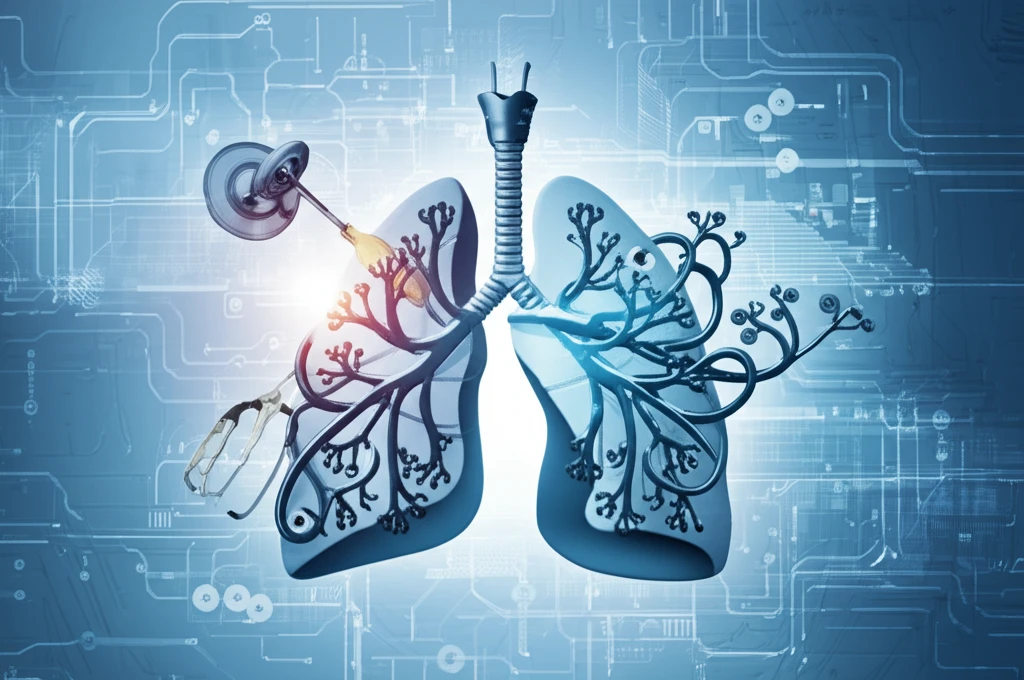
Breathe Easier: Combining Tools for Better COPD Care

"How a new scoring system could help doctors prioritize pulmonary rehabilitation for COPD patients, leading to better outcomes."
Chronic Obstructive Pulmonary Disease (COPD) affects millions worldwide, making daily life a struggle for many. Pulmonary rehabilitation (PR) can significantly improve the quality of life for these individuals, but with limited resources, deciding who needs it most urgently becomes a challenge. A recent study published in the COPD: Journal of Chronic Obstructive Pulmonary Disease explores a new approach to prioritize patients for PR, combining several assessment tools for more effective decision-making.
The traditional method relies heavily on a clinician's judgment, but this can be subjective and may not always capture the full picture. Objective tools like the BODE index, which considers body mass index, airflow obstruction, dyspnea, and exercise capacity, offer a more standardized assessment. The Pulmonary Rehabilitation Decisional Score (PRDS) is a newer tool designed to provide a more structured indication of PR priority, considering various factors influencing a patient's overall condition.
This article dives into how combining the PRDS with the BODE index and a clinician's clinical decision (CD) can lead to better prioritization and resource allocation, ultimately helping those who need pulmonary rehabilitation the most.
A Progressive Condition That Affects Breathing
COPD is a progressive condition affecting the respiratory system that causes difficulty breathing, and it encompasses a group of diseases including emphysema and chronic bronchitis that cause airflow blockage and breathing-related problems. For those living with the disease, energy may be limited, making it harder to be physically active or to do everyday tasks like preparing and eating meals. What a person eats, and when they eat, can also affect their breathing and energy levels.
Inhaled Medications and Daily Demands
Many people with COPD take their prescription medicines through metered-dose inhalers or dry powder inhalers, portable devices that are lightweight, compact, and deliver the correct dose. Inhaler options range from bronchodilators to combination types, and triple therapy combines three inhaled medications to reduce swelling, widen the airway, and relax the muscles in the airway to help people breathe easier. Even so, limited energy can make it harder to eat well and to exercise.
From Symptom Management to a Multimodal Approach
COPD has long been recognized as a progressive respiratory condition, and treatment has gradually evolved to combine medication with broader lifestyle strategies. Pulmonary rehabilitation has emerged as an important modality used as an adjunct to other treatments for COPD patients. Nutrition has also become a central part of care, since what and when a person eats can affect breathing and energy levels.
The Pulmonary Rehabilitation Decisional Score (PRDS)
The Pulmonary Rehabilitation Decisional Score (PRDS) is designed to bring more structure to how doctors decide who should get priority for pulmonary rehabilitation. The study authors wanted a tool that could look at many different aspects of a patient's health to give a well-rounded picture. Factors that contribute to the PRDS include lung function, how well a person can perform daily activities, the severity of their condition, and psychological and frailty issues.
- Low Priority (LP): PRDS score of 0-10, meaning access to rehabilitation would be after 60 days.
- High Priority (HP): PRDS score of 11-17, with access to rehabilitation within 30-60 days.
- Very High Priority (VHP): PRDS score of 18 or higher, indicating admission to PR within 30 days.
Pulmonary Rehabilitation as an Adjunct Therapy
Pulmonary rehabilitation has emerged as an important modality as an adjunct to other treatments for COPD patients, and lung centers now offer dedicated programs to help people manage the condition. Medically reviewed guidance also emphasizes that a healthy lifestyle is possible with COPD. Nutrition advice highlights that what you eat, and when you eat, can affect your breathing and energy levels.
The Energy Barrier to Healthy Habits
A key limitation of COPD care is that the disease itself limits the energy available for healthy routines. It may be harder for people with COPD to eat well and to exercise, because limited energy makes it harder to be physically active or to do things like prepare and eat meals. Even well-established strategies therefore have to be adapted to each person's daily capacity.
Medication Tools Versus Lifestyle Strategies
Inhalers range from bronchodilators to combination types and are designed to prevent and control symptoms, while triple therapy combines three inhaled medications to reduce swelling, widen the airway, and relax the muscles in the airway. By contrast, pulmonary rehabilitation serves as an adjunct to other treatments and addresses the whole person rather than the airway alone. Many people deliver these prescriptions through lightweight, compact metered-dose inhalers or dry powder inhalers.
A Step Towards Better COPD Management
By combining the PRDS, BODE index, and clinical judgment, healthcare professionals can make more informed decisions about prioritizing patients for pulmonary rehabilitation. This approach ensures that those who stand to benefit the most receive timely access to the care they need, leading to improved outcomes and a better quality of life. This research paves the way for further studies to validate and refine these methods, ultimately improving the lives of individuals living with COPD.
Combining Medications, Nutrition, and Rehabilitation
Effective COPD care combines inhaled medications with nutrition and pulmonary rehabilitation. Triple therapy brings together three inhaled medications to help people breathe easier, and pulmonary rehabilitation has emerged as an important modality as an adjunct to other treatments. Nutrition also plays a role, as what and when a person eats can affect breathing and energy levels.
Toward More Integrated Care
Care continues to move toward combining multiple strategies, from triple therapy inhalers to pulmonary rehabilitation and nutrition planning. Advances in portable delivery devices such as metered-dose and dry powder inhalers aim to make correct dosing easier during daily use. The direction of care is increasingly integrative, pairing medication with rehabilitation and lifestyle support.
The Everyday Burden of a Progressive Condition
Because COPD is a progressive condition affecting the respiratory system, it creates ongoing challenges that extend beyond the lungs. Limited energy makes it harder to be physically active and to prepare and eat meals, which can undermine nutrition and exercise even when they are recommended. These daily demands highlight why support for eating well and staying active matters as much as medication.
Living with Limited Energy
For people living with COPD, energy is often limited, making everyday tasks like preparing and eating meals more difficult. What and when a person eats can directly affect breathing and energy levels, so small dietary adjustments can have a real-world impact. Programs like pulmonary rehabilitation and healthy-lifestyle guidance aim to help people maintain independence and wellbeing.