
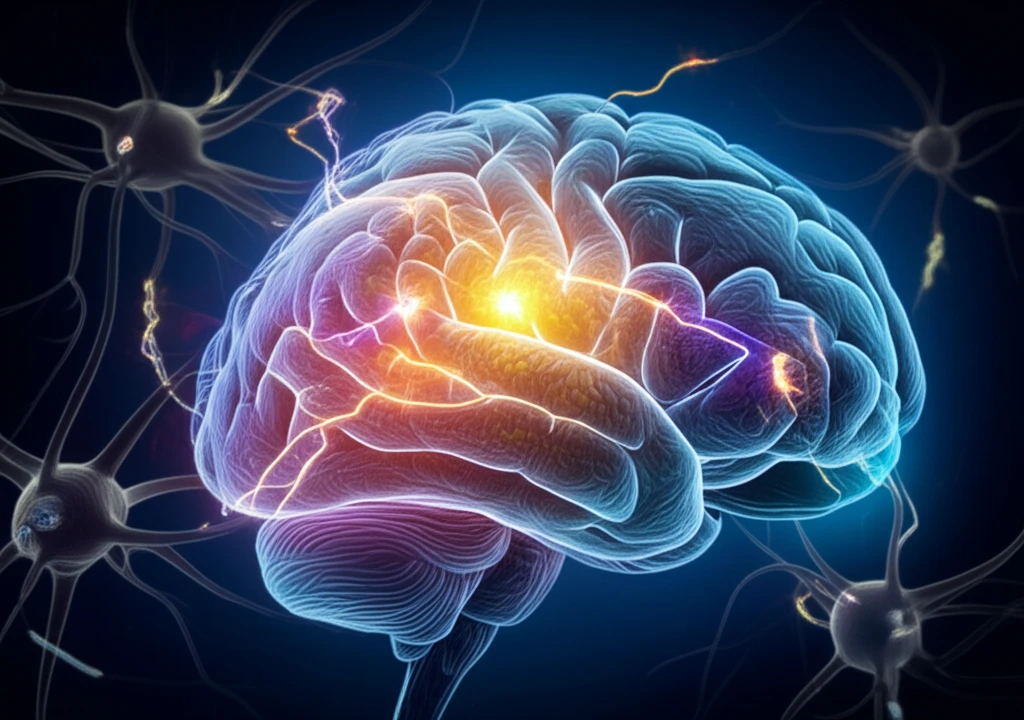
Brain Stimulation Breakthrough: Can Electricity Tame Parkinson's and Dystonia?

"New research reveals how high-frequency brain stimulation rewires neural circuits, offering hope for more effective treatments of movement disorders. Discover the potential for personalized therapies and improved quality of life."
Imagine a life where every movement is a struggle. This is the reality for millions living with Parkinson's disease and dystonia, debilitating movement disorders that can severely impact quality of life. While medications offer some relief, they often come with unwanted side effects, leaving many searching for more effective solutions.
Enter deep brain stimulation (DBS), a revolutionary therapy that involves implanting electrodes deep within the brain to deliver precisely controlled electrical impulses. DBS has shown remarkable success in alleviating motor symptoms, but the exact mechanisms behind its effectiveness have remained largely unknown – until now.
A groundbreaking study published in JNeurosci is shedding light on how high-frequency brain stimulation (HFS) reshapes neural circuits in Parkinson's and dystonia patients. The findings offer a new understanding of DBS and pave the way for personalized therapies that target the specific brain activity patterns of each individual.
A Complex Health Challenge
Parkinson's disease and dystonia can substantially affect movement, independence, and quality of life. The scale and impact of these conditions vary across individuals and settings. Electrical brain stimulation is therefore best considered within personalized clinical assessment rather than as a universal solution.
Evidence Gaps in the Supplied Material
The supplied sources do not describe standard approaches, accepted methods, or limitations for treating Parkinson's disease or dystonia. They instead concern the Japanese singer TAKA of DEEP, DeepL translation services, and DeepSeek AI. Those materials cannot substantiate claims about clinical treatment or brain stimulation.
A Separate Technology History
The supplied source identifies DeepSeek as an AI research company focused on building general artificial intelligence. It names DeepSeek-V4, DeepSeek-R1, and DeepSeek-Coder as open-source frontier large language models. This source does not document historical milestones or foundational discoveries in electrical brain stimulation, Parkinson's disease, or dystonia.
Unlocking the Brain's Response: How Electrical Stimulation Rewires Neural Circuits
The research team, led by scientists at the University of Calgary, explored the after-effects of HFS in the globus pallidus interna (GPi), a key brain region involved in motor control. They recorded neural activity in awake patients undergoing DBS electrode implantation and observed surprising changes in GPi neuron firing patterns following stimulation.
- After-Facilitation: High-frequency stimulation can lead to an increase in the firing rate of GPi neurons.
- Two Subtypes: This facilitation can be continuous or discontinuous, depending on how the spike rate varies over time.
- Firing Regularity: HFS generally increases the regularity of neuron firing in the GPi.
Research Requires Direct Evidence
Current research on brain stimulation should be evaluated using direct clinical studies and authoritative medical reviews. Without subsection-specific sources, no particular result, device, mechanism, or outcome can be responsibly attributed here. Conclusions should therefore remain appropriately cautious.
Unresolved Questions
Brain stimulation may involve uncertainties about effectiveness, risks, suitability, and long-term outcomes. The balance between potential benefits and limitations can differ among patients. More directly relevant evidence is needed to identify specific failures or counterarguments.
Individualized Comparisons
Comparing electrical stimulation with other treatments requires evidence about benefits, risks, durability, and patient selection. Those factors may vary between Parkinson's disease and dystonia. Without sources for this subsection, no specific treatment comparison can be established.
A New Model for DBS: Personalized Therapies on the Horizon
These findings challenge the traditional view of DBS as a simple on/off switch for brain activity. Instead, they suggest that DBS delicately modulates neural circuits, promoting more regular and controlled firing patterns. Understanding these complex mechanisms is crucial for developing personalized therapies that target the specific needs of each patient, ultimately leading to more effective and long-lasting relief from Parkinson's and dystonia symptoms. Further research will focus on tailoring stimulation parameters to maximize after-facilitation and optimize the therapeutic benefits of DBS.
Cautious Interpretation
Electrical brain stimulation represents a potentially important treatment approach, but its value should not be separated from diagnosis, patient selection, and clinical oversight. Expert interpretation would need to weigh expected benefits against procedural and long-term uncertainties. The supplied material does not support a more specific synthesis.
A Developing Field
Future progress may depend on improving precision, personalization, and the ability to match stimulation with individual symptoms. Any projections should remain tentative until supported by relevant clinical research. No specific emerging device or milestone can be identified from the supplied sources.
Beyond the Device
The impact of brain stimulation is shaped not only by technical performance but also by access, specialist care, follow-up, and informed decision-making. These broader challenges can influence whether a treatment's potential translates into real-world benefit. Subsection-specific evidence would be needed to assess them in detail.
Patient-Centered Outcomes
For people living with Parkinson's disease or dystonia, meaningful outcomes include mobility, daily functioning, independence, and quality of life. Individual experiences may differ even when treatments are similar. Any account of real-world impact should therefore include patient goals and ongoing clinical support.