
Beyond WEIRD: Why Psychology Needs a Global Perspective

"Is current psychological research truly representative of humanity, or just a narrow slice?"
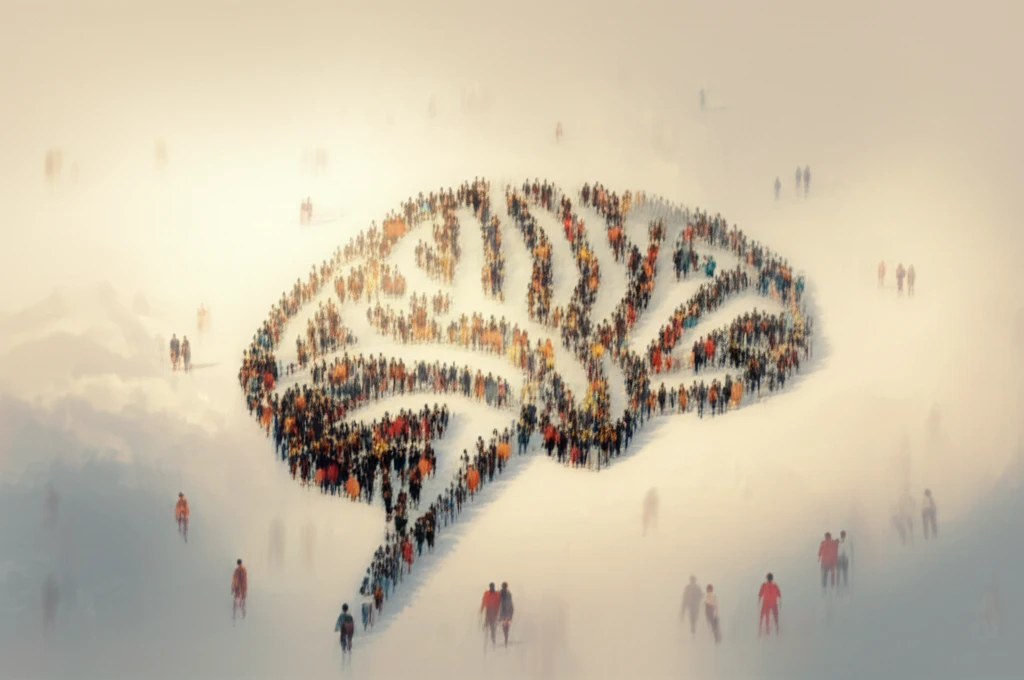
For decades, psychological science has strived to uncover universal truths about the human mind. But what if our understanding is skewed by the limited populations we study? The field faces a growing challenge: the over-reliance on WEIRD (Western, Educated, Industrialized, Rich, and Democratic) populations in research.
A groundbreaking 2010 study by Henrich et al. revealed that WEIRD populations are outliers on many psychological phenomena. This raises a critical question: can we truly claim to understand 'human' psychology when our data primarily comes from a small, unrepresentative segment of the world's population?
This article delves into a critical analysis of research practices in psychological science, highlighting the persistent issue of WEIRD sample bias. It explores the implications of this bias and champions a more inclusive, globally representative approach to psychological research, aiming to unlock a more accurate and comprehensive understanding of the human experience.
A Research Base Skewed by Geography
Precise figures on the global imbalance in psychological research are hard to state with confidence, because estimates vary depending on how samples and journals are counted. What is broadly agreed is the direction of the bias: most studies continue to draw participants from a small set of societies while claiming to describe human psychology in general. Ongoing data-collection efforts suggest the imbalance may be slowly shifting, though reporting remains uneven. Until benchmark studies converge on shared metrics, the field's exact statistics should be treated as approximate rather than settled.
Sampling, Generalization, and Reporting
The standard approach in psychological science has long been to test convenience samples, typically Western, educated, industrialized, rich, and democratic (WEIRD) populations, and generalize the results to all humans. Generalizing beyond WEIRD cultural psychology requires that published studies be replicated with cross-cultural samples to demonstrate the robustness and limitations of psychological effects. An analysis of UK-based research notes that the country is itself a WEIRD nation and a psychology powerhouse with its own governing body, the British Psychological Society (BPS), yet sample and author diversity remain underexamined. The Cambridge element "Psychology's WEIRD Problems" pushes the critique further, identifying at least four overlapping problems: WEIRDness extends beyond the participant pool to theoretical commitments, methodological assumptions, and institutional structures. More consistent demographic reporting and replication across cultures are the remedies most often proposed.
The 2010 Acronym That Named a Bias
WEIRD is a backronym standing for Western, Educated, Industrialized, Rich, and Democratic, coined in 2010 to label the populations most commonly sampled by researchers in the experimental behavioral sciences, including psychologists, cognitive scientists, and economists. The word was deliberately turned into an acronym to de-exoticize the diversity of non-WEIRD populations by shining a light on the numerous social and psychological peculiarities of WEIRD populations viewed from a broader global and historical perspective. Initially it served as a useful reminder of the demographic bias running through the literature, even as its meaning later drifted toward overuse. The measurement of cross-cultural psychological differences and cultural distances has a long history, and researchers can now build scales of cultural distance against any comparison population using available R code or the online tool at www.culturaldistance.com.
The WEIRD Problem: A Persistent Bias
A 2018 study published in PNAS scrutinized articles from Psychological Science, a leading multidisciplinary journal, in 2014 and 2017. The analysis revealed a concerning trend: a significant majority of studies relied on samples from Western countries. This means that findings, often generalized to 'humans,' were primarily based on data from a small fraction of the global population.
- Limited Generalizability: Over-reliance on WEIRD samples limits the ability to generalize findings to the broader human population.
- Missed Nuances: Neglecting cultural context can lead to an incomplete or even inaccurate understanding of psychological phenomena.
- Reinforced Biases: The lack of diversity among researchers and participants perpetuates a narrow perspective in the field.
Still WEIRD, Still Underreported
Recent benchmarks indicate the field has made only limited progress. The study "Still WEIRD, still underreported" evaluates the state of the critique along three lines: national sample origins, demographic representativeness, and adherence to American Psychological Association reporting standards. A separate 2023 progress report found that American participants still dominate psychological research, accounting for approximately half of all samples published in Psychological Science. Alongside this persistence, some researchers warn the acronym has become overused, to the point where it almost parodies itself as a shortcut for categorizing diverse populations. Taken together, the evidence points to slow movement on diversity paired with uneven reporting.
Generalizability and the Replicability Crisis
A key counterargument to WEIRD critiques is that failed replication attempts need not invalidate a finding; they may instead reveal boundary conditions on when an effect holds. The WEIRD people problem intersects with psychology's recent concern of a replicability crisis because replications conducted in other cultures that fail might indicate such boundaries. Critics respond that the field's reliance on Western, educated, industrialized, rich, and democratic populations, typically college-aged participants, creates significant limitations in generalizability, since findings may not apply across cultures, socioeconomic backgrounds, or age groups. The debate therefore centers on interpretation: diversity critics see the narrow participant pool as a fundamental weakness, while defenders argue that failed replications clarify where effects are truly universal.
Cultural Distance as an Analytical Tool
Comparative work increasingly treats cultural distance as a measurable predictor of psychological outcomes. As one commentary puts it, decades of psychological research designed to uncover truths about human psychology may have instead uncovered truths about a thin slice of our species, people who live in WEIRD nations (Henrich, Heine, & Norenzayan, 2010). Since psychological data are dominated by samples drawn from WEIRD nations, researchers need tools that place any given population relative to others. The "Beyond WEIRD" project addresses this by creating distance scales with any population as the point of comparison, fitting into a longer tradition of measuring cross-cultural psychological differences. These tools allow comparative claims to be expressed in quantitative terms rather than as broad cultural impressions.
Toward a More Inclusive Psychology
The authors propose several concrete steps to address the WEIRD problem and promote a more inclusive and representative psychological science. These include:
A Critique That Keeps Expanding
Across the literature, the WEIRD critique has matured from a complaint about participant pools into a broader examination of the field's assumptions, methods, and institutions. Many observers see slow but real progress, while others caution that measurement problems and academic incentives keep the bias firmly in place. There is no firm expert consensus on how quickly psychology will become genuinely global, and projections differ. The most defensible summary is that the critique has permanently changed how the field talks about sampling, generalization, and reporting.
Toward a Genuinely Global Science
The next frontier is likely to involve larger, more diverse collaborations and tools that make cross-cultural comparison routine rather than exceptional. Improvements in reporting standards may help convert aspiration into measurable progress. In the longer term, psychology's credibility will depend on demonstrating that findings hold beyond the populations where they were produced. None of these developments is guaranteed, but the direction of change is broadly viewed as positive.
Institutional Barriers to Diversifying the Field
Making psychology more global faces obstacles that go beyond individual studies, ranging from funding and publication incentives to the geographic concentration of major institutions and journals. Structural reform tends to move slowly, and progress can be uneven across regions and subfields. Realistic assessments treat these systemic challenges as at least as important as any single methodological fix. Without addressing them, gains in sample diversity may remain partial.
Why the Bias Matters Beyond the Lab
The stakes extend beyond statistics because psychology's claims about the mind shape education, therapy, public policy, and how people understand themselves. If research reflects only a thin slice of humanity, the applications built on it carry that bias into real-world settings. More representative research is therefore not an abstraction but a practical matter of fairness and usefulness. The human payoff of a more global psychology is better support for a far wider range of people.
<ul><li>Required Reporting: Authors should be required to report detailed demographic information about their samples, including age, SES, ethnicity, religion, and nationality.</li><li>Explicitly Tie Findings to Populations: Abstracts and conclusions should clearly link findings to the specific populations sampled.</li><li>Justify the Sampled Population: Authors should justify their choice of sample and discuss the potential limitations of their findings.</li><li>Non-WEIRD = Novel and Important: Journal editors and reviewers should prioritize studies that sample non-WEIRD populations.</li></ul>
By implementing these changes, the authors hope to incentivize researchers to diversify their samples, consider cultural context, and ultimately create a more robust and generalizable understanding of the human mind. The future of psychological science depends on moving beyond WEIRD and embracing the full spectrum of human diversity.