
Beyond the Plate: How 3D Food Printing is Revolutionizing Elderly Care

"Discover how cutting-edge 3D printing technology is creating personalized, nutritious, and easily digestible meals, transforming the landscape of geriatric care."
As we age, our bodies change, and so do our nutritional needs. For many elderly individuals, eating can become a challenge due to various factors such as difficulty swallowing, reduced appetite, or specific dietary requirements. Traditional meal preparation methods often fall short in addressing these individual needs, leading to malnutrition and a decreased quality of life.
Enter 3D food printing – a groundbreaking technology that is transforming the way we approach elderly care. By creating personalized, nutritious, and easily digestible meals, 3D food printing is revolutionizing the dining experience for older adults, offering a beacon of hope for improved health and well-being.
This innovative approach not only caters to specific dietary needs but also enhances the appeal and enjoyment of food, making meal times something to look forward to rather than a chore. Let’s delve into the fascinating world of 3D food printing and explore its potential to revolutionize elderly care.
Personalized Nutrition and Dysphagia
A review of 3D food printing for elderly diets describes a persistent mismatch between demand for personalized, nutritious food and traditional industrialized food production. Dysphagia—difficulty swallowing—is more prevalent among older adults, and a February 1, 2025 review examines 3D-printed foods for people with dysphagia. Its focus includes food sources, processing techniques, International Dysphagia Diet Standardisation Initiative (IDDSI) categories, nutrition, acceptability, and safety.
Origins and Early Directions
The supplied sources offer only a brief view of 3D food printing’s origins rather than a chronology of milestones. A January 21, 2025 article, “The Origins of 3D Printed Food - Sugar and Space,” features food architect Jashan Sippy discussing the technology’s origins in mainstream food and health industries. The article “Beyond the Plate: How 3D Food Printing is Revolutionizing Elderly Care” frames the technology around older adults’ nutritional needs and dietary challenges.
What is 3D Food Printing and How Does It Work?
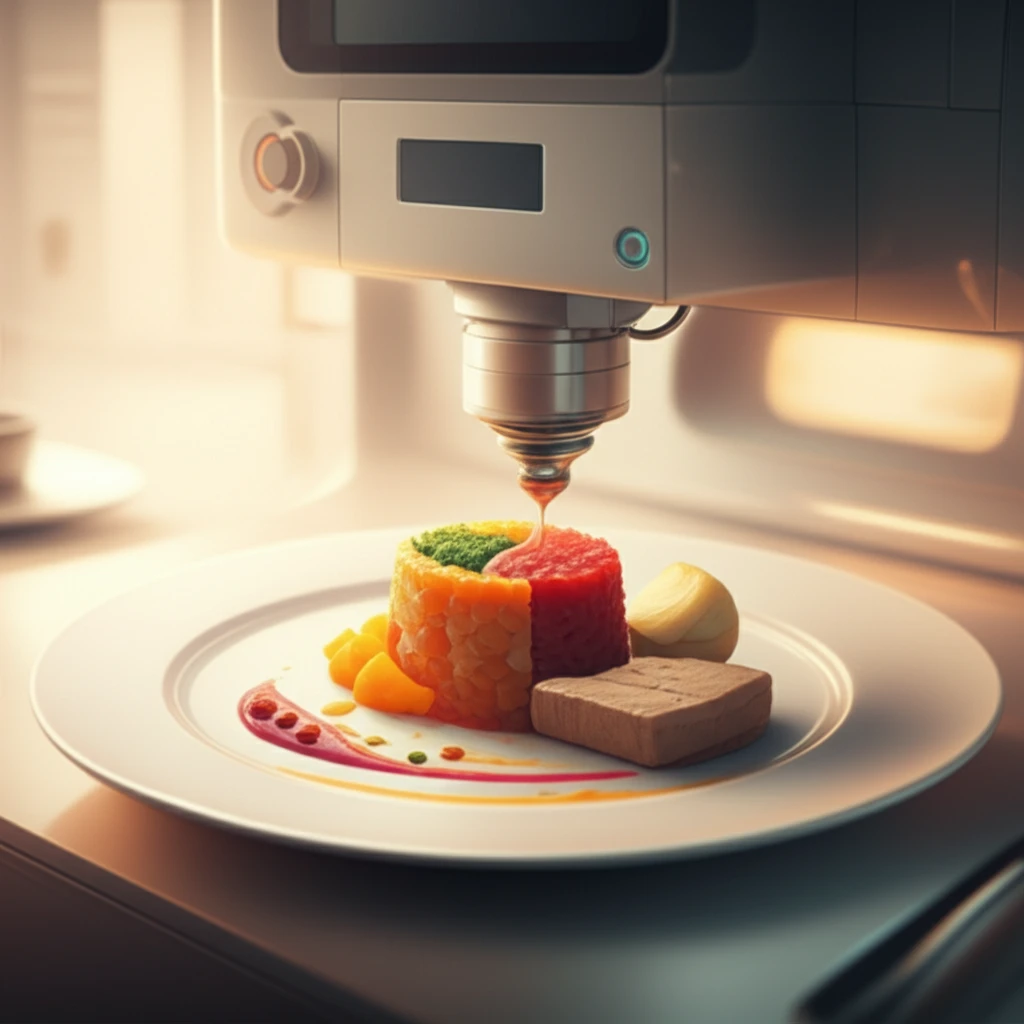
3D food printing is an additive manufacturing process that uses food materials as “ink” to create customized food products layer by layer. Imagine a regular inkjet printer, but instead of ink, it uses edible pastes, gels, or powders to construct intricate and personalized dishes.
- Preparation of Food Ink: Raw ingredients are liquefied and mixed with a suitable binding agent to create a printable food material. This can include pureed fruits and vegetables, protein sources, and carbohydrate bases.
- Designing the Meal: Using specialized software, a 3D model of the desired meal is created. This design takes into account the individual’s nutritional needs, dietary restrictions, and preferences.
- Printing the Food: The food ink is loaded into the 3D printer, which then precisely deposits the material layer by layer according to the digital design.
- Post-Processing (if needed): Some 3D-printed foods may require additional processing, such as baking, steaming, or cooling, to achieve the desired texture and flavor.
Reviews on Nutrition and Texture
A February 29, 2024 review examines how 3D food printing could customize nutrition and texture in personalized foods for older adults with dysphagia, who commonly face risks related to eating and swallowing safely. A separate review published February 1, 2025 surveys broader potential applications, including space food, packaging, dairy, fruit and vegetable processing, and cereal-based foods. That 2025 review also discusses challenges and the importance of four-dimensional food printing (4DFP).
Customization and Nutritional Tradeoffs
The supplied sources point to personalization as a potential strength of 3D-printed foods, while also identifying nutritional and implementation challenges. One source says AI can help identify older adults’ challenges, tailor recipes to physiological changes and individual preferences, and monitor printing performance. A 2023 review discusses obstacles involving energy supplementation, nutritional balance, and recipe customization, while another review considers potential nutritional risks and benefits as well as current limitations.
The Future of Food is Here
3D food printing is more than just a novelty; it's a practical solution that enhances the dining experience, improves nutritional intake, and ultimately contributes to a higher quality of life for our aging population. As technology advances, we can anticipate even more sophisticated and accessible 3D food printing solutions, paving the way for a future where personalized nutrition is within everyone's reach. For elderly individuals facing dietary challenges, 3D food printing is a game-changer.
The Challenge of a Complete Meal
A narrative review published August 3, 2026 considers 3D food printing for dysphagia across nutrition, food science, engineering, and clinical practice. It gives particular attention to the practicality of printing a complete meal that is safe and nutritionally adequate. The source frames this as a research question for the field, rather than reporting that such meals are already routinely achievable.
Developing Foods for Older Australians
A case study describes a team developing what it calls Australia’s first 3D-printed fruit- and vegetable-based foods nutritionally tailored for older Australians. The team has partnered with food suppliers and an aged-care provider to study 3D food printing. The source describes an ongoing development and study effort, not a reported outcome for residents.