
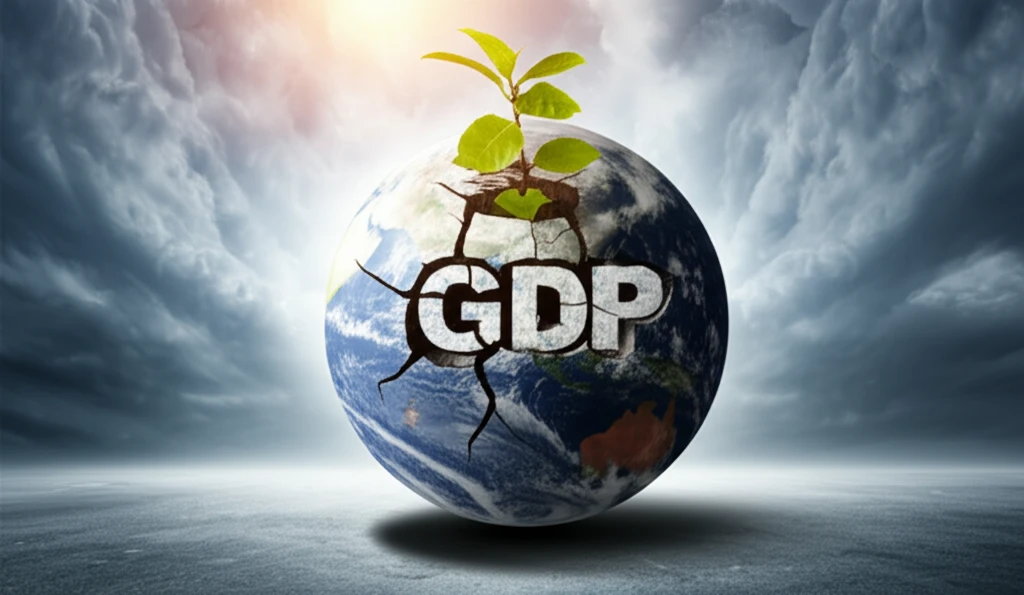
Beyond GDP: Why We Need New Ways to Measure Progress and Well-being

"Rethinking societal advancement in the 21st century: Moving beyond economic indicators to embrace sustainability and happiness."
In today's world, it's common to hear leaders and experts talk about the importance of 'sustainable development.' But what does that really mean, and how do we know if we're actually achieving it? For many years, progress has been measured almost entirely by economic growth, using figures like Gross Domestic Product (GDP).
However, relying only on GDP to measure how well a country is doing has been questioned for a long time. This is because GDP doesn't take into account important things like people's happiness, their well-being, or the health of the environment. Focusing solely on economic indicators can give us a distorted view of progress.
This article will explore why we need to look beyond GDP. We'll examine alternative ways to measure progress that consider quality of life, environmental sustainability, and economic development together. By adopting a more comprehensive approach, we can better understand how societies are truly progressing and work towards a more sustainable future.
Redefining Progress: Beyond Economic Metrics
Sustainability has emerged as a multidimensional concept that encompasses environmental, social, and economic considerations, moving beyond traditional economic indicators. According to Merriam-Webster, sustainability refers to 'capable of being sustained,' suggesting a need for measurement systems that assess long-term viability rather than short-term gains. Sustainable development, as defined on Wikipedia, involves 'improving on environmental sustainability,' indicating that progress measurement must integrate ecological factors. This broader understanding of sustainability challenges the adequacy of GDP as a sole measure of societal progress.
Traditional Measurement Frameworks
Conventional economic measurement has long relied on GDP as the primary indicator of national progress, though this approach has recognized limitations. GDP focuses primarily on market transactions and economic output, often failing to account for environmental degradation, social inequality, or quality of life factors. While alternative frameworks exist, their widespread adoption faces methodological and political challenges. The limitations of traditional approaches have prompted calls for more comprehensive measurement systems.
Evolution of Progress Measurement
The concept of measuring progress has evolved significantly over time, with growing recognition that economic metrics alone are insufficient. Early critiques of GDP-centric measurement emerged alongside the environmental movement, highlighting the need to account for ecological costs. Foundational work in sustainability science established the importance of balancing economic, social, and environmental dimensions. These historical developments laid the groundwork for contemporary efforts to develop alternative progress indicators.
The Problem with GDP: Why Economic Growth Isn't Everything
GDP, or Gross Domestic Product, measures the total value of goods and services produced in a country during a specific period. While it's a widely used indicator, it has significant limitations when it comes to assessing societal well-being and sustainable progress.
- Ignores social well-being: GDP doesn't reflect factors like happiness, health, education, social connections, and overall quality of life.
- Disregards environmental impact: GDP treats resource depletion and pollution as economic gains, failing to account for the long-term environmental consequences of economic activities.
- Hides inequality: GDP doesn't reveal how wealth is distributed within a society. A high GDP can mask significant income disparities and social inequalities.
- Treats all economic activity as positive: GDP counts both beneficial and harmful activities (like cleaning up pollution or repairing damages from accidents) as positive contributions.
The Sustainable Development Goals Framework
The United Nations Sustainable Development Goals represent a comprehensive framework for measuring progress across multiple dimensions. As described on the UN website, the 17 SDGs constitute 'an urgent call for action by all countries - developed and developing - in a global partnership.' This framework moves beyond purely economic measures to include goals related to poverty, health, education, inequality, and environmental sustainability. The SDGs demonstrate how international consensus has formed around the need for more holistic progress measurement.
Challenges in Alternative Measurement
Despite growing interest in alternative progress measures, significant challenges remain in their development and implementation. Critics argue that comprehensive measurement systems can be overly complex, difficult to standardize, or politically contentious. Some alternatives have faced criticism for lacking the simplicity and comparability of GDP. The transition from traditional to alternative metrics continues to encounter practical and conceptual obstacles.
Evaluating Different Measurement Approaches
Various approaches to measuring progress beyond GDP have emerged, each with distinct strengths and limitations. Some frameworks emphasize environmental sustainability, while others focus on social wellbeing or quality of life indicators. Comparative analysis reveals trade-offs between comprehensiveness and practicality in measurement design. No single alternative has yet achieved the universal adoption and recognition of GDP, though many offer valuable complementary perspectives.
A Call for Change: Embracing a More Holistic View of Progress
It's time to move beyond GDP and adopt a more comprehensive approach to measuring progress. By incorporating indicators of social well-being, environmental sustainability, and economic development, we can gain a more accurate understanding of how societies are truly progressing. This shift in perspective is essential for creating policies that promote a more sustainable, equitable, and fulfilling future for all.
Integrating Multiple Perspectives
Experts increasingly recognize that no single metric can fully capture societal progress, advocating instead for dashboard approaches that incorporate multiple indicators. The integration of economic, social, and environmental measures provides a more complete picture of wellbeing and sustainability. While challenges remain in implementation and standardization, the conceptual shift toward multidimensional measurement represents significant progress. This synthesis approach acknowledges the complexity of modern societies and the limitations of reductionist metrics.
Evolving Measurement Paradigms
The future of progress measurement likely involves continued refinement of existing frameworks and development of new approaches. Emerging technologies and data sources may enable more real-time, granular measurement of wellbeing and sustainability. International collaboration, as exemplified by the SDGs, suggests potential for greater convergence around common measurement standards. However, the path forward will require balancing innovation with practical implementation considerations.
Systemic Barriers to Measurement Reform
Transitioning from GDP-centric measurement to more comprehensive systems faces systemic challenges beyond technical methodology. Political economies, institutional inertia, and established interests can impede the adoption of alternative metrics. Cultural and societal values also influence what gets measured and how, complicating efforts to develop universal frameworks. These systemic factors suggest that measurement reform is as much a political and social challenge as a technical one.
Connecting Metrics to Human Experience
Ultimately, progress measurement should connect to tangible improvements in human wellbeing and quality of life. Alternative metrics aim to capture dimensions of experience that GDP overlooks, such as health, education, environmental quality, and social connection. The real-world impact of measurement systems lies in their ability to inform policy decisions that affect people's lives. Bridging the gap between abstract indicators and lived experience remains a key challenge for progress measurement.