
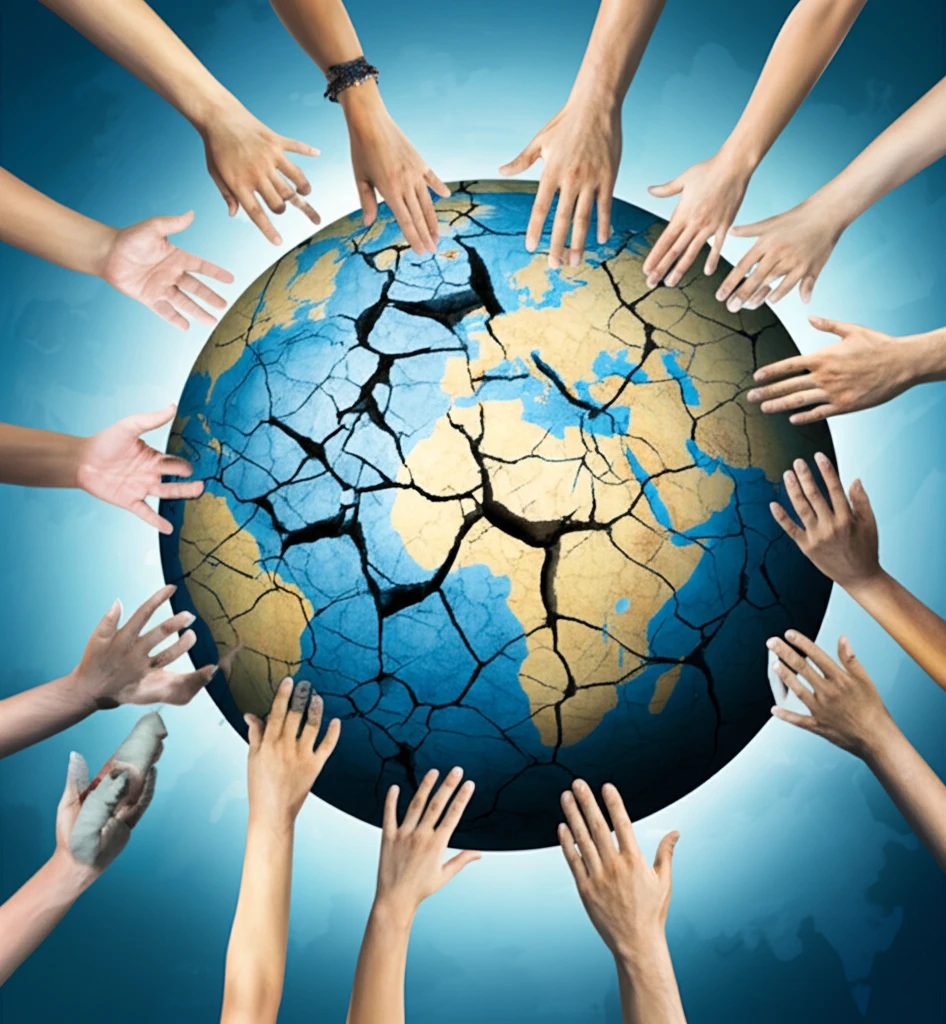
Beyond Borders: Unmasking the Hidden Power Dynamics in Humanitarian Aid

"Is humanitarian aid truly selfless, or does it perpetuate existing inequalities? A critical look at the power structures shaping disaster response."
In times of crisis, the image of aid workers rushing to alleviate suffering is a powerful one. Humanitarian aid is often presented as a purely benevolent act, a testament to our shared humanity. Yet, beneath the surface of these seemingly selfless endeavors lies a complex web of power dynamics, historical legacies, and unintended consequences. Is it possible that our efforts to help are, in some ways, perpetuating the very inequalities we seek to overcome?
This article delves into the critical questions surrounding humanitarian aid, drawing upon academic research to explore the hidden power structures at play. We'll examine how the concept of humanitarianism has evolved, its historical roots in colonialism, and the ways in which it can inadvertently marginalize local communities and reinforce existing power imbalances.
By unmasking these hidden dynamics, we aim to foster a more nuanced understanding of disaster response and promote more equitable and effective approaches to helping those in need. It's time to move beyond simplistic narratives and embrace a critical perspective that empowers local voices and prioritizes community-led solutions.
The Global Reach of Humanitarian Need
Humanitarian crises continue to escalate worldwide, driven by armed conflicts, climate-related disasters, and systemic poverty. Millions of people depend on international aid for survival, food security, and basic healthcare each year. The scale of need consistently outpaces available funding and operational capacity, creating persistent gaps in emergency response and long-term recovery efforts.
Coordination and Implementation Challenges in Humanitarian Response
Humanitarian response implementation faces diverse challenges that span coordination difficulties, resource constraints, and contextual barriers. Research shows that existing studies tend to focus on single disaster contexts or isolated challenge types, rather than providing a global picture of how aid workers view obstacles in their areas of work. Additionally, humanitarian aid—especially in complex emergencies—confronts political limitations that condition both intervention strategies and outcomes. Traditional foundations and approaches appear insufficient in today's increasingly complex and divergent disaster landscape.
From Solferino to Modern Humanitarian Systems
Before the 19th century, organized humanitarian assistance was rare, with early initiatives primarily focused on helping people of the same nationality, driven by religious or local motivations. Modern humanitarian aid evolved from battlefield relief operations into comprehensive disaster response, refugee assistance, and famine relief systems. Several historical milestones, including the story of Dunant and the founding of early relief organizations, proved critical in developing the humanitarian field as we know it today.
The Colonial Echo: How Humanitarianism Reinforces Historical Power Dynamics
The modern concept of humanitarianism, while rooted in noble intentions, has historical ties to colonialism. During the colonial era, European powers often framed their interventions in other countries as acts of benevolence, a "civilizing mission" aimed at improving the lives of the colonized. This paternalistic approach, while seemingly altruistic, served to legitimize colonial rule and reinforce the idea of European superiority.
- Ignoring Local Knowledge: Humanitarian efforts often overlook the expertise and resilience of local communities, undermining their ability to cope with disasters on their own terms.
- Imposing Western Values: Aid programs may inadvertently promote Western values and norms, disregarding local customs and traditions.
- Creating Dependency: A top-down approach to aid can create dependency, preventing communities from developing their own sustainable solutions.
- Lack of Accountability: Local communities often have limited say in how aid is distributed and used, leading to a lack of accountability and potential for corruption.
Emerging Technologies and Workforce Resilience
Research on resilience in disaster aid workers represents a vital and evolving domain with significant implications for occupational health and disaster response effectiveness. Artificial intelligence utilization in humanitarian aid has been analyzed across the crisis cycle, revealing its growing role in both immediate crisis contexts and broader humanitarian settings. The humanitarian sector stands at a critical juncture, confronting deep structural shifts including the transformation of major donor approaches and threats to UN agencies and local NGOs.
Why Humanitarian Efforts Continue to Fail
Decision-makers consistently profit from short-term solutions at the cost of addressing root causes of inequality and food insecurity, explaining why humanitarian efforts keep failing. Problems with humanitarian aid require a radical shift toward localized empowerment and transparent accountability rather than top-down delivery models. Prioritizing long-term sustainability over short-term visibility can transform relief into a tool for genuine, lasting independence for affected communities.
Disaster Relief vs. Humanitarian Aid: Distinguishing Approaches
Disaster relief represents a specific type of humanitarian aid that transitions into broader efforts when the focus shifts from emergency response to addressing underlying vulnerabilities. Coordinating international mission activities involves meaningful differences in methodology, philosophy, and outcomes across different organizations and national contexts. The continuum from immediate life-saving actions to sustainable, medium-term recovery illustrates the complexity of emergency assistance across diverse implementation approaches.
Toward a More Equitable Future: Reimagining Humanitarianism
Moving forward, it is crucial to reimagine humanitarianism in a way that empowers local communities, respects cultural diversity, and challenges existing power imbalances. This requires a shift from a top-down, Western-centric approach to a more collaborative and community-led model. By prioritizing local knowledge, fostering self-reliance, and promoting accountability, we can create a more equitable and effective system of disaster response that truly serves the needs of those affected.
Navigating Ethics and Effectiveness in Modern Humanitarianism
Effective humanitarian response demands ethics, transparency, measurable impact, and smarter donor decisions according to expert guidance on humanitarian aid assessment. Research institutions continue exploring best practices for humanitarian relief efforts and post-disaster reconstruction to improve coordination and outcomes. Independent newsrooms and policy organizations provide critical analysis and commentary essential for understanding evolving humanitarian challenges and accountability gaps.
The Politicized and Fragmented Humanitarian Landscape Ahead
The humanitarian sector faces critical structural shifts that will redefine its future, including the transformation of U.S. aid approaches and contraction of foreign development funding from major donors. Economic sanctions and embargoes further hamper aid flows, delaying critical support and eroding the impartiality of humanitarian responses. Continuous dialogue on the future of humanitarian aid, along with ongoing sense-making of weak signals emerging at the periphery, remains essential for navigating emerging challenges.
Cascading Crises and Governance Dimensions
Systematic review reveals six interconnected dimensions of humanitarian challenges, including systemic and governance challenges with politicized aid structures and weak coordination mechanisms. Global humanitarian challenges will become increasingly complex in coming decades, necessitating critical adjustments from all actors including international organizations, regional bodies, governments, and civil society. Effective international humanitarian action in natural disaster contexts requires addressing these multifaceted governance and implementation barriers simultaneously.
Humanitarian Relief in Action: Lessons from the Field
Real-world examples of humanitarian relief efforts during earthquakes, hurricanes, and epidemics demonstrate how organizations collaborate to address crises and their impact on vulnerable communities. Case studies from major disasters including the Haiti 2010 earthquake highlight civil-military information sharing and its effects on disaster relief operations. The UN coordinates humanitarian relief when natural and man-made disasters inflict devastation beyond what affected countries can handle, illustrating the essential role of international coordination.