
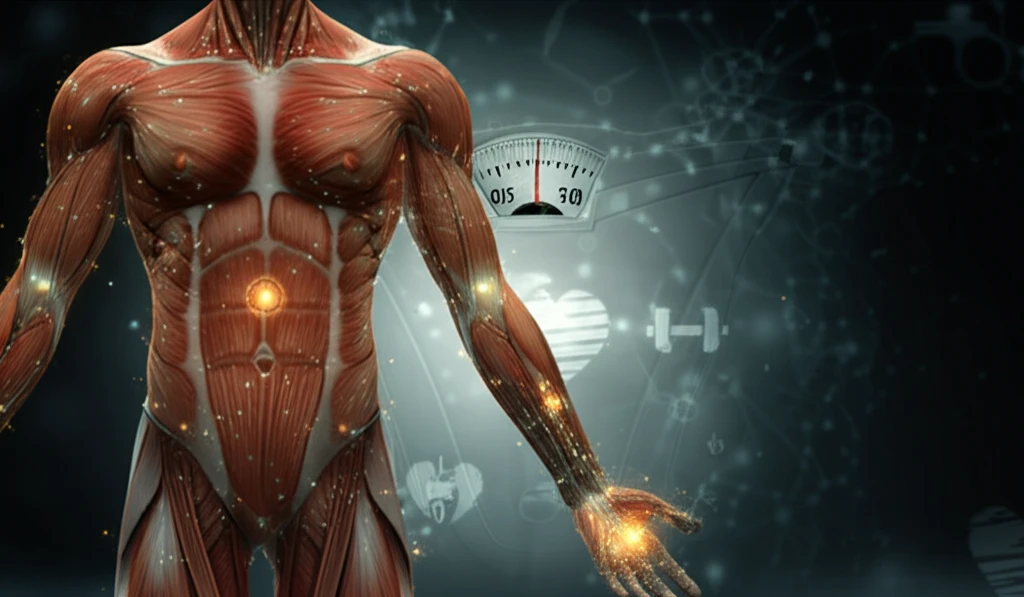
Beyond BMI: Unlocking the Secrets of Body Composition for a Longer, Healthier Life

"Discover how understanding your fat and lean mass can rewrite the rules of the 'obesity paradox' and pave the way to personalized health strategies."
In a world obsessed with weight, the Body Mass Index (BMI) has long reigned as the go-to measure of health. But what if this simple number is missing a crucial piece of the puzzle? As obesity rates climb, researchers are uncovering a more nuanced picture of health that goes beyond just weight.
Enter body composition: the ratio of fat mass to lean body mass (muscle, bone, and water) in your body. Emerging research suggests that this may be more important than your overall weight. This is where the "obesity paradox" phenomenon comes in. The paradox occurs when people who are overweight, as defined by a BMI of 25 kg/m² or higher, appear to live longer than those with a 'normal' BMI.
Why does this happen? The answer lies in body composition. BMI can't distinguish between muscle and fat, yet the relationship between the two can play an important role in mortality rates. In this article, we'll explore the science behind body composition, debunk the limitations of BMI, and reveal how understanding your body's unique makeup can pave the way for a longer, healthier life.
Why Body Composition Matters
Body composition offers a more detailed view of health than body weight or BMI alone because it considers the proportions of fat, lean tissue, bone, and water. However, its relationship with long-term health depends on factors such as age, sex, fitness, medical history, and how measurements are obtained. Body-composition measures are therefore best interpreted as part of a broader health assessment rather than as standalone verdicts.
Beyond a Single Number
BMI and scale weight remain commonly used because they are inexpensive, simple, and easy to track. They cannot, however, distinguish fat from muscle or show where fat is distributed in the body. More detailed methods may provide additional context, but their accuracy, availability, and results can vary, so no single measurement should be treated as definitive.
From Parts to Systems
Understanding body composition begins with the broader development of human anatomy: the human body is organized from living cells and extracellular materials into tissues, organs, and organ systems. Sources describe the body as a complex collection of cells, tissues, organs, and systems whose parts work together to support moment-to-moment function. This systems-based perspective provides an important foundation for looking beyond body weight toward the different components that make up the human organism.
Fat vs. Lean: What Does Your Body Composition Really Mean?
Think of your body as a building. Muscle is the steel frame, providing strength and support. Fat is the insulation, which, in moderation, helps regulate temperature and store energy. Too much or too little of either can compromise the building's integrity.
- Fat Mass: Essential for hormone production, insulation, and energy storage. However, excess fat mass, particularly visceral fat (the kind that surrounds your organs), is linked to increased risk of heart disease, type 2 diabetes, and certain cancers.
- Lean Body Mass: Composed of muscle, bone, water, and organs. Muscle is crucial for metabolism, strength, mobility, and overall function. Loss of muscle mass (sarcopenia) is a major concern as we age, leading to frailty, decreased mobility, and increased risk of falls.
An Evolving Evidence Base
Research on body composition continues to develop as scientists examine how fat, muscle, bone, and other tissues relate to health. Findings may differ according to the population studied, the measurement method used, and the outcome being assessed. Readers should therefore treat emerging conclusions as informative but potentially subject to refinement.
Limits of Simplification
Body-composition measures can be useful, but they do not capture every factor that influences health or quality of life. Measurements may also be affected by technique, timing, hydration, and the limitations of the device or method. Overreliance on any single result can produce an incomplete or misleading assessment.
Comparing Measures Carefully
BMI, waist measurements, body-fat estimates, strength, and functional indicators each describe different aspects of health. They should not be assumed to be interchangeable or expected to produce identical conclusions. A more balanced comparison considers what each measure captures, what it misses, and how reliably it can be obtained.
The Future of Health: Personalized Strategies Based on Body Composition
The journey to better health isn't about chasing a number on the scale; it's about understanding your body's unique composition and tailoring strategies to optimize it. By moving beyond BMI and embracing body composition analysis, we can unlock a new era of personalized health, empowering individuals to live longer, healthier, and more fulfilling lives.
A Broader Health Picture
The central value of body-composition assessment is that it can add context to conventional measures such as weight and BMI. Its interpretation should remain individualized and should account for physical function, health history, and trends over time. Used carefully, body composition can contribute to a broader conversation about healthy aging rather than define health by itself.
What Comes Next
Future progress may make body-composition assessment more accessible, consistent, and useful in everyday care. Better tools could help distinguish meaningful changes from normal measurement variation and connect composition with function and clinical outcomes. Until those advances are firmly established, new approaches should be evaluated for accuracy, practicality, and real-world benefit.
Measurement in Context
The usefulness of body-composition information depends not only on technology but also on access, affordability, interpretation, and the quality of follow-up care. Differences in equipment and methods can make results difficult to compare across settings. A responsible approach should also recognize that social conditions and healthcare access influence the ability to act on health information.
From Data to Daily Life
Body-composition measurements matter most when they help people make realistic, sustainable decisions about health. Numbers can motivate useful conversations, but they can also create anxiety or encourage an overly narrow focus on appearance. The most meaningful interpretation connects measurements with how a person feels, functions, and lives.