
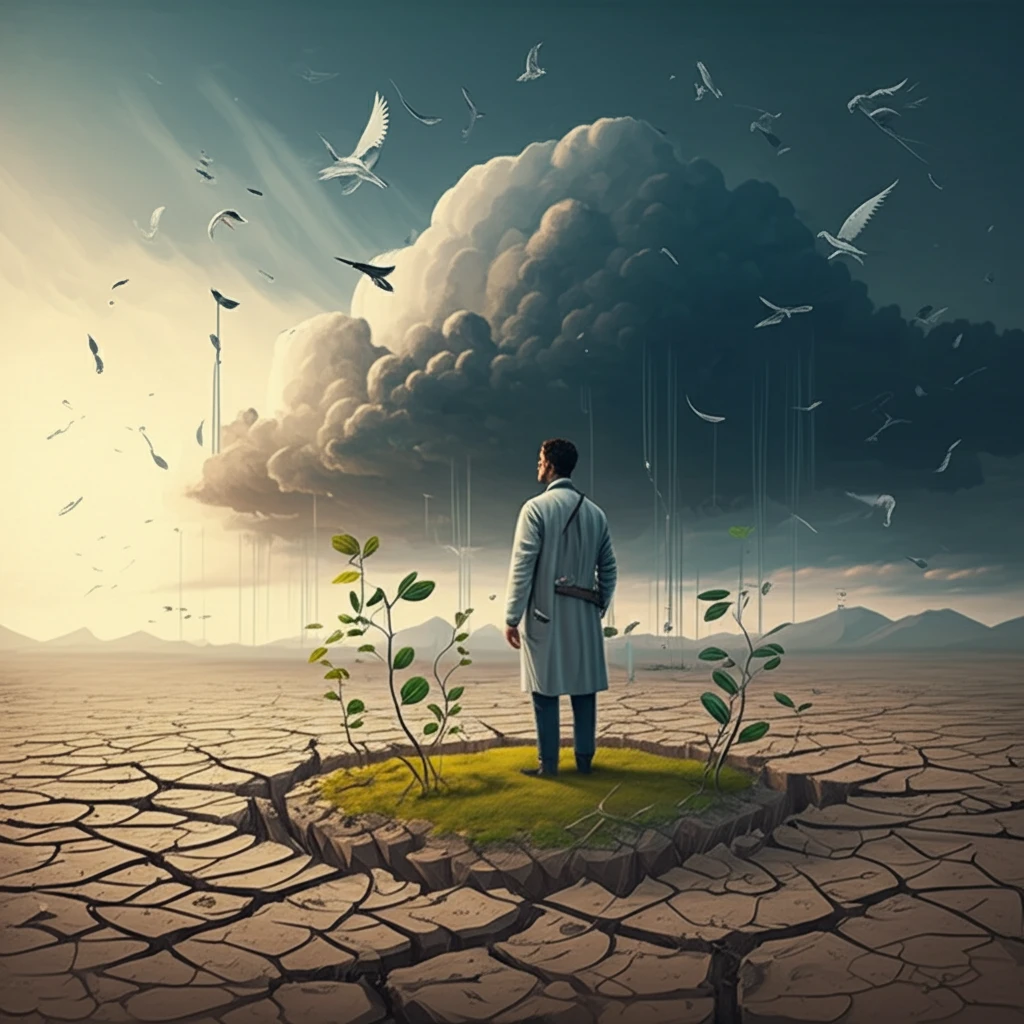
Beating Burnout: Practical Strategies for Trainee Psychiatrists and Medical Professionals

"A comprehensive guide to understanding and managing burnout, occupational stressors, and the crucial role of social support in the demanding fields of psychiatry and medicine."
The fields of psychiatry and medicine are undeniably demanding. The weight of patient care, long hours, and the emotional toll of the work can lead to a state of burnout, characterized by emotional exhaustion, depersonalization, and a reduced sense of personal accomplishment. For trainee psychiatrists and medical professionals, these challenges can be particularly acute, making it essential to understand and address the factors that contribute to burnout.
Research consistently highlights the elevated rates of psychological distress among medical professionals, particularly psychiatrists. Factors contributing to this distress range from personal predispositions and early trauma to external occupational stressors such as threatening patients, the risk of patient suicide, and aggressive administrative environments. However, the impact of social support as a buffer against these stressors is a crucial area of exploration.
This article delves into the critical issues of burnout, occupational stressors, and social support among psychiatric and general medical trainees. Drawing on research, it offers practical strategies to mitigate burnout, manage workplace stress, and harness the protective power of social connections, empowering trainees to prioritize their well-being and foster sustainable careers.
The Scope of Burnout in 2026
Burnout continues to escalate across professions in 2026, with one in five workers reporting time off due to poor mental health caused by stress, rising to two in five among young adults aged 18-24. K-12 teachers rank as the number one most burnt-out profession in the United States, reflecting how deeply the crisis penetrates even traditionally stable careers. The financial and human costs are substantial—burnout statistics reveal widespread prevalence across industries, with healthcare, education, and service sectors among the hardest hit.
Why Conventional Burnout Solutions Fall Short
Standardized assessment tools like the Maslach Burnout Inventory (MBI) remain the international benchmark, yet researchers acknowledge significant limitations in what these scales actually measure. Common burnout solutions fail many professionals because they rest on false assumptions: that exhaustion stems solely from work, and that recovery time is genuinely available—neither of which holds true for most medical trainees. A standard burnout is notoriously difficult to spot since it lacks obvious warning signs, meaning early detection requires deliberate effort and awareness of subtle behavioral changes.
The Origins and Evolution of Burnout as a Concept
The term burnout was first coined by psychologist Herbert Freudenberger in the 1970s, who observed it among volunteers at a free clinic, comparing it to how buildings burn out. Psychologist Christina Maslach later developed the foundational Maslach Burnout Inventory, which remains the most widely used assessment tool worldwide. Originally the term referred to a mild degree of unhappiness caused by job stress, but scholars Liu and van Liew have argued the concept has since been overused and lost much of its original meaning. The idea of burnout has a long history that extends well beyond professional life, shaped by broader social, economic, and cultural transformations.
Understanding Burnout and Its Impact
Burnout is more than just feeling tired; it's a state of emotional, physical, and mental exhaustion caused by prolonged or excessive stress. For trainee psychiatrists and medical professionals, burnout can manifest in several ways:
- Depersonalization: Developing a cynical, detached, and impersonal attitude toward patients and colleagues.
- Reduced Personal Accomplishment: A sense of ineffectiveness and a lack of satisfaction with one's work. You might feel like you're not making a difference, leading to decreased motivation and productivity.
- Physical Symptoms: Headaches, digestive issues, sleep disturbances, and a weakened immune system can be physical manifestations of burnout.
Current Evidence on Burnout in Healthcare
Recent research has identified strong associations between burnout and inadequate psychological support, direct contact with infected patients, and working in the nursing profession, particularly in the context of COVID-19. Mental Health UK's 2026 report found that just one in four workers feel their mental health is genuinely prioritized and supported in the workplace, with high stress pushing workers into sick leave. Studies analyzing burnout among nurses and doctors in operating theaters reveal that researchers' interest in occupational burnout stems primarily from its dangerous and extensive consequences.
Reframing Burnout: Systemic Issue, Not Personal Failing
A significant body of scholarship challenges the view that burnout is a personal failing, arguing instead that it is fundamentally a systemic workplace issue. Harvard Business Review emphasizes that burnout is preventable through good organizational hygiene, better data collection, and smarter budgeting—solutions that require institutional commitment rather than individual resilience. Some researchers debate whether burnout should be conceptualized as a mental disorder, noting it is generally acknowledged as a pervasive occupational difficulty rather than a clinical diagnosis. Emily Nagoski's work specifically challenges critics who dismiss burnout as a personal failure rather than a consequence of systemic issues.
Distinguishing Burnout from Related Conditions
Autistic burnout differs meaningfully from regular burnout, involving unique challenges such as prolonged sensory overload and masking exhaustion that standard burnout frameworks do not capture. Regular occupational burnout is characterized by three dimensions—emotional exhaustion, depersonalization, and reduced personal accomplishment—which help distinguish it from depression and general stress. Understanding these distinctions matters because interventions effective for standard burnout may not address the specific neurobiological and social factors driving autistic burnout. Depression remains broader and deeper than stress or burnout, affecting mood, energy, and sense of self in ways that require different clinical approaches.
Taking Control of Your Well-being
The journey to preventing and overcoming burnout is an ongoing process. By understanding the stressors, harnessing the power of social support, and implementing proactive strategies, trainee psychiatrists and medical professionals can take control of their well-being, build resilience, and foster long, fulfilling careers. Remember, prioritizing your mental and emotional health is not a luxury; it's a necessity for providing the best possible care to your patients and sustaining your passion for medicine.
Expert Perspectives on Preventing and Addressing Burnout
Expert consensus holds that the best solution to burnout is preventing it from occurring in the first place rather than treating it after the fact. Burnout is typically characterised by feelings of emotional exhaustion, significant disengagement, and a loss of self-worth and self-efficacy, with affected workers feeling they are working too hard while losing connection to those they serve. A Philadelphia physician emphasizes that strong doctor-patient relationships can serve as a protective factor against burnout, adding a deeply human dimension to prevention strategies. Experts also stress the importance of spotting burnout early, noting that awareness and timely intervention can prevent escalation.
Emerging Recovery Strategies and Research Directions
Recovery from burnout does not happen overnight—burnout often comes after years of over-functioning and over-straining, requiring sustained, multi-phase recovery rather than quick fixes. Research on self-efficacy and positive future outlook among adolescents found that students with the highest self-efficacy had the most positive future outlooks and the least school burnout, suggesting self-efficacy may be a key intervention target. Emerging trends in social work burnout research point toward proactive prevention models and organizational support systems as promising future directions. Calm and other wellness platforms now outline structured recovery phases, acknowledging that addressing burnout requires patience and layered support.
Burnout as a Systemic Crisis in Healthcare
Physician burnout is not merely a personal struggle but a systemic challenge requiring collective vigilance and collaborative strategies across institutions. Over 35 years of burnout research traces its roots to broad social, economic, and cultural developments—specifically the rapid transformation from an industrial society into a service economy. Burnout is fundamentally systemic, arising from workplace stress rather than personal failure, and its impacts extend to patients, staff, organizational culture, and workforce retention. Effective solutions must therefore operate at multiple levels—individual, team, and institutional—rather than placing the burden of recovery solely on the affected professional.
The Lived Experience of Burnout
Burnout can significantly affect cognitive function, including memory impairment, making it harder for affected professionals to perform even routine tasks effectively. Many companies have begun investing in mental health benefits, time off, and wellness resources like meditation rooms and mindfulness apps in response to growing burnout awareness. Burnout progresses through identifiable stages, and research from Winona State University along with psychological studies outlines five distinct phases that help individuals recognize where they are in the burnout cycle. The human cost extends beyond individual suffering—burnout erodes relationships, confidence, and the capacity to engage meaningfully with work and life.