
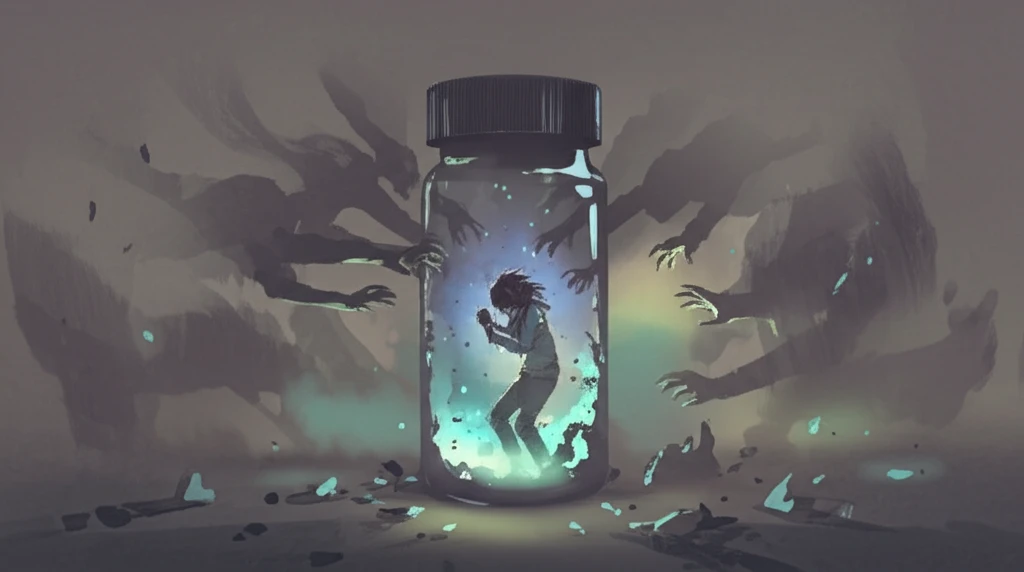
Are Your Psychiatric Meds Making You Worse? Understanding Drug-Induced Trauma

"Unmasking the dangers of psychiatric drugs: Learn how they can trigger trauma and what to do about it."
Trauma, whether simple or complex, leaves a lasting impact. While we often associate trauma with accidents, violence, or emotional distress, medications can also contribute. Psychiatric drugs, intended to heal, may inadvertently cause further distress and worsen a patient's quality of life.
Dr. Charles L. Whitfield's research delves into this phenomenon, describing how common psychiatric drugs can be toxic and chronically traumatic. This condition, termed Drug Stress Trauma Syndrome (DSTS), highlights the importance of understanding the potential dark side of psychiatric treatments.
This article unpacks Dr. Whitfield’s observations, providing insights into how psychiatric drugs can act as agents of trauma. We'll explore the risks, symptoms, and potential paths to recovery, arming you with the knowledge to make informed decisions about your mental health.
A Widespread and Growing Phenomenon
Psychiatric drug use is tracked by IQVia (formerly IMS Health), which the CCHR describes as the most accurate data available on the number of Americans taking these medications. Internationally, Statista reports that psychiatric drugs are used to treat a wide range of mental health disorders, which it attributes to a mix of genetic and environmental factors. Mad in America highlights that prescription drugs are the leading cause of death, with psychiatric drugs ranked as the third leading cause, citing CDC figures in which heart disease (695,547), cancer (605,213), COVID-19 (416,893), and accidents (224,935) were the top causes. Survey data covering more than 37,400 Americans showed that nearly 17 percent of adults used one or more psychiatric drugs in 2013, up from 10 percent in 2011.
From Under-Use to Routine Prescribing
The OUPblog notes a dramatic reversal in psychiatric practice: forty years ago, psychiatrists who believed in psychotherapy made insufficient use of drugs, while today drugs are almost the only treatment psychiatrists offer and are prescribed routinely. MentalHealthDaily cautions that many dangerous psychiatric drugs are insidious because they provide symptomatic relief but can end up producing disabling long-term effects, some of which are permanent, and it singles out antipsychotics as the fastest route to weight gain. The Inner Compass examines how psychiatric drugs are researched and marketed, a process that shapes which treatments reach patients. Hims frames understanding common psychiatric drugs as an important step in learning about mental health, reflecting how mainstream the medication-first approach has become.
Building Blocks of the Modern Psychiatric Arsenal
Wikipedia identifies the major classes of psychiatric drugs as antidepressants, anxiolytics, antipsychotics, mood stabilizers, and stimulants, which together form the foundation of modern psychopharmacology. The discipline itself has deep roots, with presentations such as the 'History of Psychiatry – 19th Century' tracing the field's early development. Mad in America's coverage of the science of psychiatric drugs reports that these medications have been linked to an increased risk of a rare, incurable neurological disease that causes loss of motor function, underscoring longstanding safety concerns. The CCHR offers downloadable fact sheets on psychiatric drug warnings, conflicts of interest, and related topics for those seeking deeper historical and scientific context.
The Hidden Toxicity of Psychiatric Drugs
Many assume that legally prescribed medications are inherently safe. However, psychiatric drugs can be as, or even more, toxic than illegal substances. Dr. Peter Breggin, a renowned psychiatrist, points out that while people often use substances like alcohol or marijuana to numb their feelings, they don't believe they are improving their brain function. In contrast, psychiatric drugs are often taken with the belief that they will enhance mental well-being, yet they can disrupt brain function and lead to destructive mental reactions.
- Disrupt brain function and cause dangerous mental reactions.
- Lead to physical dependence and severe withdrawal symptoms.
- Cause emotional numbness and increase suicidal thoughts.
- Result in long-term distress and a worsened quality of life.
Industry Influence and Safety Rankings
Medical Xpress reports that psychiatric drugs appear to be about 50 percent more effective in clinical trials funded by the drug's manufacturer than when trials of the same drug are sponsored by other groups, raising questions about how results are shaped by funding. The Alliance for Human Research Protection points to a string of scientific reports untainted by industry influence that concluded current psychiatric prescribing practices are of little, if any, therapeutic value. Research highlighted by the NIH Evidence programme examined published reports of adverse effects in young people with psychiatric disorders and found that the safest drugs for treating depression were escitalopram and fluoxetine. Together these findings illustrate both the promise and the limits of the current evidence base.
Why the Drugs Aren't Working Better
Vox reports that despite billions of dollars invested, neuroscientists are still struggling to address the mental health crisis and to explain why psychiatric drugs do not work better than they do. The publication frames the inability to improve on existing antidepressants and other psychiatric drugs as one of the field's most pressing open problems. A counterpoint comes from SELF, which emphasizes that psychiatric drugs can be life-savers for people who need them. Clinical psychologist John Mayer tells SELF that psychotropic drugs, when properly evaluated, administered, and followed up on, are 'miracles for people suffering emotional problems,' highlighting the gulf between critiques of the system and individual experiences of benefit.
Drugs Versus Alternatives
A PMC article explains that the widespread use of psychiatric drugs is justified by what it calls the disease-centred model of drug action, the idea that drugs work by correcting underlying biological abnormalities that produce psychiatric symptoms. MindFreedom International presents alternatives to psychiatric drugs and highlights medical journalist Bob Whitaker's claim that he has uncovered a deception in psychiatry's assertion of scientific progress. The Voices for Choices video series notes that psychiatric drugs are controversial because some people find benefit, some are harmed, and some avoid them altogether. CCHR International also catalogues alternatives to drugs and reports that some psychiatrists and physicians admit that these disorders are not a 'disease.'
Taking the First Step Towards Healing
The effects of psychiatric drugs can be so detrimental that they should no longer be considered mere
Does Long-Term Use Do More Harm Than Good?
A Head to Head debate published in The BMJ asked whether long-term use of psychiatric drugs causes more harm than good, with contributors including Gotzsche, Young, and Crace, and the Science Media Centre gathered expert reactions to the exchange. Reporting on the debate, The Guardian quotes the view that psychiatric drugs do more harm than good, while also noting that long-term use of schizophrenia drugs appeared to reduce early deaths. The Guardian's coverage adds that regular reviews of treatment between patient and psychiatrist are needed to continually weigh the pros and cons of any therapy. Research covered by Psychiatric Times, led by Stefan Leucht of Munich Technical University, puts the effectiveness of psychiatric drugs and general medical drugs into perspective, suggesting a more measured reading of both benefits and harms.
Shifting Practice and the Road Ahead
Scientific American reports that the number of psychiatrists who focus on talk therapy is dwindling, a striking shift from the 1960s heyday of psychoanalysis, when psychiatrists often saw patients five days a week. That trend raises questions about how medication-centred psychiatric practice will evolve. The Coming Off Psychiatric Drugs workshop led by Will Hall addresses how antipsychotics, antidepressants, mood stabilizers, and other drugs can be used wisely, and how clinicians and patients can collaborate effectively around risks and benefits. Looking further ahead, a Science magazine podcast takes up the future of psychiatric drugs as a topic of ongoing scientific exploration.
Side Effects, Toxicity, and Systemic Risks
CCHR International provides psychiatric drug facts and resources for reporting side effects, while also cataloguing health options and information for patients. Northpoint Recovery reports that psychiatric drugs are now killing more people than heroin and other illicit drugs, arguing that their dangers are widely underestimated. A CCHR quick-facts page states that psychiatrists cannot predict what adverse side effects a patient might experience because, in its view, none of them know how their drugs work, and it describes psychotropic drugs as chemical toxins with the power to kill. Mad in America adds that a scan of any FDA-approved Full Prescribing Information for a psychiatric drug confirms that these medications produce a broad array of serious neurotoxic impacts.
Personal Stakes and Real Lives
Drug Awareness's coverage of 'Psychiatric Drugs & War: A Suicide Mission' by Kelly O'Meara brings the human cost of psychiatric drug use in military settings into focus. The piece quotes Dr. Billings, who asks why psychiatry has not been held accountable given that it is responsible for mental health in the military yet has not stopped the suicides, and observes that any organization whose leadership continually fails and loses lives would ordinarily be removed. The human element also comes through in case-based education, as a review of 'Case Studies in Psychopharmacology' in the Primary Care Companion describes a format built around opening cases, question-and-answer discussion, and concluding summary points for each issue-based chapter. Together these sources show how psychiatric drugs play out in individual lives and institutional settings, far beyond the prescribing pad.