
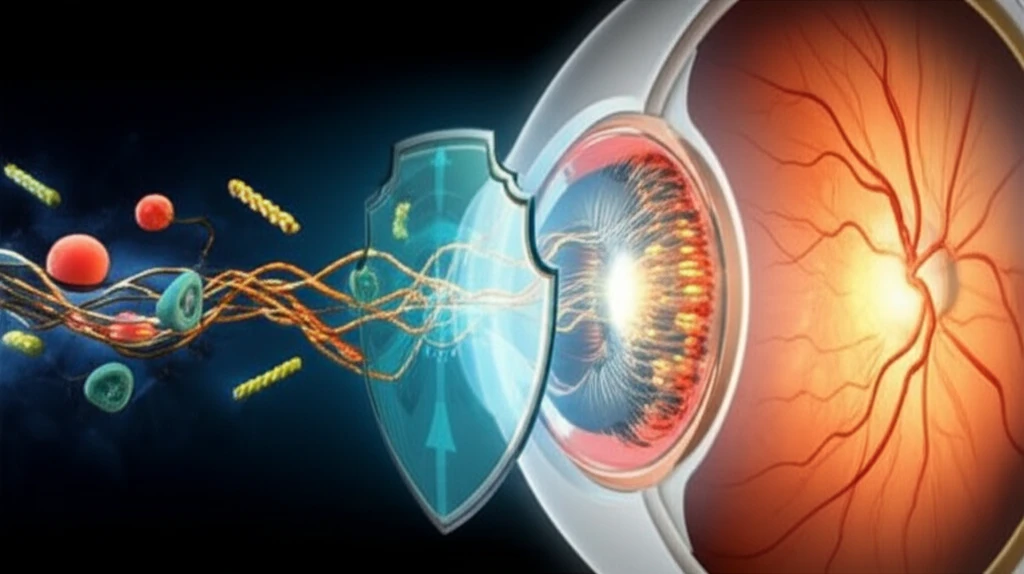
AMD & RPE: Unlocking the Secrets to Age-Related Macular Degeneration

"A deep dive into the latest research on how retinal pigment epithelium (RPE) and mitochondrial health impact age-related macular degeneration (AMD)."
Age-related macular degeneration (AMD) stands as a significant threat to vision, affecting a large portion of the aging population. Characterized by the gradual deterioration of the macula, the central area of the retina responsible for sharp, detailed vision, AMD leads to difficulties in performing everyday tasks such as reading and driving. Understanding the complexities of AMD is crucial for developing effective prevention and treatment strategies.
Recent studies highlight the critical role of the retinal pigment epithelium (RPE) in the development and progression of AMD. The RPE, a layer of cells located beneath the photoreceptors in the retina, supports the health and function of these light-sensitive cells. Dysfunction or damage to the RPE can disrupt the delicate balance within the retina, contributing to the onset of AMD. This article will explore the link between AMD and the RPE, diving into the molecular mechanisms and potential therapeutic interventions.
This article delves into groundbreaking research investigating the intricate relationship between RPE health, mitochondrial function, and the onset of AMD. We’ll explore how age-related changes in mitochondria, the powerhouses of our cells, impact RPE function and contribute to AMD. Discover the exciting possibilities for future treatments, focusing on supporting RPE health and combating the effects of AMD.
AMD Prevalence and Growing Global Burden
Age-related macular degeneration (AMD) is one of the most important causes of vision loss in older adults, with prevalence rising sharply as populations age. The CDC's VEHSS program used Bayesian meta-regression to model AMD prevalence across the entire US population in 2019, producing the agency's primary estimates for the disease. Globally, studies using the Global Burden of Disease 2021 data assessed AMD burden across countries, regions, and age groups from 1990 to 2021, examining disparities by sex and sociodemographic index level. The biggest trend is straightforward: AMD becomes much more common with age, so the total number of affected people rises as the global population gets older.
Current Diagnostic and Treatment Approaches
Diagnosis of AMD typically relies on a combination of patient age, clinical examination, and imaging of the retina to detect hallmark features such as drusen and pigmentary changes. Treatment strategies differ by disease subtype: anti-VEGF therapies are the standard of care for wet (neovascular) AMD, while dry AMD management has historically centered on vitamin supplementation and risk factor modification. However, these approaches have notable limitations—anti-VEGF treatments require frequent intravitreal injections, and the evidence supporting supplements for dry AMD prevention remains debated. Early detection and growing awareness of modifiable risk factors represent important but incomplete progress in addressing the disease.
Foundational Understanding of AMD
Age-related macular degeneration is characterized by the accumulation of extracellular deposits called drusen beneath the retina, along with progressive degeneration of photoreceptors and adjacent tissues. The disease damages the macula—the small central part of the retina responsible for sharp, detailed central vision—making tasks like reading, driving, and recognizing faces increasingly difficult. AMD is recognized as the leading cause of legal blindness in the industrialized world, a distinction underscored by the International Classification of Diseases, which categorizes it into nonexudative and exudative subtypes. Notably, the American Academy of Ophthalmology does not currently recommend genetic testing for AMD, as gene therapy is not yet available for prevention or management of the condition.
The RPE's Vital Role in Protecting Your Vision
The retinal pigment epithelium (RPE) is a single layer of cells that performs several essential functions within the eye, including:
- Nutrient Transport: Delivering vital nutrients to the photoreceptors.
- Waste Removal: Eliminating waste products from the photoreceptors.
- Light Absorption: Absorbing scattered light to enhance visual clarity.
- Phagocytosis: Engulfing and removing shed photoreceptor outer segments.
Evolving Research Landscape
Research into age-related macular degeneration continues to expand, with investigators exploring the complex interplay of genetic susceptibility, environmental triggers, and inflammatory pathways that drive disease progression. Recent work has focused on identifying earlier biomarkers and refining imaging techniques to detect subclinical changes before significant vision loss occurs. While no single breakthrough has yet transformed the treatment paradigm entirely, the breadth of ongoing investigation across pathophysiology, epidemiology, and therapeutic development suggests the field is approaching a period of meaningful advancement.
Treatment Limitations and Unresolved Challenges
AMD remains the leading cause of irreversible blindness in adults over 60 in industrialized countries, a statistic that has persisted despite decades of therapeutic progress. For dry AMD, the primary treatment remains vitamin supplementation, though its effectiveness in preventing progression to advanced disease has been questioned. Advanced AMD is categorized as either atrophic (dry) or exudative (wet), with dry AMD specifically characterized by progressive geographic atrophy—a process that current therapies only modestly slow. The high prevalence among Europeans and North Americans compared to African, Hispanic, and Asian populations also raises unresolved questions about whether existing research and treatment models are sufficiently equitable.
Evaluating Evidence Across Approaches
Comparing AMD treatment strategies requires acknowledging that wet and dry forms of the disease have fundamentally different mechanisms and therapeutic targets, making direct comparisons complex. Anti-VEGF therapies for wet AMD have demonstrated clear clinical efficacy in preserving vision, while dry AMD interventions remain more limited in scope and impact. Current evidence suggests that early diagnosis and risk factor management—including smoking cessation and cardiovascular health—may offer the most meaningful opportunity for reducing disease burden at a population level, though definitive preventive treatments remain elusive.
- Mitochondrial Dysfunction: Age-related changes in mitochondria impair cellular energy production and increase oxidative stress.
- Lipofuscin Accumulation: The build-up of lipofuscin, a metabolic waste product, interferes with RPE function.
- Oxidative Stress: An imbalance between free radical production and antioxidant defenses damages cellular components.
- Inflammation: Chronic inflammation in the macula contributes to RPE damage and dysfunction.
Protecting Your Vision for a Brighter Future
Understanding the complex relationship between RPE health, mitochondrial function, and AMD offers hope for future treatments and preventative strategies. By focusing on supporting RPE function, reducing oxidative stress, and managing inflammation, we can work towards preserving vision and improving the quality of life for individuals at risk of or affected by AMD. Regular eye exams, a healthy lifestyle, and staying informed about the latest research are crucial steps in protecting your vision for a brighter future.
Integrating Current Knowledge
The accumulated evidence positions AMD as a disease where significant progress in understanding has not yet fully translated into proportionate therapeutic advances, particularly for the dry form. Experts consistently emphasize that early detection and patient education remain critical interventions, even as the field works toward more effective treatments. The intersection of demographic trends—with aging populations worldwide—creates both urgency and opportunity for research to accelerate. Bridging the gap between laboratory discoveries and real-world clinical outcomes will be essential for meaningfully reducing AMD's burden in the coming decades.
Emerging Opportunities and Epidemiological Trajectory
The long-term epidemiological trajectory of AMD is closely tied to global population aging, with studies characterizing burden trends in adults aged 45 and older across countries and regions. Researchers are actively identifying future opportunities and challenges in the field, with recent special issues dedicated to discussing the current status and next frontiers of AMD research. Understanding these long-term trends is considered essential for anticipating future healthcare needs and guiding preventive strategies. As the global population continues to age, the demands on healthcare systems to manage AMD-related vision loss are expected to intensify significantly.
Systemic and Public Health Considerations
AMD is increasingly recognized not solely as a clinical condition but as a public health challenge requiring coordinated, system-level responses. The disease's impact extends beyond individual patients to encompass healthcare infrastructure, caregiver burden, and socioeconomic disparities in access to treatment and monitoring. Addressing these systemic dimensions demands integration across ophthalmology, primary care, public health policy, and health equity initiatives. As prevalence continues to rise with aging populations, the capacity of healthcare systems to provide timely diagnosis and ongoing management will be tested without proactive planning and resource allocation.
Quality of Life and Daily Functioning
A systematic review of evidence found that AMD significantly affects real-world visual ability and quality of life, with impacts extending across multiple domains of daily functioning. The Global Burden of Disease Study 2021 data has been used to assess AMD burden and risk factors at a population level, reinforcing the disease's classification as a critical public health issue requiring prioritized strategies. Real-world clinical experience with treatments such as brolucizumab for wet AMD has provided additional data on therapeutic efficacy and safety outside controlled trial settings. Together, these findings underscore that AMD's consequences reach far beyond clinical measurements of visual acuity, affecting independence, mental health, and overall well-being.