
Ambicor vs. Three-Piece: Choosing the Right Penile Prosthesis for You

"Navigating the Options: A Comprehensive Guide to Inflatable Penile Prostheses, Comparing Ambicor and Three-Piece Devices"
Erectile dysfunction (ED) can significantly impact a man's quality of life, affecting both physical intimacy and emotional well-being. Fortunately, advancements in medical technology have provided effective solutions, and one of the most reliable is the penile prosthesis. If you're considering this option, understanding the different types of prostheses is crucial to finding the best fit for your needs.
This article delves into the two main types of inflatable penile prostheses (IPPs): the Ambicor, a two-piece device, and the more commonly used three-piece devices. We'll explore their features, advantages, disadvantages, and suitability for different individuals. Our goal is to provide you with the knowledge needed to make an informed decision about restoring your sexual health.
We'll consider factors like surgical considerations, patient satisfaction, and mechanical reliability. Furthermore, we’ll provide insights into the unique characteristics of each device to help you determine which one aligns best with your lifestyle and health goals.
Growing Global Use
A worldwide study compiled data on more than 63,000 penile implants performed between 2005 and 2012 and found that implantation numbers steadily increased during that period. A separate review describes penile prostheses as a durable and effective treatment for erectile dysfunction and says prosthetic surgery remains a mainstay for urologists. Industry analysis reported that the penile implants market exceeded USD 453.1 million in 2023 and projected approximately 4.7% CAGR from 2024 through 2032, citing the rising incidence of erectile dysfunction as a driver.
Individualized Surgical Choice
Penile prosthesis surgery is generally considered when erectile dysfunction has not been adequately addressed by less invasive treatments. The choice between an inflatable or malleable device depends on factors such as health, anatomy, dexterity, expectations, and the surgeon's assessment. Because implantation is surgery, patients should discuss recovery, device operation, possible complications, and the likelihood of revision before deciding.
From Bone to Inflatable Devices
The first example described in the supplied history dates to 1935, when a rib was inserted into a reconstructed neo-phallus after traumatic amputation. Historical accounts also describe treatment proposals for erectile dysfunction as far back as the 8th century BC. A major modern milestone was the introduction of the inflatable penile prosthesis in 1973, followed by continuing advances in surgical knowledge and prosthetic materials. Penile prostheses have also been used to create a fully rigid neo-phallus in gender-affirming surgery and penile reconstruction after trauma.
Ambicor (Two-Piece) vs. Three-Piece IPPs: A Detailed Comparison
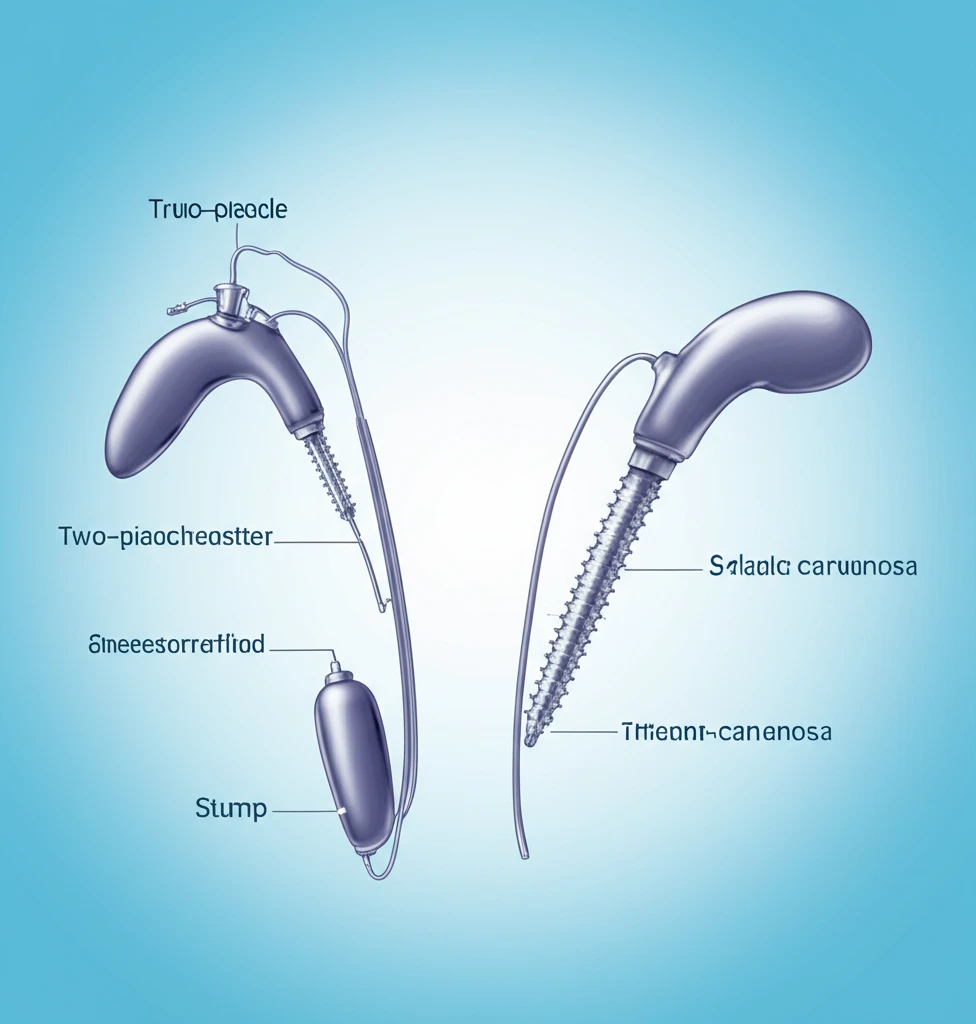
The fundamental difference between the Ambicor (two-piece) and three-piece IPPs lies in their design and functionality. The three-piece device consists of a pair of inflatable cylinders implanted within the penis, a pump placed in the scrotum, and a reservoir containing the fluid, typically placed in the abdomen. The Ambicor, on the other hand, integrates the reservoir into the inflatable cylinders, simplifying the device’s components.
- Surgical Complexity: Two-piece IPPs may involve a less invasive procedure, but reservoir placement in three-piece IPPs has become more refined.
- Erection Quality: Three-piece devices are generally known for providing a more rigid and natural erection.
- Mechanical Reliability: Both devices have improved over time, but any mechanical device carries a risk of failure.
- Patient Satisfaction: Satisfaction levels vary, and are influenced by multiple factors, including the patient's expectations and overall health.
An Evolving Evidence Base
Recent reviews continue to examine penile prosthesis outcomes, device performance, and patient experience. The available evidence should be interpreted with attention to study design, follow-up duration, and the outcome measures selected. Patients comparing Ambicor and three-piece implants should therefore rely on current clinical evidence together with individualized discussion with a qualified urologist.
Complications and Device Failure
Penile prosthesis complications can include infection, mechanical failure, erosion, migration or malposition, cylinder problems, pump or reservoir issues, pain, and corporal tissue complications. Some problems may be managed conservatively, but infection and erosion can require more extensive treatment, including device removal. A 2025 review specifically examined removal rates, causes of removal, and mechanical failures in adults receiving three-component prostheses, underscoring that durability does not eliminate the possibility of revision.
Three-Piece and Malleable Trade-Offs
The supplied comparison describes three-piece inflatable implants as using penile cylinders, a scrotal pump, and an abdominal reservoir, with the goal of providing natural feel and rigidity. Malleable implants are characterized as simpler devices that remain firm and can be positioned manually, although they may offer less natural concealment or flexibility. The best choice depends on the patient's priorities, anatomy, ability to operate the device, and tolerance for the surgical and mechanical considerations associated with each design.
Making an Informed Decision
Selecting a penile prosthesis is a personal decision that should be made in consultation with a qualified urologist specializing in sexual medicine. Consider this guide as a starting point for your research. It's essential to have an open conversation with your doctor to discuss your expectations, medical history, and lifestyle. With the right information and professional guidance, you can choose the IPP that best suits your needs and helps you regain confidence and intimacy.
Satisfaction Is Central
A systematic review of long-term penile prosthesis couple satisfaction notes that much of the existing outcome evidence is based on subjective rather than objective analysis. This makes patient and partner-reported experience an important part of judging success, while also highlighting the need to interpret satisfaction results carefully. In a 2025 expert survey concerning prosthesis implantation in non-organic erectile dysfunction or premature ejaculation, 96% of experts endorsed satisfaction surveys as useful outcome measures and 79% agreed that satisfaction benchmarks should be prioritized.
Toward Better Devices
Future development is likely to focus on improving implant materials, biocompatibility, comfort, reliability, and ease of use. Research may also explore more individualized device designs and surgical approaches. These directions remain areas of ongoing development rather than guaranteed benefits for every patient.
Access, Affordability, and Innovation
Penile prosthesis implantation has become an increasingly important surgical treatment for severe or medically refractory erectile dysfunction. Reviews identify affordability and accessibility as continuing concerns while also examining newer systems and emerging patents. The inflatable penile prosthesis, introduced in the 1970s, helped establish a field that now includes multiple device categories and continuing technological development.
Matching Treatment to Life
Choosing a penile prosthesis affects more than mechanical erectile function: it can influence intimacy, confidence, comfort, and daily routines. Patients may value different outcomes, including concealment, ease of use, rigidity, or simplicity. A shared decision with an experienced clinician can help align the device choice with personal expectations and real-world circumstances.