
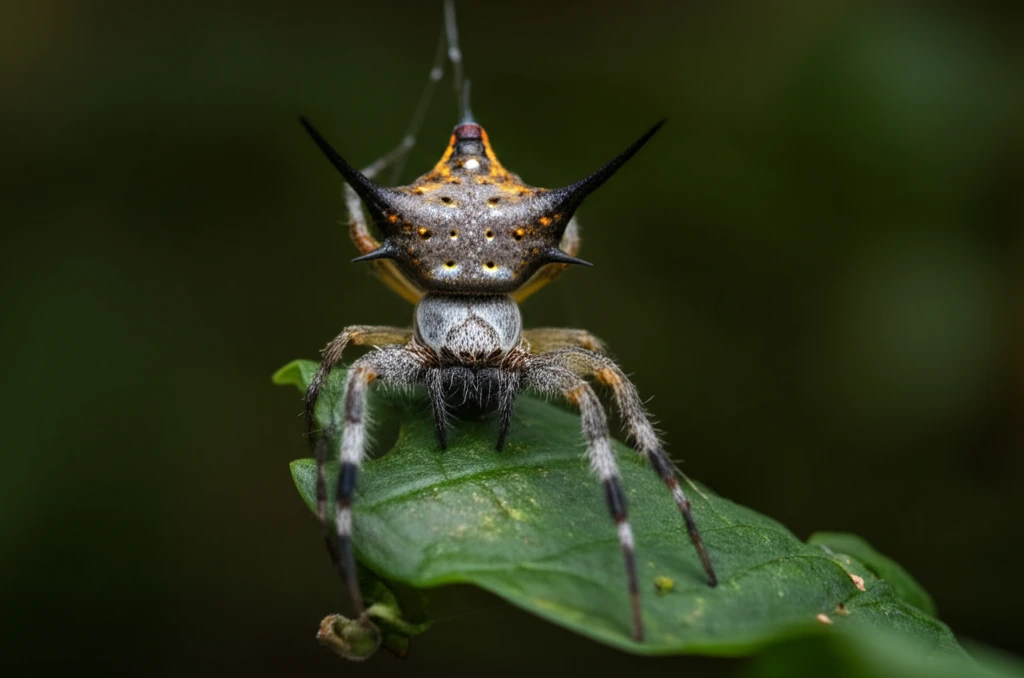
Amazon's Hidden Gems: Unveiling the New Alpaida Spider Species of Rondônia

"Discover the unique characteristics of Alpaida clarindoi sp. nov., a newly identified spider species from the depths of the Amazon rainforest, and why its discovery matters."
The Amazon rainforest, a realm of unparalleled biodiversity, continues to yield secrets to science. Among the most recent discoveries is a new spider species, Alpaida clarindoi, belonging to the Araneidae family. This finding, detailed in a research article by André A. Nogueira & Stefan R. Dias, not only enriches our understanding of arachnid diversity but also highlights the importance of continued exploration and conservation efforts in this vital ecosystem.
Araneidae ranks as the third most diverse spider family globally, boasting nearly 3,100 identified species. Within this vast family, the Neotropical genus Alpaida stands out, comprising over 140 known species. The recent classification of Alpaida clarindoi enriches this lineage, emphasizing the continuous nature of scientific exploration and species identification.
This new species was found along the Madeira River in the Brazilian Amazon's southwest region. Its discovery was part of a larger project to track animal life during the construction of the Jirau hydroelectric plant. This shows how important it is to study nature when big construction projects are happening, so we can understand and protect the local wildlife.
New Species Discovery in Rondônia
In 2015, researchers described Alpaida clarindoi sp. nov., a new species of orb-weaving spider from the southwestern Amazon forest in Rondônia, Brazil. The World Spider Catalog recognizes this species as distinct within the Alpaida genus. The new species is distinguished from most Alpaida by the presence of a pair of shoulder spines. Female specimens can be separated from similar species by the subquadrangular shape of the epigynum.
Taxonomic Identification Methods
Taxonomists rely on morphological characteristics to distinguish new spider species from existing ones. For Alpaida clarindoi, researchers examined physical features including shoulder spines, epigynum shape in females, and the terminal apophysis and tegulum in males. These anatomical structures provide diagnostic differences that separate the species from related taxa. Morphological analysis remains the standard approach for describing new arachnid species from forest ecosystems.
Alpaida Genus History
Alpaida is a genus of South American orb-weaver spiders first described by Octavius Pickard-Cambridge in 1889. The genus has been recognized as distinct from Araneus and other related genera. The World Spider Catalog and World Arachnid Catalog maintain comprehensive records of described species within this genus. This taxonomic foundation enables researchers to identify and classify new discoveries like Alpaida clarindoi.
What Makes Alpaida Clarindoi Unique?
Alpaida clarindoi distinguishes itself through several unique characteristics, setting it apart from other members of the Alpaida genus. The most notable feature is the presence of a pair of shoulder spines, a trait not commonly found in its relatives. This immediately makes it stand out.
- Females: Identified by the subquadrangular shape of their epigynum (the external structure covering the female genitalia). This shape differs notably from similar species, allowing for clear differentiation.
- Males: Characterized by the unique shape of the terminal apophysis and tegulum on their palps (small appendages near the mouth). These structures feature an apical pointed tip, a distinctive trait not found in closely related species.
Ongoing Discoveries in Alpaida Taxonomy
Research on the Alpaida genus continues to reveal new species across South American ecosystems. Scientists are applying traditional morphological methods alongside modern techniques to document arachnid biodiversity. Each new species description contributes to understanding the evolutionary relationships within orb-weaving spiders. These discoveries highlight the importance of continued survey efforts in tropical forest regions.
Challenges in Species Description
The description of Alpaida clarindoi required careful differentiation from similar species within the genus. Researchers must address potential challenges regarding species boundaries and taxonomic validity. Morphological variations within populations can complicate identification efforts. The scientific process demands rigorous examination of multiple specimens to confirm new species status.
Comparative Morphology in Orb-Weavers
Comparative analysis of morphological features helps distinguish new spider species from their relatives. Researchers examine variations in spines, reproductive structures, and body proportions across related taxa. These comparisons establish diagnostic characters that define species boundaries. Such analyses form the foundation of taxonomic descriptions in arachnology.
Why This Discovery Matters?
The discovery of Alpaida clarindoi is more than just an addition to a list of species; it's a crucial contribution to understanding the intricate web of life in the Amazon rainforest. Each new species we identify helps us better grasp the full scope of biodiversity and the ecological roles these organisms play. This knowledge is essential for effective conservation efforts, especially in regions facing increasing environmental pressures. By understanding what's there, we can work to protect it.
Expanding Alpaida Diversity Knowledge
Recent studies have described ten new Alpaida species from southeastern Brazilian states, demonstrating the genus's ongoing taxonomic richness. Researchers have identified mismatches between males and females in previously described species, highlighting the need for careful specimen association. These findings underscore the importance of comprehensive survey efforts across different Brazilian regions. The continued discovery of new species suggests significant undescribed diversity remains in South American forests.
Future Research Directions
Future research will likely focus on discovering additional Alpaida species in undersurveyed Amazon regions. Researchers may integrate molecular techniques with morphological analysis to refine species delimitation. Conservation-focused studies could assess how habitat loss affects newly described spider populations. These efforts will advance understanding of tropical arachnid biodiversity.
Biodiversity Documentation Challenges
Documenting new species in remote tropical regions presents logistical and scientific challenges. Researchers must balance thorough taxonomic work with limited funding and access to field sites. The rapid pace of habitat change in Amazonia adds urgency to biodiversity surveys. These systemic issues affect the completeness of species inventories across the region.
Conservation and Local Communities
New species discoveries can support conservation efforts by highlighting the ecological value of threatened habitats. Local communities in Rondônia may benefit from ecotourism opportunities related to unique biodiversity. Taxonomic research provides baseline data needed for environmental impact assessments. These findings contribute to broader efforts to protect Amazonian ecosystems.