
Amazon's Hidden Crisis: How Wildfires and Habitat Loss Threaten Wildlife

"Uncover the alarming impact of deforestation and wildfires on the delicate ecosystems and non-volant mammal populations in the Amazon rainforest, challenging its biodiversity."
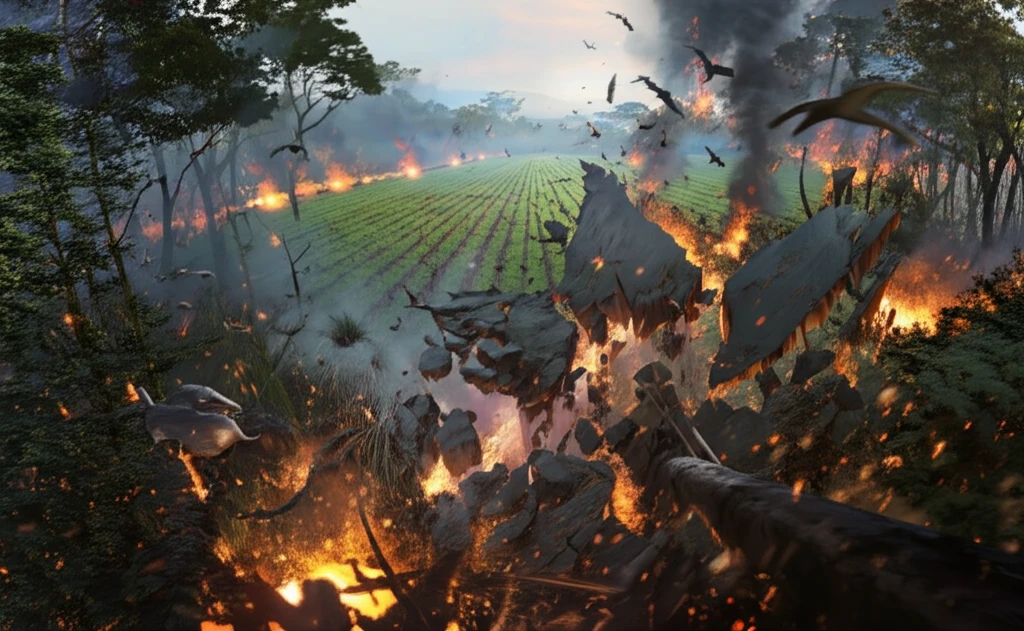
The Amazon rainforest, a realm of unparalleled biodiversity, faces an escalating crisis. Rampant deforestation, driven by the expansion of cattle ranching and soybean plantations, has fragmented this once-contiguous ecosystem. This fragmentation leads to a cascade of ecological consequences, the most alarming of which is the increased vulnerability of remaining forests to wildfires.
Edge effects, those detrimental changes in environmental and biotic conditions at the borders of fragmented habitats, further exacerbate the problem. These effects alter light availability, humidity, and wind patterns, creating conditions that favor invasive species and increase tree mortality. The result is a forest that is not only smaller but also significantly altered, with potentially devastating consequences for its inhabitants.
Amidst this turmoil, the impact on the Amazon's fauna, particularly its small, non-volant mammals, remains poorly understood. These creatures – rodents and marsupials – play critical roles in seed dispersal, pollination, and nutrient cycling, making them vital to the overall health of the ecosystem. To fully understand the consequences of these environmental changes, recent research has focused on how wildfires and edge effects are reshaping the lives of these small mammals in the forest-savanna transition zone of Southern Amazonia.
A Biological Reservoir Under Pressure
The Amazon Rainforest spans roughly 2,300,000 square miles (6,000,000 square kilometers) across northern South America, and Britannica describes it as the world's richest and most-varied biological reservoir, home to several million species. Its forests hold an incredibly vast array of wildlife, including a striking diversity of bird families that thrive in the humid canopy. As National Geographic notes, rainforests play an invaluable role in sustaining life on Earth, yet every year large portions are cleared for logging, mining, and cattle ranches. Those pressures form the backdrop against which the region's wildlife crisis must be understood.
The Untouched-Wilderness View
The standard approach to presenting Amazon wildlife leans heavily on the idea that the rainforest remains a place where animals live naturally, a framing popular in short-form content on platforms like TikTok, which celebrates the forest as a place where wildlife thrives naturally, untouched by humans. The limitation of this approach is that it treats the ecosystem as an idealized wilderness rather than an environment shaped by ongoing pressures. That single-frame view leaves little room for the complexities of how forests and their inhabitants respond to change. Careful observation and reporting are therefore needed to move beyond the idealized image and capture what is actually happening on the ground.
Documenting the Basin's Rich Fauna
The Amazon Basin supports the world's largest rainforest, accounting for more than half the total volume of all rainforests on the planet, according to National Geographic. Long-standing catalogs of the region's wildlife, organized around its mammals, birds, and reptiles, have anchored public understanding of the Amazon River basin's fauna for years. These foundational reference works helped establish the Amazon's reputation as one of the most species-rich habitats ever documented. They continue to serve as the baseline against which today's accounts of habitat loss and wildlife decline are measured.
Unveiling the Double Threat: Fire and Fragmentation
A detailed study conducted in the transitional Amazon forest examined the combined effects of wildfires and habitat fragmentation on small, non-volant mammals. The research, centered on Tanguro Farm in Mato Grosso, a region heavily impacted by soybean cultivation, compared mammal populations in burned and unburned areas, as well as at varying distances from the forest edge. Live trapping was conducted along transects in both disturbed and undisturbed forest plots to assess species richness, abundance, and habitat use.
- Wildfires directly reduce mammal populations.
- Edge effects are masked by fire damage.
- Mammals prefer areas further from forest edges.
- Habitat type influences species diversity.
Firsthand Wildlife Expeditions
On-the-ground wildlife tourism has become one of the primary ways visitors now encounter the Amazon's fauna. One popular expedition based in Nauta, in Peru's Loreto Region, advertises three days and two nights of rainforest wildlife viewing for roughly US$270, rated 5.0 by reviewers and organized around four stops of Amazon wildlife watching. A related offering from Iquitos promotes a four-day Amazon expedition on a similar itinerary, with its first day devoted to encounters with wildlife in the rainforest. Traveler reviews and listings like these function as a running, real-world record of what recent visitors actually see in the forest, complementing more formal research on the region's animals.
Record Deforestation Undercuts the Idyllic Image
Widespread videos and documentaries continue to present the Amazon as a thriving wilderness full of creatures to discover, from jungle-floor inhabitants to river dwellers. Yet those portrayals sit uneasily alongside the data: Brazilian authorities released figures revealing the highest rate of deforestation in the Amazon in over a decade, in part due to a surge of wildfires across the region. The reality of burning forest complicates any simple narrative of a pristine, untouched jungle. It is this gap between idealized images and measured destruction that frames the wildlife crisis at the heart of the current debate.
Amazon vs. Other Wildlife Destinations
Comparison guides routinely place the Amazon against other celebrated wildlife destinations to help travelers weigh their options. One widely used comparison measures the Amazon against Brazil's Pantanal wetlands, examining jaguar sightings, overall wildlife diversity, accessibility, and budget to determine which Brazilian adventure to choose. A separate strand of comparison frames the Amazon against the ocean, contrasting habitats, sights, wildlife, and the survival resources and dangers a person might face in each environment. Together these comparisons help put the Amazon's wildlife richness in perspective while showing how different lenses, such as ecotourism, adventure, and survival, shape what visitors expect to find.
Protecting the Amazon's Small Wonders
The study underscores the urgent need for comprehensive conservation strategies that address both deforestation and fire management in the Amazon. Protecting existing forest fragments, creating buffer zones, and implementing effective fire prevention measures are essential to safeguard the region's unique biodiversity. Further research is needed to fully understand the long-term consequences of these disturbances and to develop targeted conservation plans that support the resilience of small mammal populations and the overall health of the Amazon rainforest.
Experts Warn a Burning Humid Forest Is Not Normal
Experts are increasingly alarmed by the fires now hitting the Amazon. Dr Erika Berenguer, a forest expert at Oxford University and author of a book on how to deal with rainforest fires, called the situation "crazy," noting that "the humid forest should not be burning." The concern comes as El Niño is predicted to peak at what may be the worst possible time for the region, intensifying the risk to the rainforest and its wildlife. Her commentary underscores that what is happening in the Amazon is not a routine occurrence but a departure from the conditions in which the forest evolved.
Immersive Exploration of the Forest's Layers
Looking ahead, public engagement with the Amazon is increasingly immersive, as filmmakers take viewers on cinematic journeys through the rainforest, from the treetops to the jungle floor and into the mysterious waters of the river. These documentaries promise to reveal the hidden life of the ecosystem in a way that static accounts cannot. Travel guides and idea collections similarly expand the frontier of what visitors hope to experience, compiling lists of animals that can be seen in the Amazonian forest and promoting river adventures such as those offered in Peru. Together, these tools point toward a future in which more people encounter the Amazon's wildlife firsthand and through ever-closer observation.
The Tipping Point Looms
The stakes of the Amazon's decline extend far beyond any single species. The largest tropical forest on Earth stores more than 120 billion tons of carbon, which, if released into the atmosphere, would supercharge climate change, and it is home to a staggering number of plant and animal species. Analysts increasingly report that the rainforest is rapidly approaching a tipping point, a threshold beyond which large-scale forest loss could become self-reinforcing. Monitoring of total Amazon forest loss underlines how close the region may be to that point, making the preservation of its wildlife inseparable from the broader climate challenge.
The Human Stakes of a Changing Forest
Beyond the wildlife itself, the pressures on the Amazon carry human consequences that are still only partially understood. Communities that live in and around the forest depend on its rivers, fish, and natural resources for their daily livelihoods, and changes in the ecosystem can ripple directly into their lives. Regional economies tied to tourism and forest products likewise feel the effects of habitat loss and drought. Because the evidence gathered here is limited, these impacts should be read as a general caution rather than a precise assessment, a reminder that the fate of the forest and the fate of the people connected to it are bound together.