
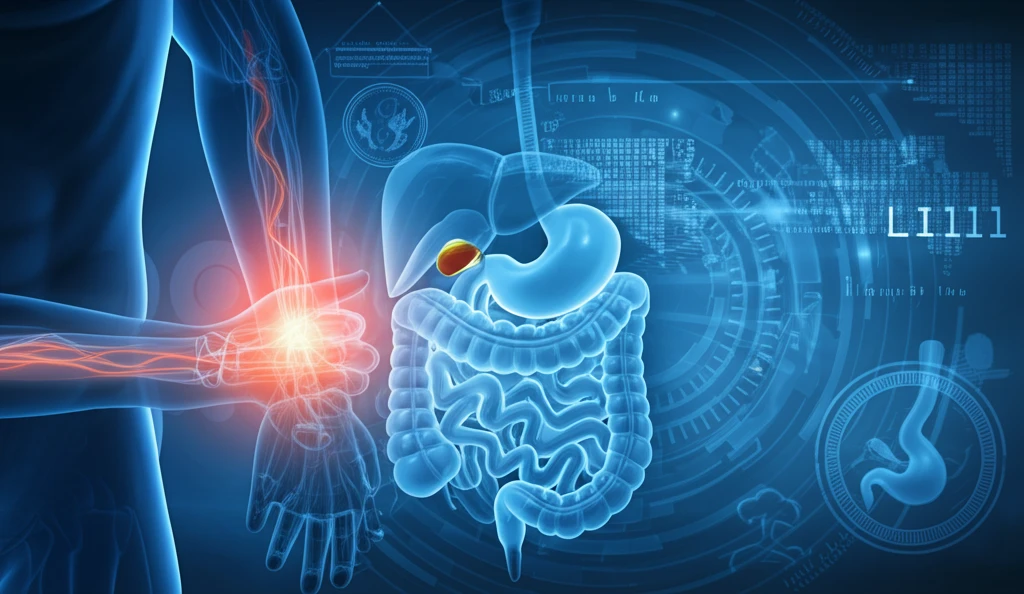
Acupuncture Points: Unlocking Gut Health with LI11 and the Parasympathetic Pathway

"Discover how electroacupuncture at the LI11 point can revolutionize your approach to digestive wellness by tapping into the body’s natural healing systems."
Gastrointestinal (GI) issues, encompassing everything from chronic constipation and diarrhea to the complexities of irritable bowel syndrome (IBS), affect a significant portion of the population. While conventional treatments often provide some relief, many individuals seek complementary therapies to better manage their symptoms and improve their overall gut health. Acupuncture, a cornerstone of Traditional Chinese Medicine, has emerged as a promising option.
Acupuncture's effects on gastrointestinal motility have been extensively studied, particularly focusing on abdominal and lower limb acupoints. However, recent research is exploring the impact of stimulating acupoints on the forelimbs to mediate gut function. One such point, LI11 (Quchi), located on the arm, has traditionally been used to treat GI disorders. New studies aim to uncover the mechanisms by which LI11 influences digestive processes, specifically its relationship with the parasympathetic nervous system—the 'rest and digest' system.
This article delves into the groundbreaking research investigating how electroacupuncture (EA) at the LI11 acupoint promotes jejunal motility—the movement of the small intestine that aids digestion—through the parasympathetic pathway. We will explore how this approach could revolutionize the way we manage gastrointestinal health, offering a natural and effective alternative to traditional treatments.
Current Evidence and Clinical Focus
Research on functional gastrointestinal disorders has analyzed acupoint combinations used for functional dyspepsia and irritable bowel syndrome through network analysis. A 2025 review of auricular acupoint therapy reported that points were used bilaterally in 15 trials, unilaterally in one, and were unspecified in three; the large intestine, spleen, and liver were the most commonly represented areas. Other research has examined manual acupuncture and electroacupuncture for ulcerative colitis, while a study of IBS-D evaluated personalized sensitive-acupoint acupuncture over six weeks and 15 sessions for abdominal pain and loose stools.
Established Methods and Constraints
Manual acupuncture and electroacupuncture are both commonly used approaches in clinical practice for gastrointestinal disorders. Reviews describe acupuncture research across clinical observations and experimental animal studies, with proposed effects involving gastrointestinal function and neurophysiological mechanisms. Interest in these methods is partly driven by the chronic or recurrent nature of gastrointestinal conditions, limited efficacy of standard treatments in some cases, and concerns about long-term pharmacological side effects. A 2025 review identifies regulation of gastrointestinal motility, visceral sensitivity, the gut-brain axis, gut microbiota, and intestinal immune homeostasis as proposed mechanisms, but these mechanisms remain areas of ongoing study.
LI11 and Traditional Frameworks
LI11, also called Quchi, is described as an acupuncture point located on the elbow crease. AcuBody presents it as a point used for conditions involving the digestive system and upper body. Acupuncture.com describes LI11 as a He-Sea point and assigns it traditional functions including regulating Qi and Blood, clearing Heat, and addressing diarrhea. These descriptions reflect traditional acupuncture frameworks rather than conclusions established by modern clinical trials.
Electroacupuncture at LI11: A New Frontier in Gut Health
A recent study published in BMC Complementary and Alternative Medicine sheds light on the potential of electroacupuncture (EA) at the LI11 acupoint to enhance jejunal motility by activating the parasympathetic pathway. This research sought to determine if EA at LI11 could stimulate the gut, whether the parasympathetic pathway was involved, and which specific nerve fibers played a role in this process. Researchers used male Sprague-Dawley rats and various types of mice, including knockout models, to examine these effects under different conditions, such as with and without drug administration or vagotomy (severing of the vagus nerve).
- EA at LI11 promotes jejunal motility.
- The parasympathetic pathway is essential for this effect.
- Ad-fibers and C-fibers may play significant roles.
- Muscarinic receptors are key to LI11's impact on gut function.
Gut-Brain Research
A 2026 review proposes that acupuncture may alleviate IBS symptoms through modulation of the microbiota-gut-brain axis, while also noting that the underlying mechanisms remain incompletely understood. A separate review of functional gastrointestinal disorders reports that acupuncture can improve symptoms and emotional state and evaluates both clinical evidence and proposed central mechanisms. Together, these reviews frame acupuncture as a subject of active mechanistic and clinical investigation rather than a fully explained intervention.
Unresolved Mechanisms and Evidence Limits
A 2023 review states that acupuncture has been used for gastrointestinal diseases, but that its specific mechanisms in the gastrointestinal tract have not yet been elucidated. A systematic review and meta-analysis assessed the efficacy and safety of acupuncture for functional gastrointestinal disorders, while another review cautioned that its animal-study findings did not represent all gastrointestinal diseases or acupuncture methods. These limitations make it difficult to generalize findings across conditions, techniques, and populations.
Acupuncture Compared with Sham
A 2026 meta-analysis reported that acupuncture significantly improved IBS response rates and overall symptoms at the end of treatment compared with sham non-acupoint acupuncture. However, the same body of evidence reported significant heterogeneity and low certainty, indicating that the findings require confirmation in larger, high-quality trials. Analyses of residual effects were inconclusive, and the specific effect on patients' psychological status was reported as insignificant. The comparison therefore suggests short-term end-of-treatment benefits but leaves longer-term and psychological effects uncertain.
The Future of Acupuncture in Digestive Health
The study not only reinforces the role of acupuncture in regulating gastrointestinal function but also opens new avenues for exploring targeted therapies for digestive disorders. By understanding the specific pathways and nerve fibers involved, practitioners can refine acupuncture techniques to maximize their effectiveness. This research supports the integration of acupuncture as a complementary approach to managing gastrointestinal health, offering hope for those seeking natural and effective solutions.
A Cautious Interpretation
The available material supports cautious interest in acupuncture for gastrointestinal symptoms, especially where conventional treatment is incomplete or difficult to sustain. Proposed explanations include effects on nervous-system regulation, gut-brain signaling, motility, and sensitivity, but these mechanisms are not yet fully established. LI11 may be discussed within traditional acupuncture practice, while modern evidence should be interpreted according to the condition, protocol, comparison group, and strength of the study.
Toward Better-Defined Trials
Future clinical trials should standardize and report precise acupoint locations, needling depth, stimulation parameters, needle-retention time, and treatment schedules. Better protocol reporting could make results easier to compare across studies and clarify which acupuncture procedures are associated with particular outcomes. A 2026 guide reports that acupuncture has been used for digestive problems for more than 2,500 years and that pilot studies have examined conditions including IBS, constipation, diarrhea, nausea and vomiting, peptic ulcer disease, and Crohn's disease. Those pilot findings point to broad research interest but do not by themselves establish effectiveness for every condition.
Context for Clinical Use
Acupuncture research must account for differences in gastrointestinal diagnoses, treatment protocols, comparison groups, and outcome measures. These differences can make results difficult to combine or generalize across settings. A balanced interpretation therefore requires distinguishing traditional explanations, proposed biological mechanisms, and findings supported by controlled clinical evidence.
Patient-Centered Considerations
People with recurrent gastrointestinal symptoms may seek acupuncture when symptoms persist or available treatments do not provide sufficient control. Their experiences can include changes in pain, bowel habits, emotional state, or perceived quality of life, but these outcomes may vary across individuals and conditions. Patient-centered care should therefore pair realistic expectations with attention to the strength and limits of the supporting evidence.